Atomic Layer Deposition (ALD) secures coating continuity through a chemically unique, self-limiting surface reaction. Unlike directional or line-of-sight coating methods, ALD relies on gas-phase precursors that possess exceptional capabilities to penetrate deep into the microscopic voids of dendritic particles. When combined with the continuous mechanical stirring of a rotary reactor, these precursors chemically adsorb onto the complex surface structure, growing a uniform film layer by layer.
The core success of ALD on dendritic powders lies in its ability to decouple the coating process into sequential, self-limiting half-reactions. This allows gas-phase precursors to navigate intricate 3D contours without clogging or shadowing, creating a pinhole-free barrier even at thicknesses as low as 18 nanometers.
The Mechanics of Conformality
The Power of Gas-Phase Precursors
The primary challenge with dendritic copper powder is its high surface area and intricate, tree-like morphology. ALD addresses this by using gas-phase precursors.
Because the coating material is introduced as a gas rather than a liquid or solid, it can navigate the tortuous paths within the dendritic structure. This ensures the material reaches deep into microscopic voids that would otherwise remain uncoated.
The Self-Limiting Reaction
Crucially, the chemical reaction in ALD is self-limiting. Once the precursor molecules have adsorbed onto the available surface sites, the reaction stops naturally.
This prevents the coating from building up excessively on the outer tips of the dendrites while starving the inner crevices. The result is a film that grows at the exact same rate on every exposed surface, regardless of its geometric orientation.
The Role of Mechanical Agitation
Overcoming Particle Contact
While gas penetration is effective, powders present a physical challenge: particles touch and shield one another. The ALD process solves this by utilizing a rotary reactor.
This specialized equipment employs mechanical stirring to keep the copper powder in motion. This agitation breaks up agglomerates and ensures that contact points between particles are constantly shifting, exposing every square nanometer of the surface to the gas precursors.
Achieving Pinhole-Free Barriers
The combination of chemical infiltration and mechanical rotation results in a physical barrier with high integrity.
Because the film is built layer-by-layer, defects are minimized. The process can achieve a continuous, pinhole-free coating at extremely low thicknesses, such as 18 nanometers, effectively functionalizing the powder without significantly altering its dimensions.
Understanding the Trade-offs
Process Speed and Throughput
While ALD offers superior quality, the layer-by-layer growth mode is inherently slower than bulk deposition techniques.
Building a film one atomic layer at a time requires significant processing time, making it less suitable for applications requiring thick coatings (micrometer scale) in short timeframes.
Equipment Complexity
Processing powders requires more than a standard vacuum chamber.
The requirement for a rotary reactor adds mechanical complexity to the vacuum system. Maintaining vacuum integrity while mechanically stirring a powder bed introduces specific engineering challenges compared to coating static wafers.
Strategic Application for Powder Metallurgy
To determine if ALD is the right solution for your dendritic copper application, consider your specific constraints:
- If your primary focus is Barrier Integrity: ALD is the optimal choice, as it provides a pinhole-free shield against oxidation or corrosion at minimal thickness (18 nm).
- If your primary focus is Geometry Preservation: ALD is superior because the self-limiting reaction ensures the complex dendritic shape is maintained without "filling in" the texture.
By leveraging the synergy between gas-phase chemistry and mechanical agitation, ALD transforms the complex morphology of dendritic powder from a processing liability into a manageable feature.
Summary Table:
| Feature | ALD Advantage for Dendritic Powders |
|---|---|
| Mechanism | Self-limiting, layer-by-layer gas-phase reaction |
| Conformality | 100% coverage of 3D contours and deep voids |
| Thickness Control | Precise atomic-level control (as thin as 18 nm) |
| Particle Interaction | Mechanical stirring in rotary reactors prevents shadowing |
| Coating Integrity | Pinhole-free, continuous barrier against oxidation |
Elevate Your Powder Metallurgy with KINTEK Precision
Are you struggling with oxidation or non-uniform coatings on complex dendritic materials? KINTEK specializes in advanced laboratory solutions designed to solve your most rigorous research challenges. From high-performance rotary reactors for ALD to our comprehensive range of crushing, milling, and high-temperature vacuum furnaces, we provide the tools necessary to achieve superior material functionalization.
Our value to you:
- Precision Engineering: Ensure coating continuity on the most intricate geometries.
- Comprehensive Portfolio: Access everything from hydraulic presses and electrolytic cells to specialized crucibles and cooling solutions.
- Expert Support: Leverage our expertise in battery research tools and thermal processing to optimize your workflow.
Ready to transform your powder processing? Contact KINTEK today for a consultation and let us help you achieve pinhole-free excellence.
References
- Véronique Cremers, Christophe Detavernier. Corrosion protection of Cu by atomic layer deposition. DOI: 10.1116/1.5116136
This article is also based on technical information from Kintek Solution Knowledge Base .
Related Products
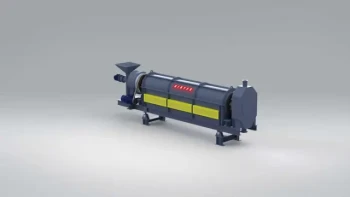
- Electric Rotary Kiln Small Rotary Furnace for Activated Carbon Regeneration
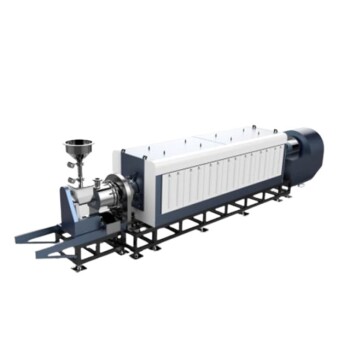
- Electric Rotary Kiln Small Rotary Furnace Biomass Pyrolysis Plant
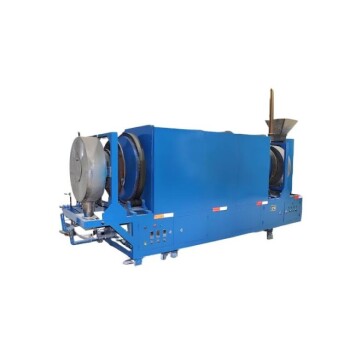
- Electric Rotary Kiln Continuous Working Small Rotary Furnace Heating Pyrolysis Plant
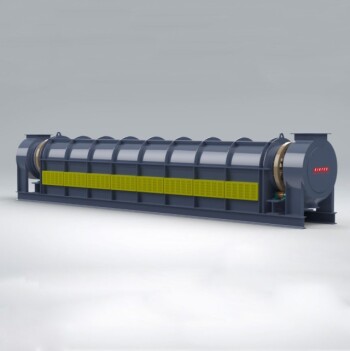
- Electric Rotary Kiln Pyrolysis Furnace Plant Machine Calciner Small Rotary Kiln Rotating Furnace
- High Pressure Laboratory Autoclave Reactor for Hydrothermal Synthesis
People Also Ask
- What is a rotary kiln electric furnace? Achieve Superior Uniform Heating for Your Materials
- What is the temperature of activated carbon regeneration? Unlock the 1000°F Process for Reuse
- What is the regeneration temperature of activated carbon? Optimize Your Process with the Right Method
- What are the characteristics of the slipping, slumping, and rolling modes of bed motion? Optimize Your Rotary Process
- What are the parts of a carbon regeneration kiln? A Guide to Its Core Components and Function