Knowledge How does external heating in vacuum hot pressing benefit large magnesium components vs SPS? Scaling Your Production
Author avatar

Tech Team · Kintek Solution

Updated 4 days ago

How does external heating in vacuum hot pressing benefit large magnesium components vs SPS? Scaling Your Production


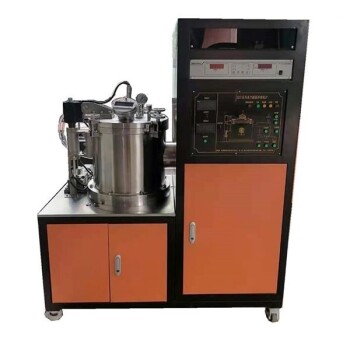
The external heating method employed by vacuum hot pressing sintering furnaces utilizes radiant heat to ensure thermal uniformity, a distinct advantage over the direct current method used in Spark Plasma Sintering (SPS). For large magnesium alloy components, this external approach prevents localized temperature gradients caused by variations in sample geometry or electrical resistivity, resulting in significantly more stable process control.

Core Takeaway: While SPS offers rapid heating for small samples, vacuum hot pressing provides the superior thermal consistency required for scaling up. By decoupling the heat source from the material's electrical properties, external heating ensures the structural integrity necessary for manufacturing complex or oversized magnesium parts.

The Mechanics of Thermal Distribution

External Radiant Heating vs. Direct Current

Vacuum hot pressing relies on external heating elements, typically made of graphite or molybdenum, which surround the load from all sides.

This generates radiant heat that penetrates the mold and material from the outside in. Conversely, SPS passes pulsed electrical currents directly through the powder, relying on the material's conductivity to generate heat (Joule heating).

Overcoming Geometry Limitations

Because SPS relies on current flow, the shape of the component dictates how heat is generated.

Complex shapes or large dimensions can alter the current path, leading to uneven heating. External heating treats the entire volume of the chamber uniformly, regardless of the component's internal geometry.

Why Size Matters for Magnesium Alloys

Eliminating Temperature Gradients

The primary risk when scaling up magnesium production using SPS is the formation of localized temperature gradients.

According to the primary technical data, these gradients arise in SPS due to variations in electrical resistivity within larger powder volumes. External heating circumvents this physics problem entirely, creating a consistent thermal environment.

Stability in Process Control

Manufacturing large powder metallurgy parts requires a predictable environment to ensure the center of the part sinters as effectively as the surface.

The external heating method offers stable process control, making it the preferred route for magnesium alloy parts with complex shapes or larger dimensions. This stability minimizes defects that occur when electrical current concentrates in specific areas of a large part.

Understanding the Trade-offs

Where SPS Excels: Speed and Microstructure

It is important to acknowledge that SPS outperforms hot pressing in terms of heating speed and cycle times.

SPS can complete sintering in minutes and typically produces finer, more uniform grains due to rapid heating. This makes it ideal for small-scale material development where high-density materials and unique chemistries are the priority.

The Scaling Limitation

However, the equipment required for SPS faces limitations when attempting to scale.

Generating the massive pulse current capacity required for large products is technically challenging. Furthermore, SPS equipment currently lacks the versatility and full automation needed for large-scale production of complex shapes compared to established hot pressing methods.

Making the Right Choice for Your Goal

When deciding between vacuum hot pressing and SPS for magnesium alloys, consider your production scale:

  • If your primary focus is producing large or geometrically complex components: Prioritize vacuum hot pressing to ensure uniform heat distribution and avoid structural defects caused by electrical resistance variations.
  • If your primary focus is rapid R&D or controlling microstructure in small samples: Prioritize Spark Plasma Sintering (SPS) to leverage short cycle times and lower sintering temperatures for high-precision grain control.

Select the method that aligns with the physical dimensions of your final product rather than the theoretical speed of the process.

Summary Table:

Feature Vacuum Hot Pressing (External Heating) Spark Plasma Sintering (SPS)
Heating Mechanism Radiant heat from external elements Pulsed DC current through material
Thermal Uniformity High (decoupled from material properties) Variable (affected by geometry/resistivity)
Ideal Component Size Large, complex, or oversized parts Small samples and rapid R&D
Process Stability Highly stable for large-scale production Challenges with localized gradients in size
Key Advantage Prevents structural defects in scale-up Superior grain control and cycle speed

Scale Your Advanced Material Production with KINTEK

Transitioning from lab-scale R&D to large-scale component manufacturing requires precision and reliability. KINTEK specializes in high-performance laboratory equipment and consumables, providing the advanced vacuum hot pressing sintering furnaces and hydraulic presses (pellet, hot, isostatic) needed to ensure structural integrity in complex magnesium alloys.

Whether you require high-temperature furnaces, crushing and milling systems, or specialized battery research tools, our comprehensive portfolio is designed to meet the rigorous demands of material science. Unlock superior thermal consistency and process control today.

Contact our technical experts for a custom solution

Related Products

People Also Ask

Related Products

Vacuum Hot Press Furnace Machine Heated Vacuum Press

Vacuum Hot Press Furnace Machine Heated Vacuum Press

Discover the advantages of Vacuum Hot Press Furnace! Manufacture dense refractory metals & compounds, ceramics, and composites under high temp and pressure.

Vacuum Hot Press Furnace Heated Vacuum Press Machine Tube Furnace

Vacuum Hot Press Furnace Heated Vacuum Press Machine Tube Furnace

Reduce forming pressure & shorten sintering time with Vacuum Tube Hot Press Furnace for high-density, fine-grain materials. Ideal for refractory metals.

600T Vacuum Induction Hot Press Furnace for Heat Treat and Sintering

600T Vacuum Induction Hot Press Furnace for Heat Treat and Sintering

Discover the 600T Vacuum Induction Hot Press Furnace, designed for high-temperature sintering experiments in vacuum or protected atmospheres. Its precise temperature and pressure control, adjustable working pressure, and advanced safety features make it ideal for nonmetal materials, carbon composites, ceramics, and metal powders.

Vacuum Heat Treat and Sintering Furnace with 9MPa Air Pressure

Vacuum Heat Treat and Sintering Furnace with 9MPa Air Pressure

The air pressure sintering furnace is a high-tech equipment commonly used for the sintering of advanced ceramic materials. It combines vacuum sintering and pressure sintering techniques to achieve high-density and high-strength ceramics.

Vacuum Heat Treat and Molybdenum Wire Sintering Furnace for Vacuum Sintering

Vacuum Heat Treat and Molybdenum Wire Sintering Furnace for Vacuum Sintering

A vacuum molybdenum wire sintering furnace is a vertical or bedroom structure, which is suitable for withdrawal, brazing, sintering and degassing of metal materials under high vacuum and high temperature conditions. It is also suitable for dehydroxylation treatment of quartz materials.

Vacuum Heat Treat Furnace with Ceramic Fiber Liner

Vacuum Heat Treat Furnace with Ceramic Fiber Liner

Vacuum furnace with polycrystalline ceramic fiber insulation liner for excellent heat insulation and uniform temperature field. Choose from 1200℃ or 1700℃ max. working temperature with high vacuum performance and precise temperature control.

2200 ℃ Tungsten Vacuum Heat Treat and Sintering Furnace

2200 ℃ Tungsten Vacuum Heat Treat and Sintering Furnace

Experience the ultimate refractory metal furnace with our Tungsten vacuum furnace. Capable of reaching 2200℃, perfect for sintering advanced ceramics and refractory metals. Order now for high-quality results.

High Pressure Laboratory Vacuum Tube Furnace Quartz Tubular Furnace

High Pressure Laboratory Vacuum Tube Furnace Quartz Tubular Furnace

KT-PTF High Pressure Tube Furnace: Compact split tube furnace with strong positive pressure resistance. Working temp up to 1100°C and pressure up to 15Mpa. Also works under controller atmosphere or high vacuum.

Vacuum Heat Treat Sintering Brazing Furnace

Vacuum Heat Treat Sintering Brazing Furnace

A vacuum brazing furnace is a type of industrial furnace used for brazing, a metalworking process that joins two pieces of metal using a filler metal that melts at a lower temperature than the base metals. Vacuum brazing furnaces are typically used for high-quality applications where a strong, clean joint is required.

2200 ℃ Graphite Vacuum Heat Treat Furnace

2200 ℃ Graphite Vacuum Heat Treat Furnace

Discover the power of the KT-VG Graphite Vacuum Furnace - with a maximum working temperature of 2200℃, it's perfect for vacuum sintering of various materials. Learn more now.

Molybdenum Vacuum Heat Treat Furnace

Molybdenum Vacuum Heat Treat Furnace

Discover the benefits of a high-configuration molybdenum vacuum furnace with heat shield insulation. Ideal for high-purity, vacuum environments like sapphire crystal growth and heat treatment.

Vacuum Dental Porcelain Sintering Furnace

Vacuum Dental Porcelain Sintering Furnace

Get precise and reliable results with KinTek's Vacuum Porcelain Furnace. Suitable for all porcelain powders, it features hyperbolic ceramic furnace function, voice prompt, and automatic temperature calibration.

Ultra-High Temperature Graphite Vacuum Graphitization Furnace

Ultra-High Temperature Graphite Vacuum Graphitization Furnace

The ultra-high temperature graphitization furnace utilizes medium frequency induction heating in a vacuum or inert gas environment. The induction coil generates an alternating magnetic field, inducing eddy currents in the graphite crucible, which heats up and radiates heat to the workpiece, bringing it to the desired temperature. This furnace is primarily used for graphitization and sintering of carbon materials, carbon fiber materials, and other composite materials.

Graphite Vacuum Furnace Bottom Discharge Graphitization Furnace for Carbon Materials

Graphite Vacuum Furnace Bottom Discharge Graphitization Furnace for Carbon Materials

Bottom-out graphitization furnace for carbon materials, ultra-high temperature furnace up to 3100°C, suitable for graphitization and sintering of carbon rods and carbon blocks. Vertical design, bottom discharging, convenient feeding and discharging, high temperature uniformity, low energy consumption, good stability, hydraulic lifting system, convenient loading and unloading.

Horizontal High Temperature Graphite Vacuum Graphitization Furnace

Horizontal High Temperature Graphite Vacuum Graphitization Furnace

Horizontal Graphitization Furnace: This type of furnace is designed with the heating elements placed horizontally, allowing for uniform heating of the sample. It's well-suited for graphitizing large or bulky samples that require precise temperature control and uniformity.

Graphite Vacuum Furnace High Thermal Conductivity Film Graphitization Furnace

Graphite Vacuum Furnace High Thermal Conductivity Film Graphitization Furnace

The high thermal conductivity film graphitization furnace has uniform temperature, low energy consumption and can operate continuously.

Mesh belt controlled atmosphere furnace

Mesh belt controlled atmosphere furnace

Discover our KT-MB mesh belt sintering furnace - perfect for high-temperature sintering of electronic components & glass insulators. Available for open air or controlled atmosphere environments.

Dental Porcelain Zirconia Sintering Ceramic Vacuum Press Furnace

Dental Porcelain Zirconia Sintering Ceramic Vacuum Press Furnace

Get precise dental results with Dental Vacuum Press Furnace. Automatic temperature calibration, low noise tray, and touch screen operation. Order now!

Vertical High Temperature Graphite Vacuum Graphitization Furnace

Vertical High Temperature Graphite Vacuum Graphitization Furnace

Vertical high temperature graphitization furnace for carbonization and graphitization of carbon materials up to 3100℃.Suitable for shaped graphitization of carbon fiber filaments and other materials sintered in a carbon environment.Applications in metallurgy, electronics, and aerospace for producing high-quality graphite products like electrodes and crucibles.

Graphite Vacuum Furnace IGBT Experimental Graphitization Furnace

Graphite Vacuum Furnace IGBT Experimental Graphitization Furnace

IGBT experimental graphitization furnace, a tailored solution for universities and research institutions, with high heating efficiency, user-friendliness, and precise temperature control.


Leave Your Message