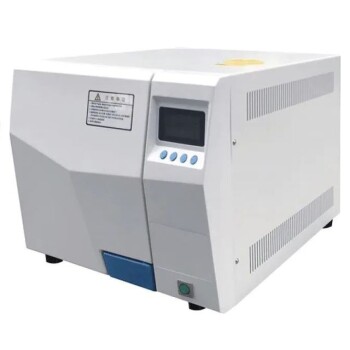
In the synthesis of Na3Zr2Si2PO12 (NZSP) solid electrolytes, the laboratory oven serves as the critical bridge between physical mixing and chemical transformation. Specifically, it is utilized to process the mixed slurry resulting from ball milling by subjecting it to a controlled temperature of 155°C. This step is designed to completely evaporate the ethanol solvent, converting the wet mixture into the dry, solvent-free powder required for subsequent high-temperature processing.
The laboratory oven functions as a stabilization stage, ensuring the absolute removal of solvents from the precursor mixture. This prevents compositional defects and prepares the material for the rigorous thermal demands of calcination.
The Role of the Oven in the Synthesis Workflow
Processing the Ball-Milled Slurry
Before the material reaches the oven, raw precursors—typically stoichiometric amounts of sodium, zirconium, silicon, and phosphorus compounds—are vigorously mixed in a ball mill.
This milling process uses ethanol as a solvent to break down agglomerates and ensure uniform distribution of the reactants.
The laboratory oven receives this resulting "slurry." Its function is to transition the material from a liquid-suspended state back into a solid phase without disturbing the homogeneity achieved during milling.
Specific Thermal Parameters
The process requires precise thermal control, strictly maintaining the environment at 155°C.
This temperature is selected because it is sufficiently high to drive off the ethanol solvent efficiently but controlled enough to avoid initiating the solid-phase reaction prematurely.
The objective is strictly physical separation (drying), not chemical conversion, at this stage.
Why Solvent Removal is Critical
Establishing a Stable Base
The primary reference indicates that the ultimate goal of this step is to provide a "dry, solvent-free base material."
If ethanol were to remain within the powder, it could interfere with the stoichiometry or create volatile conditions during the next stage of the process.
Preparing for Calcination
Following the oven drying, the NZSP precursors undergo high-temperature calcination.
The oven ensures that only the dry precursor powder enters the calcination furnace. This protects the integrity of the synthesis, ensuring that the high heat of calcination acts solely on the reactants to form the NZSP crystal structure, rather than wasting energy on evaporating residual liquids.
Understanding the Trade-offs
Temperature Precision vs. Throughput
A common pitfall in laboratory drying is the desire to accelerate the process by increasing the temperature.
However, deviating from the specified 155°C risks altering the physical characteristics of the powder. Excessive heat could lead to hard agglomeration, making the powder difficult to process in subsequent steps.
Conversely, insufficient temperature or time in the oven leaves residual ethanol. This can lead to uneven heating or structural inconsistencies when the material is eventually subjected to the extreme temperatures of the solid-phase reaction.
Making the Right Choice for Your Goal
To ensure high-quality NZSP synthesis, apply the oven processing step with the following focus:
- If your primary focus is Compositional Homogeneity: Ensure the ball-milled slurry is spread evenly in the oven to facilitate uniform evaporation at 155°C, preserving the mixture's uniformity.
- If your primary focus is Process Safety and Stability: Verify that the drying time is sufficient to remove all ethanol traces, preventing volatile evaporation during the high-temperature calcination phase.
Complete solvent removal is the non-negotiable prerequisite for a successful solid-phase reaction.
Summary Table:
| Stage | Process Parameters | Objective |
|---|---|---|
| Input Material | Ball-milled slurry (Precursors + Ethanol) | Uniform reactant distribution |
| Thermal Setting | Constant 155°C | Efficient ethanol evaporation |
| Physical State | Liquid-suspended to solid powder | Prepare solvent-free base material |
| Critical Goal | Total Solvent Removal | Prevent compositional defects in calcination |
Elevate Your Material Synthesis with KINTEK Precision
Successful solid-state battery research starts with uncompromising thermal control. At KINTEK, we specialize in the high-performance laboratory equipment essential for every stage of Na3Zr2Si2PO12 (NZSP) development. From the initial drying in our precision laboratory ovens to the rigorous demands of high-temperature furnaces (muffle, tube, or vacuum) and the final shaping using our hydraulic pellet presses, we provide the tools needed to ensure compositional homogeneity and structural integrity.
Whether you are refining electrolyte precursors or scaling up production, our comprehensive range—including ball milling systems, high-purity ceramics, and crucibles—is designed to meet the strictest research standards. Contact KINTEK today to optimize your lab's workflow and achieve superior material performance.
Related Products
- Laboratory Scientific Electric Heating Blast Drying Oven
- 56L Vertical Laboratory Vacuum Drying Oven
- 23L Laboratory Vacuum Drying Oven
- 1200℃ Muffle Furnace Oven for Laboratory
- 1700℃ Muffle Oven Furnace for Laboratory
People Also Ask
- How does a laboratory electric drying oven contribute to the formation of the initial coating? Expert Insights
- What role does a precision laboratory drying oven play in the synthesis of GO-PANI nanocomposites? Protect Material Integrity
- What role does a laboratory drying oven play in the preparation of zinc oxide nanoparticle precursors?
- What is the necessity of using a laboratory drying oven when processing MoO3/GO composite nanopowders? Find out here.
- What is the role of a laboratory drying oven in cellulose citrate production? Ensure Material Stability & Purity