Chemical Vapour Deposition (CVD) is a process category with several distinct variations tailored to specific manufacturing needs. The most common methods include Atmospheric Pressure CVD (APCVD), Low Pressure CVD (LPCVD), Ultrahigh Vacuum CVD (UHVCVD), Laser Induced CVD (LICVD), Metal-Organic CVD (MOCVD), and Plasma Enhanced CVD (PECVD).
Core Insight: While all CVD methods share the same fundamental mechanism—using gas-phase precursors to react and form a solid deposit—the specific method is chosen based on the required pressure levels and the energy source (heat vs. plasma vs. laser) needed to drive the reaction.
Categorizing by Pressure Environment
One of the primary ways to distinguish CVD methods is by the operating pressure within the reaction chamber. Pressure significantly influences the purity and uniformity of the deposited film.
Atmospheric Pressure CVD (APCVD)
This method operates at normal atmospheric pressure. Because it does not require vacuum pumps, it allows for continuous, high-volume manufacturing. However, the lack of low pressure can sometimes limit the uniformity of the film.
Low Pressure CVD (LPCVD)
LPCVD operates at sub-atmospheric pressures. Reducing the pressure lowers the concentration of impurity molecules in the reactor.
This environment increases the mean free path of the reactive gas groups. This improves the efficiency of gas collisions with the substrate, generally resulting in higher quality, more uniform films than atmospheric processes.
Ultrahigh Vacuum CVD (UHVCVD)
This method utilizes extremely low pressures, far below standard LPCVD. It is typically reserved for applications requiring the absolute highest purity levels, where even trace contamination must be eliminated.
Categorizing by Energy Source
Standard CVD relies on thermal energy (heat) to crack gas precursors and initiate reactions. Advanced methods use alternative energy sources to facilitate deposition, often at lower temperatures.
Plasma Enhanced CVD (PECVD)
As the name implies, PECVD uses plasma rather than thermal heat alone to drive chemical reactions. This allows deposition to occur at significantly lower temperatures, protecting temperature-sensitive substrates.
Radio-Frequency PECVD (RF PECVD)
A subset of plasma methods, RF PECVD is noted for its ability to fabricate films at a low cost with high deposition efficiency. It is particularly useful for creating graded-refractive-index films or stacks of nano-films with varying properties.
Laser Induced CVD (LICVD)
This technique employs a focused laser beam to locally heat the substrate or directly dissociate the gas molecules. This allows for highly precise, localized deposition patterns without heating the entire substrate.
Specialized Precursor Methods
Some CVD techniques are defined by the specific type of chemical precursor used to create the film.
Metal-Organic CVD (MOCVD)
MOCVD is a specific variation that utilizes metal-organic compounds as the precursor gas. It is a critical method for fabricating complex semiconductor structures, particularly in optoelectronics (like LEDs) and high-speed transistors.
Understanding the Trade-offs
Choosing a method requires balancing deposition rate, film quality, and thermal constraints.
Temperature vs. Substrate Integrity
Standard thermal methods often require high temperatures to "crack" carbon-containing gases and form bonds. While effective, this can damage sensitive substrates. PECVD mitigates this by using electrical energy to trigger reactions at lower temperatures.
Deposition Rate vs. Purity
APCVD offers fast deposition rates suitable for mass production but may struggle with step coverage and purity. Conversely, LPCVD and UHVCVD sacrifice some speed and require complex vacuum systems to achieve superior film purity and uniformity.
Making the Right Choice for Your Goal
The optimal CVD method depends entirely on the material properties you need to achieve and the limitations of your substrate.
- If your primary focus is protecting heat-sensitive components: Prioritize PECVD, as it drives reactions via plasma rather than high thermal loads.
- If your primary focus is high-volume, continuous manufacturing: Consider APCVD for its ability to operate without complex vacuum cycles.
- If your primary focus is maximum film purity and uniformity: Select LPCVD or UHVCVD to minimize impurities and optimize gas distribution.
- If your primary focus is complex compound semiconductors: Utilize MOCVD, which is specifically designed for metal-organic precursor chemistry.
Select the method that balances your tolerance for system complexity with your requirement for film precision.
Summary Table:
| CVD Method | Pressure Level | Energy Source | Key Advantage |
|---|---|---|---|
| APCVD | Atmospheric | Thermal | High-volume, continuous manufacturing |
| LPCVD | Low Pressure | Thermal | Superior film uniformity and purity |
| PECVD | Low Pressure | Plasma | Lower deposition temperatures for sensitive substrates |
| MOCVD | Varies | Thermal/Chemical | Ideal for complex compound semiconductors (LEDs) |
| UHVCVD | Ultra-high Vacuum | Thermal | Maximum purity; eliminates trace contamination |
| LICVD | Varies | Laser | Highly precise, localized deposition patterns |
Elevate Your Thin Film Deposition with KINTEK Precision
Choosing the right CVD method is critical to the success of your material research and semiconductor manufacturing. At KINTEK, we specialize in providing high-performance laboratory equipment tailored to these advanced processes. Whether you require PECVD or CVD systems, high-temperature tube furnaces, or specialized vacuum and cooling solutions, our expertise ensures your lab achieves maximum film precision and uniformity.
Ready to optimize your deposition workflow? Contact KINTEK today to explore our comprehensive range of high-temperature furnaces, PECVD/MPCVD systems, and essential laboratory consumables. Let our experts help you select the perfect system for your target applications.
Related Products
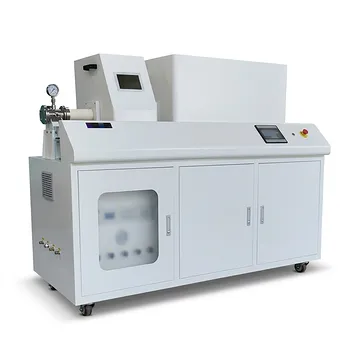
- Chemical Vapor Deposition CVD Equipment System Chamber Slide PECVD Tube Furnace with Liquid Gasifier PECVD Machine
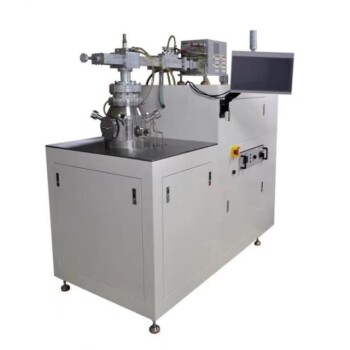
- RF PECVD System Radio Frequency Plasma-Enhanced Chemical Vapor Deposition RF PECVD
- Microwave Plasma Chemical Vapor Deposition MPCVD Machine System Reactor for Lab and Diamond Growth
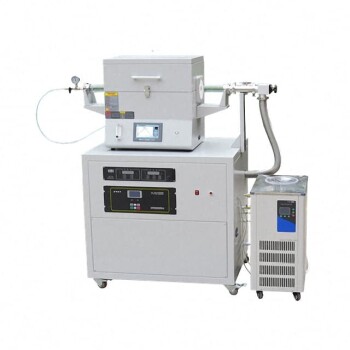
- Customer Made Versatile CVD Tube Furnace Chemical Vapor Deposition Chamber System Equipment
- 915MHz MPCVD Diamond Machine Microwave Plasma Chemical Vapor Deposition System Reactor
People Also Ask
- What are the advantages of chemical vapor deposition? Achieve Superior Thin Films for Your Lab
- What types of substrates are used in CVD to facilitate graphene films? Optimize Graphene Growth with the Right Catalyst
- What is the chemical vapor deposition growth process? Build Superior Thin Films from the Atom Up
- How expensive is chemical vapor deposition? Understanding the True Cost of High-Performance Coating
- Why is Chemical Vapor Deposition (CVD) equipment uniquely suited for constructing hierarchical superhydrophobic structures?