Hot pressing offers superior structural and electrical properties compared to traditional cold pressing for Li2OHBr samples. By combining mechanical pressure with heat—typically around 120°C—this method induces plastic flow in the powder, significantly reducing porosity and grain boundary resistance for more accurate testing.
Core Takeaway Standard cold pressing often leaves microscopic voids that act as barriers to ion movement. Hot pressing overcomes this by utilizing thermal energy to densify the material, ensuring that impedance spectroscopy data reflects the true ionic conductivity of the material rather than the limitations of the sample preparation.
The Mechanics of Densification
Achieving Plastic Flow
The primary physical advantage of hot pressing is the induction of plastic flow. Under standard cold pressing, powder particles are mechanically compacted, but gaps often remain between them.
By applying heat at approximately 120°C, the Li2OHBr powder softens sufficiently to flow into these interstitial spaces. This results in a much higher degree of densification compared to pressure alone.
Creating a Uniform Microstructure
Cold pressing can result in density gradients, where the outside of the pellet is denser than the center. Hot pressing mitigates this issue.
The combination of heat and pressure promotes a uniform microstructure throughout the sample volume. This homogeneity is critical for ensuring the test current flows evenly through the entire sample.
Impact on Electrical Measurements
Reducing Grain Boundary Resistance
For ionic conductivity tests, the interfaces between particles—the grain boundaries—are often the source of highest resistance.
Hot pressing effectively fuses these particles together, significantly reducing grain boundary resistance. This creates a clearer path for lithium ions to migrate, yielding higher and more accurate conductivity values.
Enhancing Data Reproducibility
Samples prepared via cold pressing can vary wildly in quality, leading to inconsistent impedance spectroscopy data.
Because hot pressing achieves consistent density and structure, it allows for highly reproducible results. This reliability is essential when validating experimental materials or comparing different sample batches.
Understanding the Trade-offs
Process Complexity vs. Sample Quality
While hot pressing yields superior samples, it introduces procedural complexity. It requires an insulating mold capable of withstanding both pressure and the 120°C temperature requirement.
Thermal Management
Precise temperature control is necessary to achieve plastic flow without degrading the material. Unlike the rapid nature of cold pressing, hot pressing demands careful monitoring of the thermal profile to ensure the sample is not overheated or under-processed.
Making the Right Choice for Your Goal
To determine the best approach for your specific testing requirements, consider the following:
- If your primary focus is precise conductivity data: Use hot pressing to minimize internal resistance and eliminate porosity artifacts in your impedance spectra.
- If your primary focus is mechanical handling: Use hot pressing to produce samples with high mechanical strength that can withstand mounting in test fixtures without crumbling.
Hot pressing transforms Li2OHBr from a loose aggregate into a cohesive solid, providing the physical integrity necessary for definitive scientific measurement.
Summary Table:
| Feature | Cold Pressing | Hot Pressing (120°C) |
|---|---|---|
| Material State | Mechanical compaction | Induced plastic flow |
| Porosity | High (microscopic voids) | Significantly reduced |
| Grain Boundary Resistance | High (barrier to ions) | Low (fused particles) |
| Microstructure | Potential density gradients | Highly uniform & homogeneous |
| Data Reproducibility | Variable/Inconsistent | High/Reliable results |
| Mechanical Strength | Brittle/Fragile | Cohesive & robust solid |
Elevate Your Battery Research with KINTEK Precision Solutions
Don't let sample preparation artifacts compromise your ionic conductivity data. KINTEK specializes in advanced laboratory equipment designed to meet the rigorous demands of material science. Whether you need specialized insulating molds, high-performance hydraulic pellet presses (hot, cold, or isostatic), or precision high-temperature furnaces, our solutions ensure your Li2OHBr samples achieve maximum density and uniform microstructure.
From battery research tools and consumables to high-pressure reactors and planetary ball mills for material synthesis, KINTEK provides the comprehensive toolkit needed for groundbreaking discoveries.
Ready to achieve more accurate and reproducible results? Contact our technical experts today to find the perfect pressing solution for your lab!
Related Products
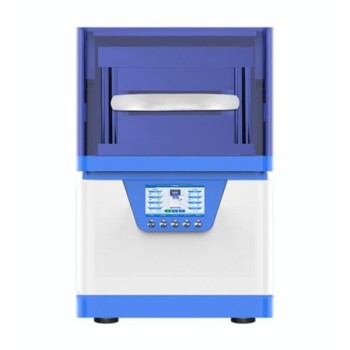
- Automatic Heated Hydraulic Press Machine with Heated Plates for Laboratory Hot Press 25T 30T 50T
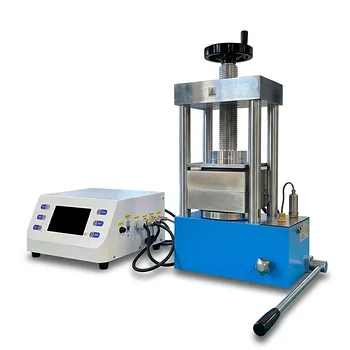
- 30T 40T Split Automatic Heated Hydraulic Press Machine with Heated Plates for Laboratory Hot Press
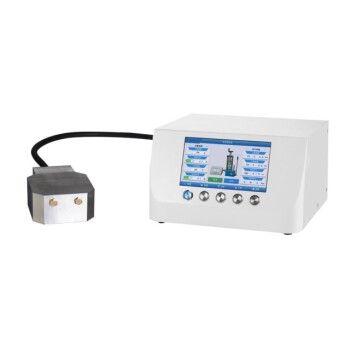
- Automatic Heated Hydraulic Press Machine with Heated Plates for Laboratory Hot Press
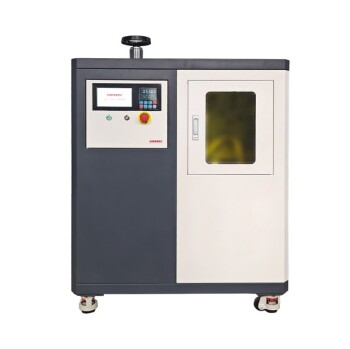
- Automatic High Temperature Heated Hydraulic Press Machine with Heated Plates for Lab
- 24T 30T 60T Heated Hydraulic Press Machine with Heated Plates for Laboratory Hot Press
People Also Ask
- Why is the heating function of a laboratory hydraulic press essential for MEA assembly in DEFC? Optimize Cell Bonding
- What technical conditions does a heated hydraulic press provide for PEO batteries? Optimize Solid-State Interfaces
- How is a heated hydraulic press used for Li-LLZO batteries? Optimize Interfacial Bonding with Thermal-Pressure
- What role does a heated hydraulic press play in Cold Sintering (CSP)? Enhancing LATP-Halide Densification
- What are heated hydraulic presses used for? Molding Composites, Vulcanizing Rubber, and More