Knowledge Vacuum Furnace What are the advantages of using a Spark Plasma Sintering (SPS/FAST) system for LLZTO? Rapid Densification & Purity
Author avatar

Tech Team · Kintek Solution

Updated 1 day ago

What are the advantages of using a Spark Plasma Sintering (SPS/FAST) system for LLZTO? Rapid Densification & Purity


The primary advantage of using a Spark Plasma Sintering (SPS/FAST) system for LLZTO synthesis is the ability to achieve rapid densification through the simultaneous application of pulsed current heating and mechanical pressure. Unlike traditional methods that require long durations at high heat, SPS can complete the sintering process in as little as 3 minutes at relatively low temperatures (e.g., 1100°C).

By drastically reducing thermal exposure time, the SPS/FAST system solves the common problem of excessive grain growth. This ensures the production of dense, pure cubic phase ceramic targets that serve as a superior foundation for subsequent powder production.

Mechanisms of Rapid Densification

The Role of Pulsed Current and Pressure

The defining feature of the SPS/FAST system is its departure from simple thermal radiation. It utilizes pulsed current heating directly through the die and/or sample, combined with uniaxial mechanical pressure.

This dual-action approach drives the sintering process internally rather than relying solely on external heat transfer.

Efficiency in Time and Temperature

Traditional sintering often requires extended dwell times to achieve the necessary density. In contrast, the SPS system is capable of achieving full densification in extremely short timeframes, such as 3 minutes.

Furthermore, this densification occurs at relatively low temperatures (specifically cited at 1100°C for this material), which is significantly more efficient than the thermal requirements of conventional long-term sintering.

Impact on Material Quality

Suppressing Grain Growth

A critical challenge in sintering LLZTO ceramics is controlling the microstructure. Extended exposure to high heat typically leads to excessive grain growth, which can degrade the mechanical and electrochemical properties of the material.

Because the SPS process is so rapid, the material spends very little time at peak temperature. This effectively suppresses grain coarsening, locking in a fine-grained microstructure while still achieving high density.

Achieving Phase Purity

The quality of the final ceramic precursor is defined by its phase composition. The SPS/FAST process results in targets with a pure cubic phase.

This phase purity is vital, as it provides a high-quality baseline for any subsequent processing, such as the production of ceramic powders.

Understanding the Trade-offs

Process Complexity vs. Simplicity

While the primary reference highlights the superiority of SPS over traditional methods, it is important to acknowledge the shift in processing complexity. Traditional sintering relies primarily on temperature control over time.

In contrast, SPS introduces mechanical pressure and pulsed current as critical variables. This requires precise control over multiple parameters simultaneously to ensure the die does not degrade and the pressure is applied uniformly, contrasting with the simpler "set and forget" nature of some conventional furnaces.

Making the Right Choice for Your Goal

To determine if the SPS/FAST system is the correct tool for your LLZTO synthesis, evaluate your specific project requirements:

  • If your primary focus is microstructure control: The SPS system is essential for suppressing grain growth while maintaining high density.
  • If your primary focus is process speed: SPS is the clear choice, reducing processing time from hours to mere minutes (e.g., 3 minutes).
  • If your primary focus is phase purity: The system reliably produces the desired pure cubic phase required for high-quality precursors.

SPS/FAST technology effectively decouples densification from grain growth, offering a distinct pathway to high-performance LLZTO ceramics that traditional sintering cannot match.

Summary Table:

Feature Traditional Sintering SPS/FAST System
Sintering Time Hours to Days ~3 Minutes
Temperature High (Extended exposure) Relatively Low (1100°C)
Mechanism Thermal Radiation Pulsed Current + Pressure
Grain Growth Significant/Excessive Suppressed (Fine-grained)
Material Phase Risk of secondary phases Pure Cubic Phase

Elevate Your Advanced Material Synthesis with KINTEK

Precision matters when developing high-performance LLZTO ceramics. KINTEK specializes in cutting-edge laboratory equipment designed to meet the rigorous demands of battery research and material science.

Our advanced Spark Plasma Sintering (SPS/FAST) systems, high-temperature furnaces, and precision crushing and milling systems empower researchers to achieve superior densification and phase purity without compromising microstructure. Whether you need reliable hydraulic presses, high-temperature high-pressure reactors, or essential ceramic crucibles, KINTEK provides the comprehensive tools necessary to accelerate your laboratory's innovation.

Ready to transform your sintering efficiency and material quality? Contact our experts today to find the perfect solution for your lab!

Related Products

People Also Ask

Related Products

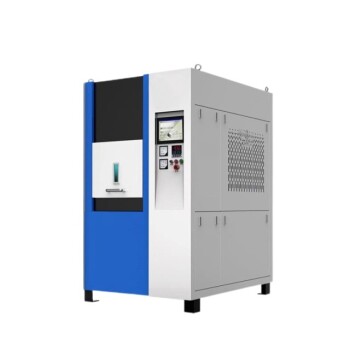
Spark Plasma Sintering Furnace SPS Furnace

Spark Plasma Sintering Furnace SPS Furnace

Discover the benefits of Spark Plasma Sintering Furnaces for rapid, low-temperature material preparation. Uniform heating, low cost & eco-friendly.

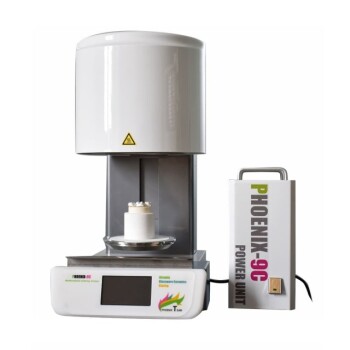
Dental Porcelain Zirconia Sintering Ceramic Vacuum Press Furnace

Dental Porcelain Zirconia Sintering Ceramic Vacuum Press Furnace

Get precise dental results with Dental Vacuum Press Furnace. Automatic temperature calibration, low noise tray, and touch screen operation. Order now!

Vacuum Heat Treat Furnace with Ceramic Fiber Liner

Vacuum Heat Treat Furnace with Ceramic Fiber Liner

Vacuum furnace with polycrystalline ceramic fiber insulation liner for excellent heat insulation and uniform temperature field. Choose from 1200℃ or 1700℃ max. working temperature with high vacuum performance and precise temperature control.

Ultra-High Temperature Graphite Vacuum Graphitization Furnace

Ultra-High Temperature Graphite Vacuum Graphitization Furnace

The ultra-high temperature graphitization furnace utilizes medium frequency induction heating in a vacuum or inert gas environment. The induction coil generates an alternating magnetic field, inducing eddy currents in the graphite crucible, which heats up and radiates heat to the workpiece, bringing it to the desired temperature. This furnace is primarily used for graphitization and sintering of carbon materials, carbon fiber materials, and other composite materials.

Automatic High Temperature Heated Hydraulic Press Machine with Heated Plates for Lab

Automatic High Temperature Heated Hydraulic Press Machine with Heated Plates for Lab

The High Temperature Hot Press is a machine specifically designed for pressing, sintering and processing materials in a high temperature environment. It is capable of operating in the range of hundreds of degrees Celsius to thousands of degrees Celsius for a variety of high temperature process requirements.

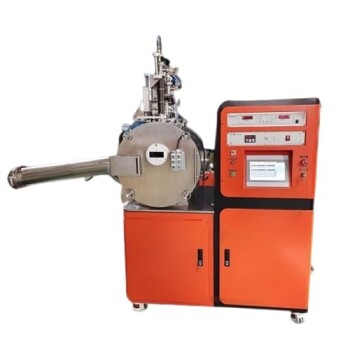
Small Vacuum Heat Treat and Tungsten Wire Sintering Furnace

Small Vacuum Heat Treat and Tungsten Wire Sintering Furnace

The small vacuum tungsten wire sintering furnace is a compact experimental vacuum furnace specially designed for universities and scientific research institutes. The furnace features a CNC welded shell and vacuum piping to ensure leak-free operation. Quick-connect electrical connections facilitate relocation and debugging, and the standard electrical control cabinet is safe and convenient to operate.

Twin Screw Extruder Plastic Granulation Machine

Twin Screw Extruder Plastic Granulation Machine

Twin screw extruder plastic granulation machine is designed for the mixing and processing experiments of engineering plastics, modified plastics, waste plastics and masterbatches.

High Pressure Laboratory Autoclave Reactor for Hydrothermal Synthesis

High Pressure Laboratory Autoclave Reactor for Hydrothermal Synthesis

Discover the applications of Hydrothermal Synthesis Reactor - a small, corrosion-resistant reactor for chemical labs. Achieve rapid digestion of insoluble substances in a safe and reliable way. Learn more now.

Platinum Sheet Electrode for Laboratory and Industrial Applications

Platinum Sheet Electrode for Laboratory and Industrial Applications

Elevate your experiments with our Platinum Sheet Electrode. Crafted with quality materials, our safe and durable models can be tailored to fit your needs.

Custom PTFE Teflon Parts Manufacturer for Acid and Alkali Resistant Chemical Powder Material Scoops

Custom PTFE Teflon Parts Manufacturer for Acid and Alkali Resistant Chemical Powder Material Scoops

Known for its excellent thermal stability, chemical resistance and electrical insulating properties, PTFE is a versatile thermoplastic material.

Graphite Vacuum Furnace High Thermal Conductivity Film Graphitization Furnace

Graphite Vacuum Furnace High Thermal Conductivity Film Graphitization Furnace

The high thermal conductivity film graphitization furnace has uniform temperature, low energy consumption and can operate continuously.

Graphite Vacuum Furnace Bottom Discharge Graphitization Furnace for Carbon Materials

Graphite Vacuum Furnace Bottom Discharge Graphitization Furnace for Carbon Materials

Bottom-out graphitization furnace for carbon materials, ultra-high temperature furnace up to 3100°C, suitable for graphitization and sintering of carbon rods and carbon blocks. Vertical design, bottom discharging, convenient feeding and discharging, high temperature uniformity, low energy consumption, good stability, hydraulic lifting system, convenient loading and unloading.

Laboratory Disc Rotary Mixer for Efficient Sample Mixing and Homogenization

Laboratory Disc Rotary Mixer for Efficient Sample Mixing and Homogenization

Efficient Laboratory Disc Rotary Mixer for Precise Sample Mixing, Versatile for Various Applications, DC Motor and Microcomputer Control, Adjustable Speed and Angle.

Vertical High Temperature Graphite Vacuum Graphitization Furnace

Vertical High Temperature Graphite Vacuum Graphitization Furnace

Vertical high temperature graphitization furnace for carbonization and graphitization of carbon materials up to 3100℃.Suitable for shaped graphitization of carbon fiber filaments and other materials sintered in a carbon environment.Applications in metallurgy, electronics, and aerospace for producing high-quality graphite products like electrodes and crucibles.

Graphite Vacuum Furnace Negative Material Graphitization Furnace

Graphite Vacuum Furnace Negative Material Graphitization Furnace

Graphitization furnace for battery production has uniform temperature and low energy consumption. Graphitization furnace for negative electrode materials: an efficient graphitization solution for battery production and advanced functions to enhance battery performance.

Vacuum Hot Press Furnace Machine for Lamination and Heating

Vacuum Hot Press Furnace Machine for Lamination and Heating

Experience clean and precise lamination with Vacuum Lamination Press. Perfect for wafer bonding, thin-film transformations, and LCP lamination. Order now!

Graphite Vacuum Continuous Graphitization Furnace

Graphite Vacuum Continuous Graphitization Furnace

High-temperature graphitization furnace is a professional equipment for graphitization treatment of carbon materials. It is a key equipment for the production of high-quality graphite products. It has high temperature, high efficiency and uniform heating. It is suitable for various high-temperature treatments and graphitization treatments. It is widely used in metallurgy, electronics, aerospace, etc. industry.

Horizontal High Temperature Graphite Vacuum Graphitization Furnace

Horizontal High Temperature Graphite Vacuum Graphitization Furnace

Horizontal Graphitization Furnace: This type of furnace is designed with the heating elements placed horizontally, allowing for uniform heating of the sample. It's well-suited for graphitizing large or bulky samples that require precise temperature control and uniformity.

Glassy Carbon Sheet RVC for Electrochemical Experiments

Glassy Carbon Sheet RVC for Electrochemical Experiments

Discover our Glassy Carbon Sheet - RVC. Perfect for your experiments, this high-quality material will elevate your research to the next level.

Manual High Temperature Heated Hydraulic Press Machine with Heated Plates for Lab

Manual High Temperature Heated Hydraulic Press Machine with Heated Plates for Lab

The High Temperature Hot Press is a machine specifically designed for pressing, sintering and processing materials in a high temperature environment. It is capable of operating in the range of hundreds of degrees Celsius to thousands of degrees Celsius for a variety of high temperature process requirements.


Leave Your Message