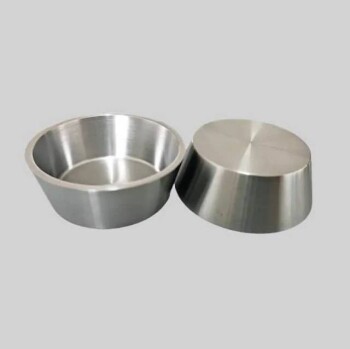
Customized titanium alloy crucibles provide the essential durability and containment required for rigorous liquid sodium corrosion studies. By integrating high-temperature sealing gaskets with threaded titanium lids, researchers achieve a stable testing environment capable of withstanding prolonged exposure to temperatures such as 773 K. This specific configuration solves the dual challenges of preventing sodium vapor leakage and maintaining chemical consistency.
Success in liquid sodium research depends on isolating the experiment from external variables. This crucible design guarantees data accuracy by maintaining a constant internal chemical environment and preventing hazardous leaks.
Material Performance Under Stress
High-Temperature Endurance
Titanium alloy is specifically selected for its ability to withstand extreme thermal conditions.
References confirm its suitability for long-duration testing at temperatures reaching 773 K.
Chemical Stability
Beyond heat resistance, the material offers excellent chemical stability.
This ensures the crucible itself resists degradation, preserving the validity of the corrosion test over long periods.
The Importance of the Sealing System
Preventing Sodium Vapor Leakage
The system utilizes a threaded titanium lid paired with a specialized high-temperature gasket.
This combination creates a reliable barrier that effectively traps sodium vapor inside the vessel.
Maintaining Internal Consistency
A tightly sealed environment allows for a constant internal chemical state.
This stability is crucial for ensuring that observed corrosion results are accurate and not skewed by environmental fluctuations or mass loss.
Understanding Operational Dependencies
The Critical Role of the Gasket
While the titanium body is robust, the system's integrity relies heavily on the gasket component.
The high-temperature gasket acts as the primary defense against leakage; if this seal is compromised, the chemical stability of the entire experiment fails.
Making the Right Choice for Your Research
To maximize the effectiveness of your corrosion studies, align the equipment features with your specific goals:
- If your primary focus is experimental safety: Rely on the threaded lid and gasket combination to prevent hazardous sodium vapor leaks.
- If your primary focus is data precision: Utilize the chemical stability of titanium to maintain a constant internal environment free from contamination.
By securing both the vessel integrity and the seal, you ensure that your corrosion data remains both accurate and reproducible.
Summary Table:
| Feature | Benefit in Liquid Sodium Research |
|---|---|
| Titanium Alloy Body | High-temperature endurance up to 773 K and chemical stability. |
| Threaded Lid Design | Provides a secure mechanical seal to contain internal pressure. |
| High-Temp Gaskets | Prevents hazardous sodium vapor leakage and mass loss. |
| Controlled Environment | Maintains internal chemical consistency for accurate data. |
Elevate Your Corrosion Research with KINTEK Precision
To achieve accurate and reproducible results in liquid sodium studies, you need equipment that withstands the most demanding chemical environments. KINTEK specializes in high-performance laboratory solutions, providing researchers with specialized high-temperature crucibles, ceramics, and high-pressure reactors tailored for extreme stress testing.
From our robust muffle and vacuum furnaces to our precision-engineered PTFE products and crucibles, KINTEK delivers the durability your laboratory demands. Ensure the integrity of your experiments and protect your data with our professional-grade consumables and systems.
Ready to upgrade your research infrastructure? Contact KINTEK today for a customized solution!
References
- Yi Xie. Tellurium Corrosion of Type 304/304L Stainless Steel, Iron, Chromium, and Nickel in High-Temperature Liquid Sodium. DOI: 10.3390/ma16206798
This article is also based on technical information from Kintek Solution Knowledge Base .
Related Products
- Custom Machined and Molded PTFE Teflon Parts Manufacturer with PTFE Crucible and Lid
- Electron Beam Evaporation Coating Tungsten Crucible and Molybdenum Crucible for High Temperature Applications
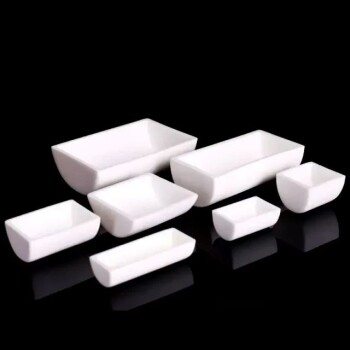
- Arc-Shaped Alumina Ceramic Crucible High Temperature Resistant for Engineering Advanced Fine Ceramics
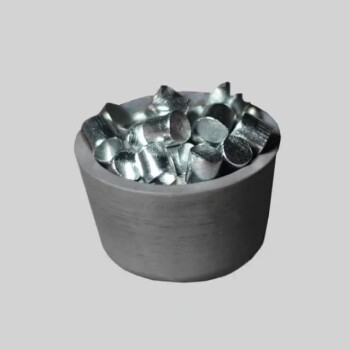
- High Purity Pure Graphite Crucible for Evaporation
- Zirconia Ceramic Gasket Insulating Engineering Advanced Fine Ceramics
People Also Ask
- Why is a PTFE crucible preferred for plasma etching? Ensure Chemical Integrity and Targeted Action
- What essential consumables are required for laboratory processes? Expert Guide to PTFE, Ceramics, and Crucibles
- Why are PTFE molds used for dental resin specimens? Ensure Pure Samples and Accurate Testing
- What are the advantages of using PTFE molds for preparing PUA hybrid films? Ensure High Purity and Easy Demolding
- What advantages do PTFE molds offer for composite polymer electrolyte casting? Ensure Defect-Free Membrane Fabrication