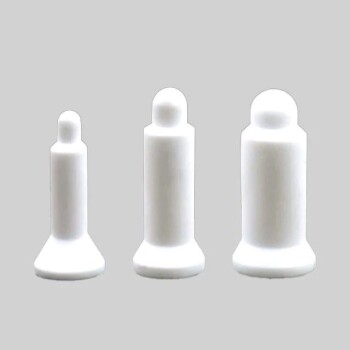
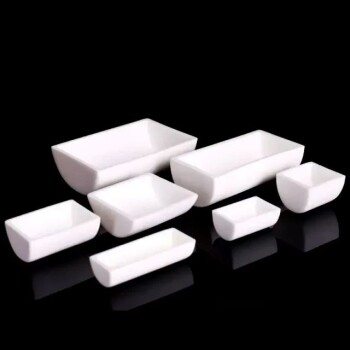
High-purity sintered alumina tubes provide a critical advantage in ammonia decomposition and alloy nitriding experiments by acting as a chemically neutral vessel. Unlike metallic tubes, they possess non-catalytic properties that prevent the ammonia from breaking down before it reaches the sample, ensuring the environment inside the furnace remains stable and predictable.
Core Takeaway The defining value of high-purity alumina is the elimination of experimental error caused by the furnace equipment itself. By preventing premature ammonia decomposition, these tubes allow for the precise control of nitrogen activity necessary to accurately assess a material's corrosion resistance.
Preserving Chemical Integrity
Avoiding Catalytic Interference
In experiments involving ammonia, the material of the furnace tube is a critical variable. Metallic tubes often act as catalysts, triggering the decomposition of ammonia gas as it travels through the hot zone.
High-purity sintered alumina is chemically inert and non-catalytic. It allows the ammonia to pass through the heating zone without reacting with the tube walls.
Ensuring Accurate Environment Control
To measure corrosion resistance or nitriding effects effectively, you must know the exact concentration of the gas reaching your sample.
Because alumina does not alter the gas composition, the "nitrogen activity" (the concentration of reactive nitrogen) remains stable. This ensures that the results you observe are caused by the intended experimental parameters, not by a depleted gas supply.
Thermal and Physical Robustness
Withstanding Extreme Temperatures
High-purity alumina is engineered for aggressive thermal environments. With a sintering temperature of 1810°C, these tubes can sustain a maximum working temperature of 1800°C.
This high thermal ceiling allows researchers to push experiments to extreme limits without risking the structural integrity of the furnace tube.
Stability in Reducing Atmospheres
Beyond simple heat resistance, alumina maintains its properties in challenging chemical environments.
It performs reliably under reducing, inert, or high-vacuum conditions. Additionally, the material offers excellent wear and abrasion resistance, extending the lifespan of the equipment even under rigorous use.
Understanding the Trade-offs
Structural Limitations at High Heat
While alumina is thermally stable, it is not immune to physical deformation under gravity.
The specific "sag temperature" for unsupported 99.6% purity alumina tubes is approximately 1600°C. If your experiment approaches this temperature, the tube must be properly supported to prevent bending or structural failure.
Handling and Brittleness
As a ceramic, alumina lacks the ductility of metal. While it offers superior wear resistance, it requires careful handling to avoid fracture from mechanical shock or rapid thermal cycling.
Making the Right Choice for Your Goal
To ensure your experimental setup yields valid data, align your equipment choice with your specific scientific objectives.
- If your primary focus is precise chemical data: Choose high-purity alumina to prevent catalytic interference and ensure the nitrogen activity at the sample matches your input calculations.
- If your primary focus is high-temperature durability: Utilize alumina for its ability to withstand up to 1800°C, but ensure adequate physical support if operating near or above 1600°C.
By selecting high-purity alumina, you convert your furnace tube from an active variable into a passive, reliable constant.
Summary Table:
| Feature | Advantage | Benefit to Experiment |
|---|---|---|
| Chemical Properties | Non-catalytic & Inert | Prevents premature ammonia breakdown |
| Max Temperature | Up to 1800°C | Supports extreme thermal processes |
| Stability | Reducing/Vacuum Resistance | Maintains integrity in harsh atmospheres |
| Nitrogen Activity | Precise Control | Ensures accurate corrosion/nitriding data |
| Wear Resistance | High Hardness | Extends equipment lifespan under rigourous use |
Elevate Your Material Research with KINTEK Precision
Don't let equipment variables compromise your experimental data. KINTEK specializes in high-performance laboratory solutions, providing the high-purity sintered alumina tubes and high-temperature furnaces (tube, muffle, vacuum, and CVD) essential for precise ammonia decomposition and alloy nitriding.
Whether you require specialized crushing systems, hydraulic presses, or advanced thermal equipment, our experts are ready to help you configure the perfect setup for your laboratory. Ensure the integrity of your next project—Contact KINTEK today for a customized consultation!
References
- Benjamin Aymans, Marcel A.J. Somers. Evaluation of the Corrosion Resistance of Heat Resistant Cast Alloys in Ammonia Containing Atmospheres: The Role of Oxide Scales. DOI: 10.1002/maco.70046
This article is also based on technical information from Kintek Solution Knowledge Base .
Related Products
- High Purity Alumina Granulated Powder for Engineering Advanced Fine Ceramics
- High Temperature Alumina (Al2O3) Furnace Tube for Engineering Advanced Fine Ceramics
- High Temperature Aluminum Oxide (Al2O3) Protective Tube for Engineering Advanced Fine Ceramics
- 1700℃ Laboratory High Temperature Tube Furnace with Alumina Tube
- 1400℃ Laboratory High Temperature Tube Furnace with Alumina Tube
People Also Ask
- What is the function of high-purity alumina powder in pack cementation? Ensure Uniform Aerospace Blade Coatings
- How should alumina powder be selected for polishing a disc electrode, and what is the procedure for removing scratches? Achieve a Perfect Mirror Finish
- What are the properties and handling precautions for alumina powder as a polishing material? Achieve a Flawless Finish with Precision
- Why is it necessary to apply alumina powder to graphite molds for TiC10/Cu-Al2O3? Ensure Smooth Release.
- What measures should be taken to prevent cross-contamination when using different sizes of alumina powder?