The primary advantage of using specialized supports in the out-of-pack aluminizing process is the complete physical isolation of the component from the donor powder mixture. This separation is critical for preventing powder particles from embedding into the coating, ensuring a pristine surface finish and eliminating the need for corrective post-processing.
By decoupling the sample from the powder source, specialized supports preserve the integrity of the coating surface, delivering a higher-quality finish while removing the operational burden of mechanical restoration.
Enhancing Surface Integrity
Preventing Particle Embedding
In coating processes where components are buried directly in the donor mixture, there is a high risk of particles fusing to the substrate. Specialized supports hold the sample at a distance, ensuring there is no physical contact between the powder and the component. This isolation prevents the common defect of powder particles becoming embedded in the growing coating layer.
Achieving a Superior Finish
The direct result of this separation is a significantly cleaner surface finish. Because the coating is formed solely through gas-phase transport rather than direct contact, the resulting aluminide layer is free from surface roughness and inclusions associated with sintered powder adhesion.
Streamlining the Workflow
Eliminating Post-Coating Machining
One of the most significant operational benefits is the reduction in downstream processing steps. When samples are coated in direct contact with powder, the surface often requires mechanical machining to restore the intended structure and remove stuck particles.
Preserving Component Geometry
By using supports, the coating process yields the intended coating structure immediately upon completion. This removes the risk of altering the component's geometry during aggressive cleaning or machining operations, making the process more efficient and predictable.
Understanding the Process Trade-offs
Balancing Setup vs. Post-Processing
The decision to use specialized supports represents a strategic trade-off between preparation and remediation. While implementing supports requires specific fixturing and setup within the reactor, this upfront effort is generally outweighed by the elimination of the mechanical machining phase.
Quality vs. Complexity
Opting for out-of-pack supports adds a layer of complexity to the reactor loading process compared to simple packing. However, this is the necessary price for achieving a high-quality surface that does not require subtractive manufacturing techniques to correct.
Making the Right Choice for Your Goal
To determine if specialized supports are required for your specific application, consider your priorities regarding surface tolerances and workflow efficiency.
- If your primary focus is surface quality: Use specialized supports to ensure a clean, contamination-free finish with no embedded powder particles.
- If your primary focus is process efficiency: Implement supports to eliminate the time and cost associated with post-coating mechanical machining.
By prioritizing physical separation during the coating cycle, you ensure a final product that meets structural specifications without the need for remedial work.
Summary Table:
| Feature | Direct Powder Contact | Specialized Support (Out-of-Pack) |
|---|---|---|
| Surface Quality | High risk of particle embedding | Pristine, inclusion-free finish |
| Post-Processing | Requires mechanical machining | No corrective processing needed |
| Geometry Integrity | Risk of damage during cleaning | Original geometry preserved |
| Workflow Efficiency | Fast setup, slow finishing | Upfront setup, immediate results |
| Coating Method | Solid-state / Gas transport | Pure gas-phase transport |
Elevate Your Coating Precision with KINTEK
Don't let powder contamination compromise your material integrity. KINTEK specializes in advanced laboratory solutions designed for high-performance thermal processing. Whether you are performing out-of-pack aluminizing or complex CVD processes, our comprehensive range of high-temperature furnaces (muffle, vacuum, and atmosphere), high-temperature high-pressure reactors, and precision ceramic crucibles provide the controlled environment necessary for a superior finish.
Why choose KINTEK?
- Expertise in Thermal Dynamics: Our systems ensure uniform gas-phase transport for consistent coating thickness.
- Reduced Operational Costs: Eliminate post-coating machining by utilizing our high-purity consumables and supports.
- Tailored Lab Solutions: From dental furnaces to isostatic hydraulic presses, we equip your facility for excellence.
Ready to streamline your workflow and achieve the intended coating structure the first time? Contact KINTEK today to discuss your project requirements!
References
- Jakub Jopek, Marcin Drajewicz. High Temperature Protective Coatings for Aeroengine Applications. DOI: 10.21062/mft.2023.052
This article is also based on technical information from Kintek Solution Knowledge Base .
Related Products
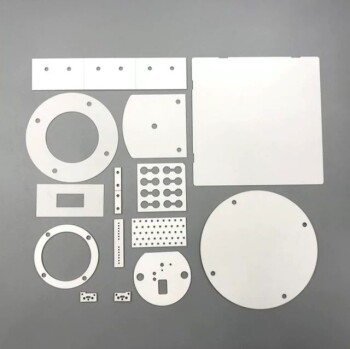
- Custom-Made Alumina Zirconia Special-Shaped Ceramic Plates for Engineering Advanced Fine Ceramics Processing
- Aluminized Ceramic Evaporation Boat for Thin Film Deposition
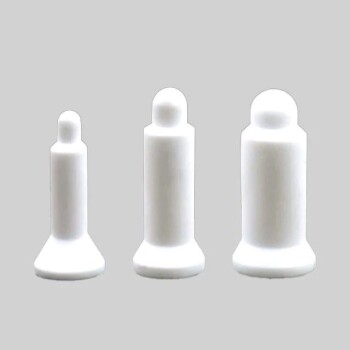
- Engineering Advanced Fine Alumina (Al₂O₃) Ceramic Positioning Pin Straight Bevel for Precision Applications
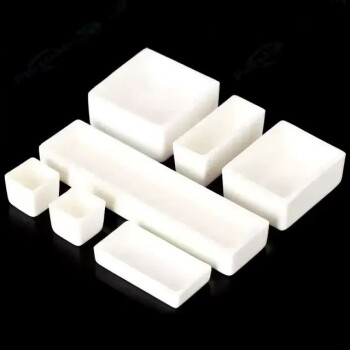
- Engineering Advanced Fine Alumina Al2O3 Ceramic Crucible for Laboratory Muffle Furnace
- Engineering Advanced Fine Ceramics Alumina Crucibles (Al2O3) for Thermal Analysis TGA DTA
People Also Ask
- What function do alumina ceramic plates serve as supports in the preparation of molecular sieve membranes?
- Why are ceramics more resistant to corrosion? Unlock the Secret to Unmatched Chemical Stability
- What are the process advantages of selecting an alumina plate for CuO nanofilm synthesis? Achieve Superior Purity
- How is alumina ceramic made? A Guide to Manufacturing Methods and Material Properties
- What are the applications of zirconia ceramics? Unlock High-Performance Solutions for Extreme Environments