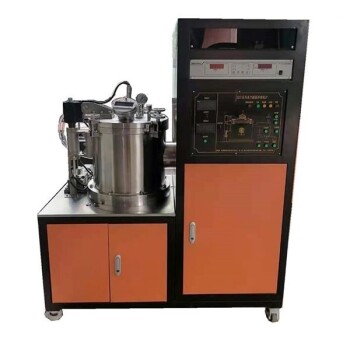
Knowledge vacuum induction melting furnace What are the factors that affect melting? Master Temperature, Pressure & Chemistry for High-Quality Results
Author avatar

Tech Team · Kintek Solution

Updated 2 months ago

What are the factors that affect melting? Master Temperature, Pressure & Chemistry for High-Quality Results


In a controlled melting process, the critical factors are not just about reaching a certain temperature, but about precisely managing the molten material's environment and chemistry. The key variables that affect the outcome are temperature, pressure, physical agitation, and the strategic addition of chemical components. Mastering these allows you to control the purity, homogeneity, and final composition of the melt.

The goal of industrial melting is rarely just to create a liquid. It is to produce a refined, homogenous liquid metal with a precise chemical composition, ready for casting. This requires balancing competing factors like temperature and pressure to facilitate desired reactions while preventing contamination and the loss of valuable elements.
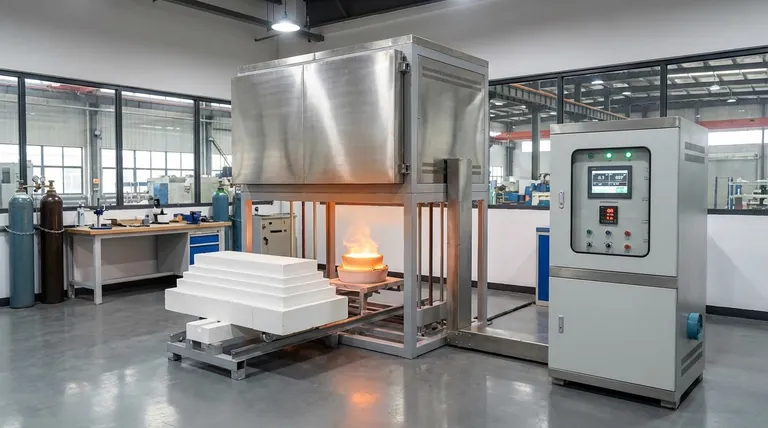
What are the factors that affect melting? Master Temperature, Pressure & Chemistry for High-Quality Results

The Role of Temperature in Refining

Temperature is the primary driver of the melting process, but its effects are more complex than simply turning a solid into a liquid. It acts as a catalyst for chemical reactions within the melt.

Accelerating Metallurgical Reactions

Higher temperatures increase the rate of desired reactions. This can speed up the refining process, allowing impurities to be removed more quickly and helping alloying elements dissolve into the molten pool efficiently.

The Risk of Contamination

However, elevated temperatures are a double-edged sword. They also accelerate unwanted reactions, particularly between the molten metal and the crucible or furnace lining. This can introduce contaminants like oxygen, compromising the purity of the final product.

Controlling the Environment with Pressure

The pressure of the atmosphere above the melt is a powerful tool for purification. In many advanced applications, this involves creating a strong vacuum.

The Power of Vacuum Smelting

Operating under a high vacuum (low pressure) helps pull unwanted dissolved gases, like hydrogen and nitrogen, out of the molten metal. It also helps remove impurities that have a higher vapor pressure than the base metal, causing them to essentially boil off and be extracted.

Protecting Volatile Elements

A vacuum is not always the answer. If you are creating an alloy with volatile elements (those that evaporate easily), a high vacuum will pull them out of the melt along with the impurities. To prevent this loss, the process is often backfilled with an inert gas, like argon, to raise the pressure and keep these valuable elements in the solution.

Achieving Homogeneity and Composition

A molten pool can suffer from variations in temperature and chemical makeup. Ensuring the final product is uniform requires managing both physical mixing and the chemical state of the melt.

The Importance of Stirring

Sufficient stirring or agitation of the molten pool is essential. It ensures that temperature is distributed evenly, prevents hot spots, and guarantees that any added alloying elements are mixed thoroughly for a perfectly uniform composition.

The Strategic Sequence of Alloying

The order and timing of additions are critical. For instance, active alloying components that react strongly with oxygen (like titanium or aluminum) should only be added after the melt has been fully deoxidized. Adding them too early would cause them to be consumed in reactions with oxygen, wasting the material and failing to achieve the desired final chemistry.

Understanding the Trade-offs

Optimizing a melting process is an exercise in balancing competing factors. There is no single "best" setting, only the best setting for a specific goal.

Temperature vs. Purity

The central trade-off is speed versus quality. A higher temperature accelerates the process but increases the risk of contamination from the crucible. A lower temperature protects purity but extends the time required for refining.

Vacuum vs. Alloy Retention

A high vacuum is excellent for removing gaseous impurities but can lead to the loss of valuable volatile alloying elements. You must balance the need for purification against the need to maintain the target composition, often using an inert gas backfill as a compromise.

Optimizing Your Melting Process

Your approach should be dictated by the primary goal for your material. Each objective requires a different balance of the core factors.

  • If your primary focus is maximum purity: Emphasize achieving the highest possible vacuum and carefully managing temperature to minimize reactions with the crucible.
  • If your primary focus is a precise alloy composition: Stress the importance of a controlled sequence of additions, performing deoxidation first, and using an inert gas atmosphere to retain volatile elements.
  • If your primary focus is process efficiency: Prioritize finding the optimal temperature that accelerates reactions without introducing unacceptable levels of contamination, thereby minimizing furnace time.

By understanding how these variables interact, you can move from simply melting metal to engineering a material with predictable, high-quality results.

Summary Table:

Factor Key Role in Melting Key Consideration
Temperature Drives refining reactions and alloy dissolution. Higher temps speed up the process but increase contamination risk.
Pressure Removes dissolved gases and volatile impurities. A vacuum purifies but can also remove valuable volatile alloying elements.
Agitation Ensures uniform temperature and chemical composition. Prevents hot spots and guarantees a homogenous final product.
Chemical Additions Determines the final alloy composition. Sequence is critical; deoxidize before adding active elements like titanium.

Ready to Engineer Your Perfect Melt?

Achieving precise control over temperature, pressure, and chemistry is key to producing high-purity, homogenous metals. The right lab equipment is fundamental to mastering this balance.

KINTEK specializes in the advanced lab equipment and consumables you need to optimize your melting process. Whether your goal is maximum purity, precise alloy composition, or improved efficiency, we have the solutions to help you succeed.

Contact our experts today to discuss your specific application and discover how KINTEK can enhance your laboratory's capabilities.

Visual Guide
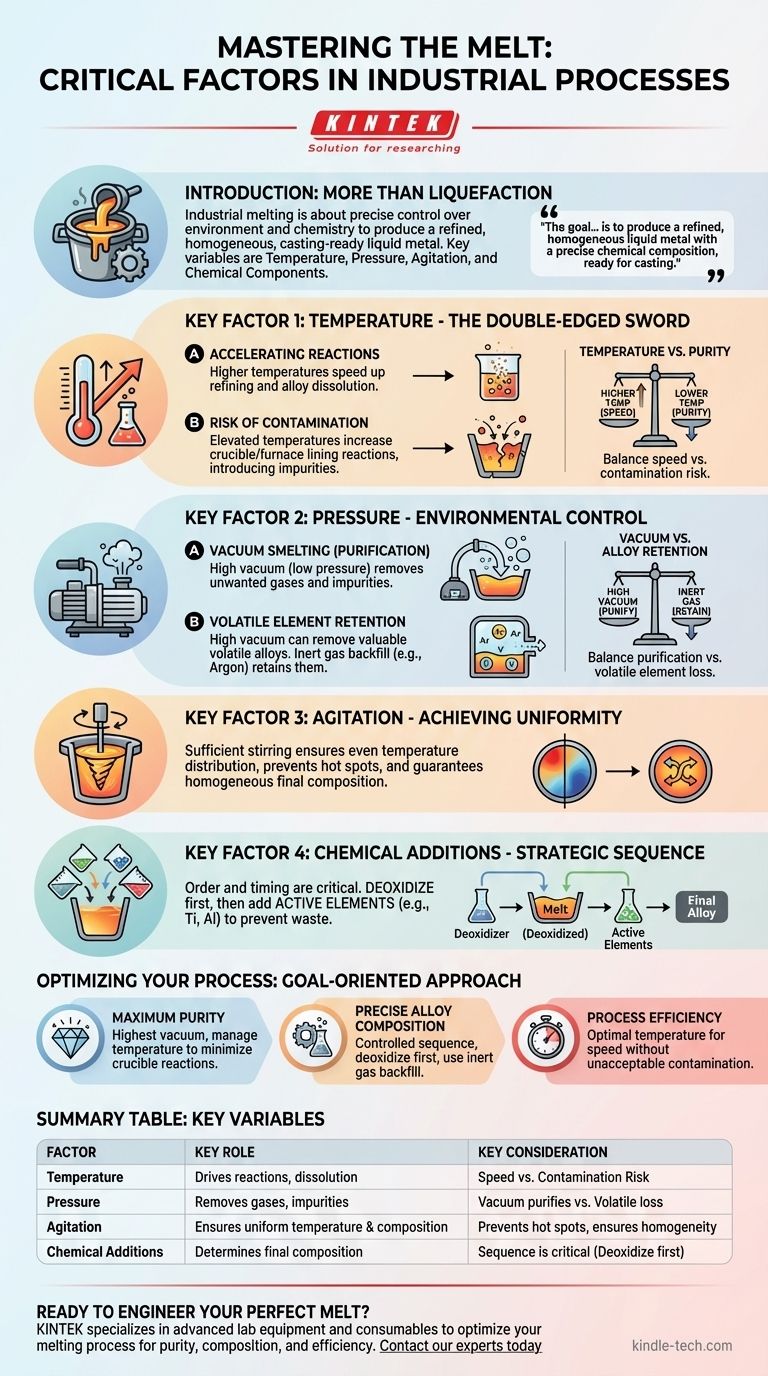
What are the factors that affect melting? Master Temperature, Pressure & Chemistry for High-Quality Results Visual Guide

Related Products

People Also Ask

Related Products

Non Consumable Vacuum Arc Induction Melting Furnace

Non Consumable Vacuum Arc Induction Melting Furnace

Explore the benefits of Non-Consumable Vacuum Arc Furnace with high melting point electrodes. Small, easy to operate & eco-friendly. Ideal for laboratory research on refractory metals & carbides.

2200 ℃ Tungsten Vacuum Heat Treat and Sintering Furnace

2200 ℃ Tungsten Vacuum Heat Treat and Sintering Furnace

Experience the ultimate refractory metal furnace with our Tungsten vacuum furnace. Capable of reaching 2200℃, perfect for sintering advanced ceramics and refractory metals. Order now for high-quality results.

Vacuum Arc Induction Melting Furnace

Vacuum Arc Induction Melting Furnace

Discover the power of Vacuum Arc Furnace for melting active & refractory metals. High-speed, remarkable degassing effect, and free of contamination. Learn more now!

Vacuum Heat Treat Furnace and Levitation Induction Melting Furnace

Vacuum Heat Treat Furnace and Levitation Induction Melting Furnace

Experience precise melting with our Vacuum Levitation Melting Furnace. Ideal for high melting point metals or alloys, with advanced technology for effective smelting. Order now for high-quality results.

Lab-Scale Vacuum Induction Melting Furnace

Lab-Scale Vacuum Induction Melting Furnace

Get precise alloy composition with our Vacuum Induction Melting Furnace. Ideal for aerospace, nuclear energy, and electronic industries. Order now for effective smelting and casting of metals and alloys.

High Temperature Muffle Oven Furnace for Laboratory Debinding and Pre Sintering

High Temperature Muffle Oven Furnace for Laboratory Debinding and Pre Sintering

KT-MD High temperature debinding and pre-sintering furnace for ceramic materials with various molding processes. Ideal for electronic components such as MLCC and NFC.

Graphite Vacuum Furnace Bottom Discharge Graphitization Furnace for Carbon Materials

Graphite Vacuum Furnace Bottom Discharge Graphitization Furnace for Carbon Materials

Bottom-out graphitization furnace for carbon materials, ultra-high temperature furnace up to 3100°C, suitable for graphitization and sintering of carbon rods and carbon blocks. Vertical design, bottom discharging, convenient feeding and discharging, high temperature uniformity, low energy consumption, good stability, hydraulic lifting system, convenient loading and unloading.

Mesh belt controlled atmosphere furnace

Mesh belt controlled atmosphere furnace

Discover our KT-MB mesh belt sintering furnace - perfect for high-temperature sintering of electronic components & glass insulators. Available for open air or controlled atmosphere environments.

Vacuum Heat Treat and Molybdenum Wire Sintering Furnace for Vacuum Sintering

Vacuum Heat Treat and Molybdenum Wire Sintering Furnace for Vacuum Sintering

A vacuum molybdenum wire sintering furnace is a vertical or bedroom structure, which is suitable for withdrawal, brazing, sintering and degassing of metal materials under high vacuum and high temperature conditions. It is also suitable for dehydroxylation treatment of quartz materials.

Laboratory Rapid Thermal Processing (RTP) Quartz Tube Furnace

Laboratory Rapid Thermal Processing (RTP) Quartz Tube Furnace

Get lightning-fast heating with our RTP Rapid Heating Tube Furnace. Designed for precise, high-speed heating and cooling with convenient sliding rail and TFT touch screen controller. Order now for ideal thermal processing!

Vertical High Temperature Graphite Vacuum Graphitization Furnace

Vertical High Temperature Graphite Vacuum Graphitization Furnace

Vertical high temperature graphitization furnace for carbonization and graphitization of carbon materials up to 3100℃.Suitable for shaped graphitization of carbon fiber filaments and other materials sintered in a carbon environment.Applications in metallurgy, electronics, and aerospace for producing high-quality graphite products like electrodes and crucibles.

Vacuum Heat Treat Sintering Brazing Furnace

Vacuum Heat Treat Sintering Brazing Furnace

A vacuum brazing furnace is a type of industrial furnace used for brazing, a metalworking process that joins two pieces of metal using a filler metal that melts at a lower temperature than the base metals. Vacuum brazing furnaces are typically used for high-quality applications where a strong, clean joint is required.

Vacuum Heat Treat and Pressure Sintering Furnace for High Temperature Applications

Vacuum Heat Treat and Pressure Sintering Furnace for High Temperature Applications

Vacuum pressure sintering furnaces are designed for high temperature hot pressing applications in metal and ceramic sintering. Its advanced features ensure precise temperature control, reliable pressure maintenance, and a robust design for seamless operation.

600T Vacuum Induction Hot Press Furnace for Heat Treat and Sintering

600T Vacuum Induction Hot Press Furnace for Heat Treat and Sintering

Discover the 600T Vacuum Induction Hot Press Furnace, designed for high-temperature sintering experiments in vacuum or protected atmospheres. Its precise temperature and pressure control, adjustable working pressure, and advanced safety features make it ideal for nonmetal materials, carbon composites, ceramics, and metal powders.

Molybdenum Vacuum Heat Treat Furnace

Molybdenum Vacuum Heat Treat Furnace

Discover the benefits of a high-configuration molybdenum vacuum furnace with heat shield insulation. Ideal for high-purity, vacuum environments like sapphire crystal growth and heat treatment.

Ultra-High Temperature Graphite Vacuum Graphitization Furnace

Ultra-High Temperature Graphite Vacuum Graphitization Furnace

The ultra-high temperature graphitization furnace utilizes medium frequency induction heating in a vacuum or inert gas environment. The induction coil generates an alternating magnetic field, inducing eddy currents in the graphite crucible, which heats up and radiates heat to the workpiece, bringing it to the desired temperature. This furnace is primarily used for graphitization and sintering of carbon materials, carbon fiber materials, and other composite materials.

2200 ℃ Graphite Vacuum Heat Treat Furnace

2200 ℃ Graphite Vacuum Heat Treat Furnace

Discover the power of the KT-VG Graphite Vacuum Furnace - with a maximum working temperature of 2200℃, it's perfect for vacuum sintering of various materials. Learn more now.

Laboratory Muffle Oven Furnace Bottom Lifting Muffle Furnace

Laboratory Muffle Oven Furnace Bottom Lifting Muffle Furnace

Efficiently produce batches with excellent temperature uniformity using our Bottom Lifting Furnace. Features two electric lifting stages and advanced temperature control up to 1600℃.

1200℃ Split Tube Furnace with Quartz Tube Laboratory Tubular Furnace

1200℃ Split Tube Furnace with Quartz Tube Laboratory Tubular Furnace

KT-TF12 split tube furnace: high-purity insulation, embedded heating wire coils, and max. 1200C. Widely used for new materials and chemical vapour deposition.

Horizontal High Temperature Graphite Vacuum Graphitization Furnace

Horizontal High Temperature Graphite Vacuum Graphitization Furnace

Horizontal Graphitization Furnace: This type of furnace is designed with the heating elements placed horizontally, allowing for uniform heating of the sample. It's well-suited for graphitizing large or bulky samples that require precise temperature control and uniformity.


Leave Your Message