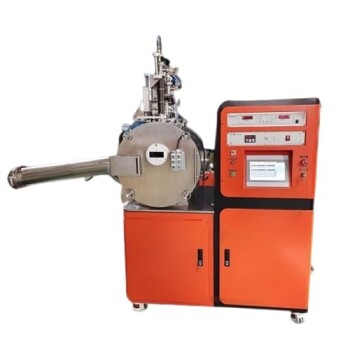
Vacuum arc melting serves as the primary processing method for creating high-purity ferrochrome (CrFe) binary alloy samples. By utilizing a high-energy electric arc within a controlled inert atmosphere, this equipment completely melts metal components to ensure the alloy is chemically uniform, precisely proportioned, and free from atmospheric contaminants.
The core function of this equipment is to eliminate variables: it transforms raw, high-purity metals into a homogenized alloy specimen that provides a reliable baseline for studying complex oxidation behaviors.
The Mechanism of Action
High-Energy Arc Melting
The equipment operates by generating a high-energy electric arc.
This intense heat source ensures the complete melting of high-purity metal components.
The process is designed to handle materials with high melting points, ensuring that both the Iron (Fe) and Chromium (Cr) reach a fully liquid state for proper mixing.
Controlled Inert Atmosphere
The melting process does not occur in open air; it takes place under a controlled inert atmosphere.
This environment is critical because it isolates the molten metal from the surrounding air.
By removing oxygen and other atmospheric gases, the equipment prevents the metals from reacting chemically during the heating phase.
Critical Functions in Alloy Preparation
Preventing Impurity Introduction
The primary enemy of high-quality alloy preparation is atmospheric contamination.
Vacuum arc melting effectively prevents the introduction of atmospheric impurities that would otherwise compromise the material.
This is particularly vital for reactive elements like Chromium, which are prone to oxidative loss if exposed to oxygen during the melt.
Ensuring Homogeneity
Creating a binary alloy requires more than just melting two metals; they must be perfectly mixed.
The equipment ensures a high degree of homogeneity across the alloy components.
This uniformity is essential for research, as it guarantees that the material properties are consistent throughout the entire specimen.
Precise Proportioning
Scientific validity depends on knowing exactly what is in your sample.
This process ensures precise proportioning of the alloy components.
Because the environment is sealed and controlled, there is minimal loss of material to evaporation or oxidation, ensuring the final ratio matches the initial input.
The Necessity of Environmental Control
Why Standard Melting Fails
Melting ferrochrome without vacuum or inert gas protection leads to immediate degradation.
Reactive elements, such as Chromium, are highly susceptible to oxidative loss when heated in standard atmospheres.
Without the vacuum arc environment, the resulting material would contain oxides and impurities, rendering it useless for high-precision experimentation.
Ensuring Experimental Validity
Producing High-Quality Initial Specimens
The ultimate output of this machinery is a high-quality initial specimen.
These specimens are specifically prepared to be used in further research, such as studying the oxidation behavior of alloys in high-temperature molten electrolytes.
By starting with a pure, homogeneous sample, researchers can be confident that their test results reflect the true properties of the alloy, not defects in the manufacturing process.
Making the Right Choice for Your Goal
- If your primary focus is material purity: Rely on vacuum arc melting to prevent atmospheric impurities and oxidative loss of reactive elements like Chromium.
- If your primary focus is experimental accuracy: Use this equipment to ensure high homogeneity, providing a consistent baseline for oxidation studies.
Ultimately, vacuum arc melting is not just a heating process; it is a purification and stabilization step that guarantees the scientific integrity of your ferrochrome alloy.
Summary Table:
| Feature | Function in CrFe Preparation | Benefit to Research |
|---|---|---|
| High-Energy Arc | Complete melting of Fe and Cr | Ensures uniform chemical mixing |
| Inert Atmosphere | Prevents atmospheric contamination | Eliminates oxidative loss of Chromium |
| Vacuum Control | Removes oxygen and impurities | Guarantees high-purity initial specimens |
| Process Stability | Precise proportioning of metals | Maintains exact binary alloy ratios |
Elevate Your Material Research with KINTEK Precision
Achieving the scientific integrity required for high-precision experimentation starts with superior alloy preparation. At KINTEK, we specialize in high-performance laboratory equipment designed to meet the rigorous demands of material science.
Our extensive portfolio includes advanced induction melting and vacuum arc solutions, alongside a comprehensive range of high-temperature furnaces (muffle, tube, vacuum, CVD), crushing and milling systems, and hydraulic presses. Whether you are studying the oxidation behavior of alloys or developing new electrochemical processes, our high-temperature high-pressure reactors, electrolytic cells, and specialized ceramics and crucibles provide the reliability your lab needs.
Ready to ensure the homogeneity and purity of your specimens? Contact us today to find the perfect solution for your laboratory!
References
- M. Esmaily, Antoine Allanore. Oxidation and electrical properties of chromium–iron alloys in a corrosive molten electrolyte environment. DOI: 10.1038/s41598-020-71903-0
This article is also based on technical information from Kintek Solution Knowledge Base .
Related Products
- Non Consumable Vacuum Arc Induction Melting Furnace
- Vacuum Induction Melting Spinning System Arc Melting Furnace
- Vacuum Arc Induction Melting Furnace
- Lab-Scale Vacuum Induction Melting Furnace
- Vacuum Heat Treat Furnace and Levitation Induction Melting Furnace
People Also Ask
- What is the use of induction melting furnace? Achieve Fast, Clean, and Precise Metal Melting
- What are the advantages of induction melting furnace? Achieve Purity, Efficiency, and Safety
- What is the temperature range of the induction melting furnace? Find the Right Heat for Your Metals
- How do specialized industrial-grade small melting furnaces address challenges in precision jewelry casting? Expert Guide
- How do vacuum induction or arc melting furnaces facilitate the synthesis of U-Al-C MAX phases? Precision Heat & Purity