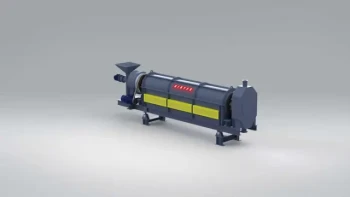
A rotary kiln system consists of three primary stages: a pre-heating zone, the central rotary reactor, and a cooling zone. While the core component is the tilted, rotating cylindrical reactor supported by tyres and rollers, a complete system integrates heat recuperators (pre-heaters) and product coolers to maximize thermal efficiency and ensure safe material handling.
Core Takeaway: A rotary kiln is not merely a standalone heating device; it is a holistic thermal loop. The system's efficiency relies heavily on "recuperative" components that capture waste heat from exhaust gases and hot product to preheat incoming material and combustion air.
The Core Processing Unit: The Rotary Reactor
The heart of the system is the rotary reactor itself. This is where the actual thermal processing—such as calcination, reduction, or sintering—takes place.
The Shell and Refractory Lining
The reactor body is a horizontal circular cylinder known as the shell. It is tilted slightly to facilitate the axial movement of material through the system.
Inside the shell lies the refractory lining. This non-conductive layer serves two critical purposes: it protects the steel shell from extreme temperatures and minimizes thermal losses to the outside environment.
Drive and Support Mechanisms
Because the shell is heavy and rotates continuously, it requires robust mechanical support. The cylinder rests on support tyres (also called riding rings) that sit on heavy-duty rollers.
The rotation is powered by a girth gear connected to a drive train. This train typically includes electric motors (often DC) and gearboxes, ensuring the kiln turns at a precise speed to mix the material homogeneously.
Optimizing Thermal Efficiency: The Peripheral System
According to high-efficiency design principles, the reactor should not operate in isolation. Peripheral components are essential for managing energy consumption.
Pre-heaters (Heat Recuperators)
To reduce fuel consumption, modern systems utilize pre-heaters. These devices capture the hot exhaust gas exiting the kiln and use it to heat the raw feed material before it enters the reactor.
This step ensures that the material is already at an elevated temperature when processing begins, significantly lowering the energy load on the main burner.
Cooling Systems
At the discharge end, coolers are employed to lower the temperature of the final product for safe handling and storage.
However, these coolers serve a dual purpose. They act as energy recuperators by transferring heat from the hot product to the incoming combustion air, further closing the energy loop.
Material Handling and Control
For the system to function continuously, the flow of material must be mechanized and monitored.
Feeding and Discharging Devices
The feeding system introduces raw material into the kiln, often using a screw feeder for precise, quantitative conveying.
On the opposite end, the discharging device manages the exit of the processed material. This is often integrated directly with the cooling unit, such as a drum cooler, to streamline the workflow.
Control Units
A central control unit orchestrates the entire operation. It regulates the drive speed, temperature profiles, and feed rates to maintain consistent product quality.
Understanding the Trade-offs
While integrating these components creates a highly efficient system, it introduces complexity that must be managed.
Capital Cost vs. Operational Savings
Adding extensive recuperation equipment (pre-heaters and complex coolers) significantly increases the initial investment and physical footprint of the plant.
However, for operations with high fuel costs or high-volume throughput, the reduction in operational expenses usually offsets the upfront capital cost over time.
Maintenance Complexity
A simple kiln is easy to maintain, but a full system introduces more failure points. Refractory linings require regular replacement, and additional mechanical parts in feeders and coolers increase the maintenance schedule.
Making the Right Choice for Your Goal
Selecting the right configuration depends on balancing energy goals with operational constraints.
- If your primary focus is Fuel Efficiency: Prioritize a system with advanced pre-heaters and air-recuperating coolers to minimize external energy input.
- If your primary focus is Material Homogeneity: Focus on the quality of the drive gear and internal mixing capabilities of the reactor shell to ensure consistent turnover.
- If your primary focus is Low Maintenance: Opt for a simpler feeding and discharge configuration, accepting lower thermal efficiency in exchange for higher mechanical reliability.
The most successful kiln systems are those where the mechanical robustness of the reactor is perfectly matched with the thermal efficiency of its peripheral support equipment.
Summary Table:
| Component | Primary Function | Key Benefit |
|---|---|---|
| Rotary Shell | Houses the thermal reaction | Durable containment for high-temp processing |
| Refractory Lining | Protects the steel shell | Minimizes thermal loss and prevents damage |
| Pre-heaters | Captures exhaust gas heat | Significantly reduces fuel consumption |
| Support Tyres/Rollers | Mechanical rotation support | Ensures stable, continuous operation |
| Cooling Zone | Lowers product temperature | Recuperates heat for combustion air efficiency |
| Control Unit | Regulates speed and heat | Maintains consistent product quality and safety |
Maximize Your Thermal Efficiency with KINTEK
Ready to upgrade your material processing capabilities? KINTEK specializes in advanced laboratory and industrial equipment, including high-performance rotary kilns, muffle furnaces, and vacuum systems. Whether you are focused on calcination, sintering, or battery research, our engineering experts provide the tools you need for precise, energy-efficient results.
From high-temperature high-pressure reactors to precision milling and cooling solutions, we support your entire workflow with industry-leading durability.
Enhance your production today—contact our technical team at KINTEK for a custom solution!
Related Products
- Electric Rotary Kiln Small Rotary Furnace Biomass Pyrolysis Plant
- Electric Rotary Kiln Continuous Working Small Rotary Furnace Heating Pyrolysis Plant
- Electric Rotary Kiln Small Rotary Furnace for Activated Carbon Regeneration
- Electric Rotary Kiln Pyrolysis Furnace Plant Machine Calciner Small Rotary Kiln Rotating Furnace
- Vacuum Sealed Continuous Working Rotary Tube Furnace Rotating Tube Furnace
People Also Ask
- What is the temperature of a rotating kiln? It Depends on Your Material and Process Goal
- What are the principles of a rotary kiln? Master the Mechanics of High-Temperature Processing
- What are the different types of calciners? A Guide to Selecting the Right Thermal Processing Equipment
- How are rotary kilns heated? Direct vs. Indirect Heating Methods Explained
- Is rotary kiln a furnace? Discover the Key Differences for Industrial Processing