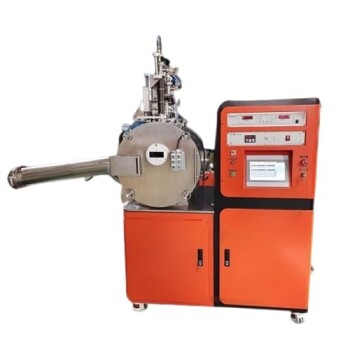
A standard PECVD system is defined by four fundamental pillars: a vacuum chamber, a precise gas delivery system for introducing precursors, a high-frequency plasma generator (typically RF), and a specialized substrate holder.
These core elements work in unison to enable the deposition of thin films at lower temperatures by utilizing electrical energy rather than relying solely on thermal energy.
Core Takeaway: While the vacuum chamber and gas lines provide the physical environment, the defining characteristic of a PECVD system is the plasma generator, which dissociates reactive gases to allow high-rate film deposition without the stress and damage associated with high-temperature processing.
The Core Deposition Environment
The Vacuum Chamber
The chamber acts as the primary vessel for the process. It must maintain a strictly controlled low-pressure environment to ensure the purity of the deposition and the stability of the plasma.
Substrate Holder and Heating
Located inside the chamber, the substrate holder supports the material being coated. It includes a heating mechanism to maintain the sample at the required process temperature.
Thermal Control Functions
Beyond facilitating the reaction, the heater helps remove impurities, such as water vapor, from the substrate surface. This improves the adhesion of the deposited film.
The Plasma Generation System
RF Power Supply
The heart of the "deposition system" is the Radio Frequency (RF) power supply. This unit, often operating at 13.56 MHz, provides the energy necessary to ionize the reactive gases into plasma.
Auto-Matching Network
To ensure efficient energy transfer, an auto-matching network is placed between the power supply and the electrodes. It adjusts impedance automatically to minimize reflected power and maintain stable plasma.
The Electrode Configuration
The system typically employs an RF electrode to couple the energy into the gas. This creates the electric field required to dissociate the precursor gases.
Gas and Pressure Management
Mass Flow Controllers (MFCs)
The gas delivery system relies on Mass Flow Controllers to regulate the introduction of precursor gases with extreme precision. These often handle flow ranges up to 200 sccm to ensure exact chemical composition.
Gas Showerhead
To ensure uniformity across the substrate, gases are often introduced through a "showerhead" mechanism. This distributes the precursor gas evenly over the surface of the wafer or sample.
Vacuum and Scrubber Systems
A complex pumping system (mechanical, Roots, or molecular pumps) maintains the required pressure. A scrubber system is frequently integrated to treat hazardous exhaust gases before they are vented.
Control and Safety Architecture
Computerized Control (PLC)
Modern PECVD systems utilize a PC-based control system integrating a PLC (Programmable Logic Controller). This allows for recipe storage, historical data logging, and fully automatic operation.
Safety Interlocks
The system is protected by a safety network. This includes interlocks for vacuum integrity and temperature limits, ensuring the machine shuts down if safe operating parameters are violated.
Water Cooling System
High-energy components, such as the RF generator and various pumps, require active cooling. A water cooling system prevents overheating and triggers alarms if temperatures exceed set limits.
Understanding the Operational Trade-offs
Process Flexibility vs. System Complexity
The inclusion of granular controls—such as auto-matching networks and programmable recipes—greatly enhances film quality and repeatability. However, this increases the complexity of maintenance and the potential for component failure compared to simpler, manual systems.
Deposition Rate vs. Film Quality
PECVD allows for high deposition rates and low-temperature processing, which reduces stress on the substrate. The trade-off is that low-temperature films may sometimes exhibit different structural properties (e.g., becoming amorphous rather than crystalline) compared to high-temperature CVD.
Making the Right Choice for Your Goal
When evaluating or configuring a PECVD system, your hardware priorities should shift based on your end goal.
- If your primary focus is Research and Development: Prioritize a versatile Control System that allows for easy recipe modification and extensive data logging to experiment with different parameters.
- If your primary focus is High-Volume Production: Prioritize a robust Vacuum and Scrubber System and automated handling capabilities to maximize throughput and safety compliance.
Success in PECVD relies not just on generating plasma, but on the precise synchronization of pressure, temperature, and gas flow.
Summary Table:
| Component Category | Key Hardware | Primary Function |
|---|---|---|
| Plasma Generation | RF Power Supply & Matching Network | Ionizes precursor gases to enable low-temp deposition |
| Environment Control | Vacuum Chamber & Pumping System | Maintains low-pressure purity and stable plasma environment |
| Gas Management | MFCs & Gas Showerhead | Precisely regulates and distributes precursor gas flow |
| Thermal & Support | Substrate Holder & Heating Element | Supports material and maintains optimal process temperature |
| System Architecture | PLC Control & Safety Interlocks | Manages automated recipes, data logging, and safety protocols |
Elevate Your Thin Film Research with KINTEK
Precision in PECVD requires the perfect synchronization of plasma, pressure, and temperature. KINTEK specializes in advanced laboratory equipment and consumables, providing industry-leading solutions for your most demanding deposition needs. Our comprehensive portfolio includes high-performance PECVD and CVD systems, high-temperature furnaces, and vacuum solutions tailored for both R&D and high-volume production.
From battery research tools and high-pressure reactors to essential PTFE and ceramic consumables, we provide the technical expertise and robust hardware necessary to ensure repeatable, high-quality results.
Ready to optimize your laboratory's capabilities? Contact us today to discuss your project requirements and discover how KINTEK can drive your innovation forward.
Related Products
- RF PECVD System Radio Frequency Plasma-Enhanced Chemical Vapor Deposition RF PECVD
- Chemical Vapor Deposition CVD Equipment System Chamber Slide PECVD Tube Furnace with Liquid Gasifier PECVD Machine
- Inclined Rotary Plasma Enhanced Chemical Vapor Deposition PECVD Equipment Tube Furnace Machine
- Inclined Rotary Plasma Enhanced Chemical Vapor Deposition PECVD Equipment Tube Furnace Machine
- 915MHz MPCVD Diamond Machine Microwave Plasma Chemical Vapor Deposition System Reactor
People Also Ask
- What is plasma enhanced chemical vapour deposition PECVD used for? Enable Low-Temp Thin Films for Electronics & Solar
- What is the role of RF-PECVD in VFG preparation? Mastering Vertical Growth and Surface Functionality
- What is an example of PECVD? RF-PECVD for High-Quality Thin Film Deposition
- What is plasma enhanced chemical Vapour deposition process used for fabrication of? A Guide to Low-Temperature Thin Films
- What is plasma CVD? Unlock Low-Temperature Thin Film Deposition for Sensitive Materials