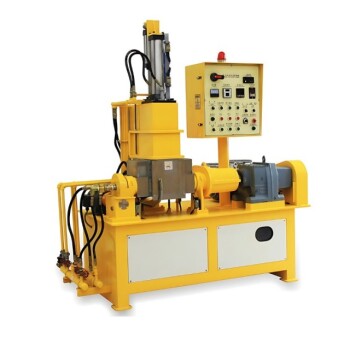
The primary advantage of using a laboratory ultrasonic homogenizer for polyhydroxyalkanoates (PHA) extraction lies in its ability to replace complex chemical processes with rapid physical disruption. By leveraging the cavitation effect generated by high-frequency ultrasound, this method efficiently breaks down cell walls to release intracellular biopolymers. It is particularly valuable for small-scale research, offering a cleaner and faster workflow for strains such as Bacillus flexus.
Ultrasonic homogenization optimizes PHA extraction by substituting harsh chemical reagents with mechanical cavitation, delivering a rapid and simplified method ideal for early-stage research and development.
The Mechanics of Ultrasonic Extraction
Harnessing the Cavitation Effect
The core mechanism driving this efficiency is cavitation. High-frequency ultrasound waves create microscopic bubbles in the liquid medium.
Physical Cell Disruption
When these bubbles implode, they generate intense physical force. This force mechanically disrupts the cell walls of bacteria, effectively releasing the intracellular PHA without requiring chemical digestion.
Subsequent Separation
Once the cell walls are breached, the mixture undergoes centrifugal separation. Because the cells are physically broken, isolating the biopolymer from the cell debris becomes a straightforward mechanical process.
Key Operational Benefits for PHA Research
Elimination of Complex Reagents
One of the most significant advantages is the removal of complex chemical reagents from the workflow.
Traditional methods often rely on solvents or enzymes to lyse cells. Ultrasonic homogenization bypasses this requirement, reducing the need for hazardous or expensive consumables.
Accelerated Processing Speeds
The use of ultrasound offers rapid processing speeds compared to chemical methods.
Chemical lysis often requires incubation time for reactions to occur. Physical cavitation is immediate, significantly shortening the time required to extract biopolymers from the bacterial culture.
Optimization for Small-Scale R&D
This technology is specifically identified as an ideal tool for the research and development phase.
It allows researchers to process small batches efficiently. This is critical when screening various strains, such as Bacillus flexus, to determine their PHA yield potential before scaling up.
Understanding the Trade-offs
Scale Limitations
While highly effective for R&D, this method is explicitly highlighted for small-scale research.
The physical nature of ultrasonic probes means the technique does not inherently scale to industrial volumes as easily as chemical processing tanks might. It is a tool designed for precision and discovery, not necessarily mass manufacturing.
Specificity of Application
The method relies on intracellular release.
It is most effective for biopolymers located inside the cell. If a researcher is investigating extracellular products, the aggressive nature of cell wall disruption might introduce unnecessary complexity or debris into the sample.
Making the Right Choice for Your Research
If you are designing an extraction protocol for PHA, consider the following to determine if ultrasonic homogenization fits your needs:
- If your primary focus is Speed and Efficiency: The rapid processing capabilities will allow you to cycle through experiments and strain testing faster than chemical methods.
- If your primary focus is Purity and Simplicity: The elimination of complex chemical reagents prevents sample contamination and simplifies the downstream purification process.
- If your primary focus is Strain Screening: This is the optimal choice for processing small volumes of specific strains like Bacillus flexus during the initial R&D phase.
By choosing ultrasonic homogenization, you prioritize a cleaner, faster, and more direct path to isolating high-quality biopolymers in the lab.
Summary Table:
| Feature | Ultrasonic Homogenization | Traditional Chemical Lysis |
|---|---|---|
| Mechanism | Mechanical Cavitation | Chemical/Enzymatic Digestion |
| Processing Speed | Rapid/Immediate | Slow (Requires Incubation) |
| Reagent Use | Minimal to None | High (Solvents/Enzymes) |
| Ideal Scale | Small-scale R&D | Industrial Production |
| Sample Purity | High (No Chemical Residue) | Variable (Requires Purification) |
Elevate Your Biopolymer Research with KINTEK
Accelerate your PHA extraction and strain screening with KINTEK’s high-precision laboratory ultrasonic homogenizers. Our advanced equipment replaces cumbersome chemical processes with efficient mechanical cavitation, ensuring faster workflows and superior sample purity for your R&D projects.
Beyond homogenization, KINTEK specializes in a comprehensive range of lab solutions, including:
- High-Temperature Furnaces: Muffle, vacuum, and CVD systems.
- Processing Equipment: Crushing, milling, and hydraulic pellet presses.
- Advanced Reactors: High-temperature high-pressure reactors and autoclaves.
- Electrochemical Tools: Electrolytic cells and high-quality electrodes.
- Cooling & Preservation: ULT freezers and freeze dryers.
Ready to streamline your laboratory operations? Contact us today to discover how our tailored equipment and consumables can enhance your research outcomes.
References
- Amandeep Girdhar, Archana Tiwari. Process Parameters for Influencing Polyhydroxyalkanoate Producing Bacterial Factories: An Overview. DOI: 10.4172/2157-7463.1000155
This article is also based on technical information from Kintek Solution Knowledge Base .
Related Products
- High Performance Lab Homogenizer for Pharma Cosmetics and Food R&D
- High Shear Homogenizer for Pharmaceutical and Cosmetic Applications
- Lab Sterile Slapping Type Homogenizer for Tissue Mashing and Dispersing
- Laboratory High Throughput Tissue Grinding Mill Grinder
- Laboratory Disc Rotary Mixer for Efficient Sample Mixing and Homogenization
People Also Ask
- Why is a high-performance homogenizer essential for Fe3O4@C9 anode slurries? Boost Battery Performance & Stability.
- What is the primary function of high-performance homogenizers for SAPO-34 MMMs? Ensure Superior Gas Separation Efficiency
- How do lab stirrers & homogenizers ensure uniform distribution? Optimize Your Complex Multiphase Chemical Mixing
- What role does a laboratory homogenizer play in radioactive cesium detection? Ensure Accuracy in Wildlife Sampling
- How does a laboratory automatic masticator or homogenizer facilitate the processing of biofilm samples? Optimize Accuracy