Knowledge What is calcination suitable for? A Guide to High-Temperature Solid-State Transformation
Author avatar

Tech Team · Kintek Solution

Updated 6 days ago

What is calcination suitable for? A Guide to High-Temperature Solid-State Transformation


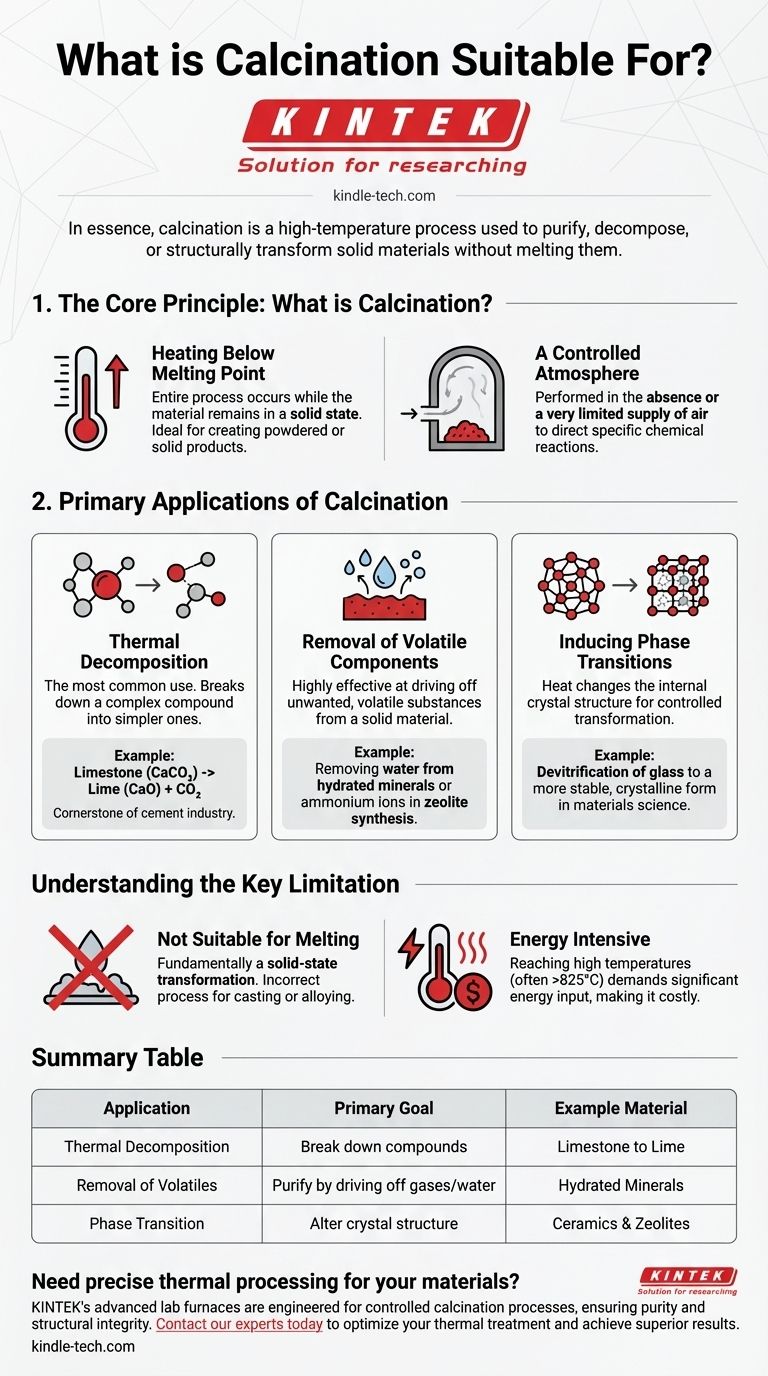
In essence, calcination is a high-temperature process used to purify, decompose, or structurally transform solid materials without melting them. It is most famously suitable for the industrial-scale production of cement and lime from limestone, but its applications extend to creating specialized materials like zeolites and ceramics.

Calcination is not simply about intense heating. It is a precise thermal treatment designed to change a material's fundamental chemistry or physical structure, primarily by removing volatile components like water and carbon dioxide to create a new, more useful substance.
What is calcination suitable for? A Guide to High-Temperature Solid-State Transformation

The Core Principle: What is Calcination?

Calcination is a specific type of heat treatment. Its suitability for certain tasks comes from two defining characteristics that separate it from other thermal processes.

Heating Below the Melting Point

The entire process occurs while the material remains in a solid state. The goal is to provide enough thermal energy to break chemical bonds or alter crystal structures, but not so much that the material liquefies.

This makes it ideal for creating powdered or solid products, like the lime that results from heating limestone.

A Controlled Atmosphere

Calcination is performed in the absence or a very limited supply of air. This is a critical distinction from a process like roasting, which uses abundant air to promote oxidation.

By controlling the atmosphere, the process can be directed toward specific chemical reactions, such as pure decomposition rather than combustion.

Primary Applications of Calcination

The unique conditions of calcination make it suitable for several key industrial and scientific objectives.

Thermal Decomposition

This is the most common use of calcination. The process breaks down a complex compound into simpler ones.

The archetypal example is the decomposition of calcium carbonate (limestone) into calcium oxide (lime or quicklime) and carbon dioxide gas. This reaction is the cornerstone of the global cement industry.

Removal of Volatile Components

Calcination is highly effective at driving off unwanted, volatile substances from a solid material.

This includes removing physically absorbed water from hydrated minerals or chemically bound water from crystals. It's also used in more advanced applications, such as removing ammonium ions during the synthesis of zeolites, which are critical materials for catalysts and adsorbents.

Inducing Phase Transitions

Heat can change the internal crystal structure of a material, and calcination provides a controlled way to achieve this.

In materials science, this is used for processes like the devitrification of glass, where a disordered, amorphous solid is transformed into a more stable, crystalline one, fundamentally altering its physical properties.

Understanding the Key Limitation

While powerful, calcination is a specialized tool with a clear boundary condition that defines its suitability.

Not Suitable for Melting

The process is fundamentally a solid-state transformation. Its primary advantage is that it modifies the material without changing its state from solid to liquid.

If your goal is to melt a substance for casting or alloying, calcination is the incorrect process. You would need a smelting or melting furnace for that purpose.

Energy Intensive

Reaching and maintaining the high temperatures required for calcination (often above 825°C or 1500°F for limestone) demands a significant energy input, making it a costly process at industrial scales.

Making the Right Choice for Your Goal

To determine if calcination is suitable, you must first define your desired outcome for the material.

  • If your primary focus is creating an oxide from a carbonate (like limestone): Calcination is the definitive, industry-standard method for producing lime and cement.
  • If your primary focus is purifying a material by removing water or trapped gases: The process is ideal for driving off these volatile fractions without altering the core substance you wish to keep.
  • If your primary focus is altering a material's internal crystal structure: Calcination provides the controlled thermal energy needed for solid-state phase transformations, essential in ceramics and advanced materials manufacturing.

Ultimately, calcination is the correct choice when your objective is to fundamentally change a solid's composition or structure while ensuring it remains in a solid form.

Summary Table:

Application Primary Goal Example Material
Thermal Decomposition Break down compounds Limestone to Lime
Removal of Volatiles Purify by driving off gases/water Hydrated Minerals
Phase Transition Alter crystal structure Ceramics & Zeolites

Need precise thermal processing for your materials? KINTEK's advanced lab furnaces are engineered for controlled calcination processes, ensuring purity and structural integrity for your limestone, ceramics, and specialized material projects. Contact our experts today to optimize your thermal treatment and achieve superior results.

Visual Guide
What is calcination suitable for? A Guide to High-Temperature Solid-State Transformation Visual Guide

Related Products

People Also Ask

Related Products

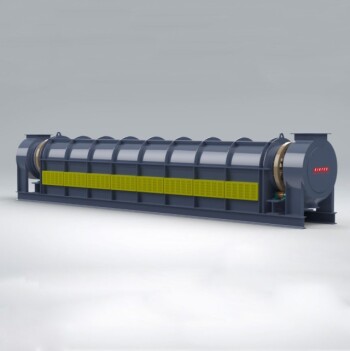
Electric Rotary Kiln Pyrolysis Furnace Plant Machine Calciner Small Rotary Kiln Rotating Furnace

Electric Rotary Kiln Pyrolysis Furnace Plant Machine Calciner Small Rotary Kiln Rotating Furnace

Electric rotary kiln - precisely controlled, it's ideal for calcination and drying of materials like lithium cobalate, rare earths, and non-ferrous metals.

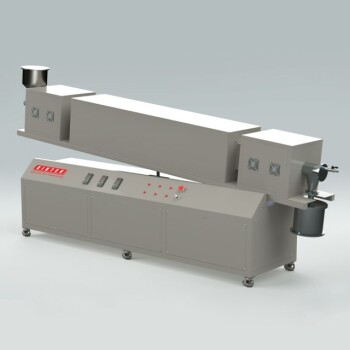
Electric Rotary Kiln Continuous Working Small Rotary Furnace Heating Pyrolysis Plant

Electric Rotary Kiln Continuous Working Small Rotary Furnace Heating Pyrolysis Plant

Efficiently calcine and dry bulk powder and lump fluid materials with an electric heating rotary furnace. Ideal for processing lithium ion battery materials and more.

Vacuum Sealed Continuous Working Rotary Tube Furnace Rotating Tube Furnace

Vacuum Sealed Continuous Working Rotary Tube Furnace Rotating Tube Furnace

Experience efficient material processing with our vacuum-sealed rotary tube furnace. Perfect for experiments or industrial production, equipped with optional features for controlled feeding and optimized results. Order now.

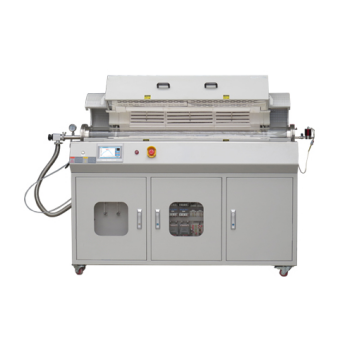
Rotary Tube Furnace Split Multi Heating Zone Rotating Tube Furnace

Rotary Tube Furnace Split Multi Heating Zone Rotating Tube Furnace

Multi zone rotary furnace for high-precision temperature control with 2-8 independent heating zones. Ideal for lithium ion battery electrode materials and high-temperature reactions. Can work under vacuum and controlled atmosphere.

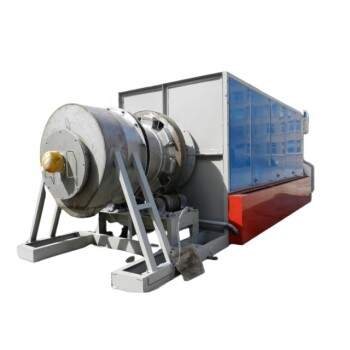
Electric Rotary Kiln Small Rotary Furnace for Activated Carbon Regeneration

Electric Rotary Kiln Small Rotary Furnace for Activated Carbon Regeneration

Revitalize your activated carbon with KinTek's Electric Regeneration Furnace. Achieve efficient and cost-effective regeneration with our highly automated rotary kiln and intelligent thermal controller.

Electric Rotary Kiln Small Rotary Furnace Biomass Pyrolysis Plant

Electric Rotary Kiln Small Rotary Furnace Biomass Pyrolysis Plant

Learn about Rotary Biomass Pyrolysis Furnaces & how they decompose organic material at high temps without oxygen. Use for biofuels, waste processing, chemicals & more.

Laboratory Quartz Tube Furnace Tubular RTP Heating Furnace

Laboratory Quartz Tube Furnace Tubular RTP Heating Furnace

Get lightning-fast heating with our RTP Rapid Heating Tube Furnace. Designed for precise, high-speed heating and cooling with convenient sliding rail and TFT touch screen controller. Order now for ideal thermal processing!

Mesh belt controlled atmosphere furnace

Mesh belt controlled atmosphere furnace

Discover our KT-MB mesh belt sintering furnace - perfect for high-temperature sintering of electronic components & glass insulators. Available for open air or controlled atmosphere environments.

1700℃ Laboratory Quartz Tube Furnace with Alumina Tube Tubular Furnace

1700℃ Laboratory Quartz Tube Furnace with Alumina Tube Tubular Furnace

Looking for a high-temperature tube furnace? Check out our 1700℃ Tube Furnace with Alumina Tube. Perfect for research and industrial applications up to 1700C.

Laboratory Muffle Oven Furnace Bottom Lifting Muffle Furnace

Laboratory Muffle Oven Furnace Bottom Lifting Muffle Furnace

Efficiently produce batches with excellent temperature uniformity using our Bottom Lifting Furnace. Features two electric lifting stages and advanced temperature control up to 1600℃.

High Temperature Muffle Oven Furnace for Laboratory Debinding and Pre Sintering

High Temperature Muffle Oven Furnace for Laboratory Debinding and Pre Sintering

KT-MD High temperature debinding and pre-sintering furnace for ceramic materials with various molding processes. Ideal for electronic components such as MLCC and NFC.

1800℃ Muffle Oven Furnace for Laboratory

1800℃ Muffle Oven Furnace for Laboratory

KT-18 muffle furnace with Japan Al2O3 polycrystalline fibe and Silicon Molybdenum heating element, up to 1900℃, PID temperature control and 7" smart touch screen. Compact design, low heat loss, and high energy efficiency. Safety interlock system and versatile functions.

1200℃ Split Tube Furnace with Quartz Tube Laboratory Tubular Furnace

1200℃ Split Tube Furnace with Quartz Tube Laboratory Tubular Furnace

KT-TF12 split tube furnace: high-purity insulation, embedded heating wire coils, and max. 1200C. Widely used for new materials and chemical vapour deposition.

1700℃ Muffle Oven Furnace for Laboratory

1700℃ Muffle Oven Furnace for Laboratory

Get superior heat control with our 1700℃ Muffle Furnace. Equipped with intelligent temperature microprocessor, TFT touch screen controller & advanced insulation materials for precise heating up to 1700C. Order now!

Ultra-High Temperature Graphite Vacuum Graphitization Furnace

Ultra-High Temperature Graphite Vacuum Graphitization Furnace

The ultra-high temperature graphitization furnace utilizes medium frequency induction heating in a vacuum or inert gas environment. The induction coil generates an alternating magnetic field, inducing eddy currents in the graphite crucible, which heats up and radiates heat to the workpiece, bringing it to the desired temperature. This furnace is primarily used for graphitization and sintering of carbon materials, carbon fiber materials, and other composite materials.

Graphite Vacuum Continuous Graphitization Furnace

Graphite Vacuum Continuous Graphitization Furnace

High-temperature graphitization furnace is a professional equipment for graphitization treatment of carbon materials. It is a key equipment for the production of high-quality graphite products. It has high temperature, high efficiency and uniform heating. It is suitable for various high-temperature treatments and graphitization treatments. It is widely used in metallurgy, electronics, aerospace, etc. industry.

Vacuum Heat Treat and Molybdenum Wire Sintering Furnace for Vacuum Sintering

Vacuum Heat Treat and Molybdenum Wire Sintering Furnace for Vacuum Sintering

A vacuum molybdenum wire sintering furnace is a vertical or bedroom structure, which is suitable for withdrawal, brazing, sintering and degassing of metal materials under high vacuum and high temperature conditions. It is also suitable for dehydroxylation treatment of quartz materials.

1400℃ Muffle Oven Furnace for Laboratory

1400℃ Muffle Oven Furnace for Laboratory

Get precise high-temperature control up to 1500℃ with KT-14M Muffle furnace. Equipped with a smart touch screen controller and advanced insulation materials.

600T Vacuum Induction Hot Press Furnace for Heat Treat and Sintering

600T Vacuum Induction Hot Press Furnace for Heat Treat and Sintering

Discover the 600T Vacuum Induction Hot Press Furnace, designed for high-temperature sintering experiments in vacuum or protected atmospheres. Its precise temperature and pressure control, adjustable working pressure, and advanced safety features make it ideal for nonmetal materials, carbon composites, ceramics, and metal powders.

Vacuum Heat Treat Furnace with Ceramic Fiber Liner

Vacuum Heat Treat Furnace with Ceramic Fiber Liner

Vacuum furnace with polycrystalline ceramic fiber insulation liner for excellent heat insulation and uniform temperature field. Choose from 1200℃ or 1700℃ max. working temperature with high vacuum performance and precise temperature control.


Leave Your Message