Knowledge Electric Rotary Kiln What is the condition for calcination? Mastering Heat and Atmosphere for Material Transformation
Author avatar

Tech Team · Kintek Solution

Updated 2 months ago

What is the condition for calcination? Mastering Heat and Atmosphere for Material Transformation


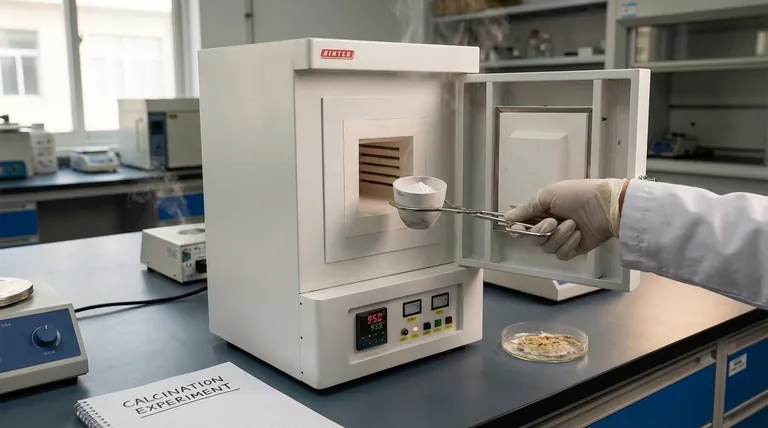
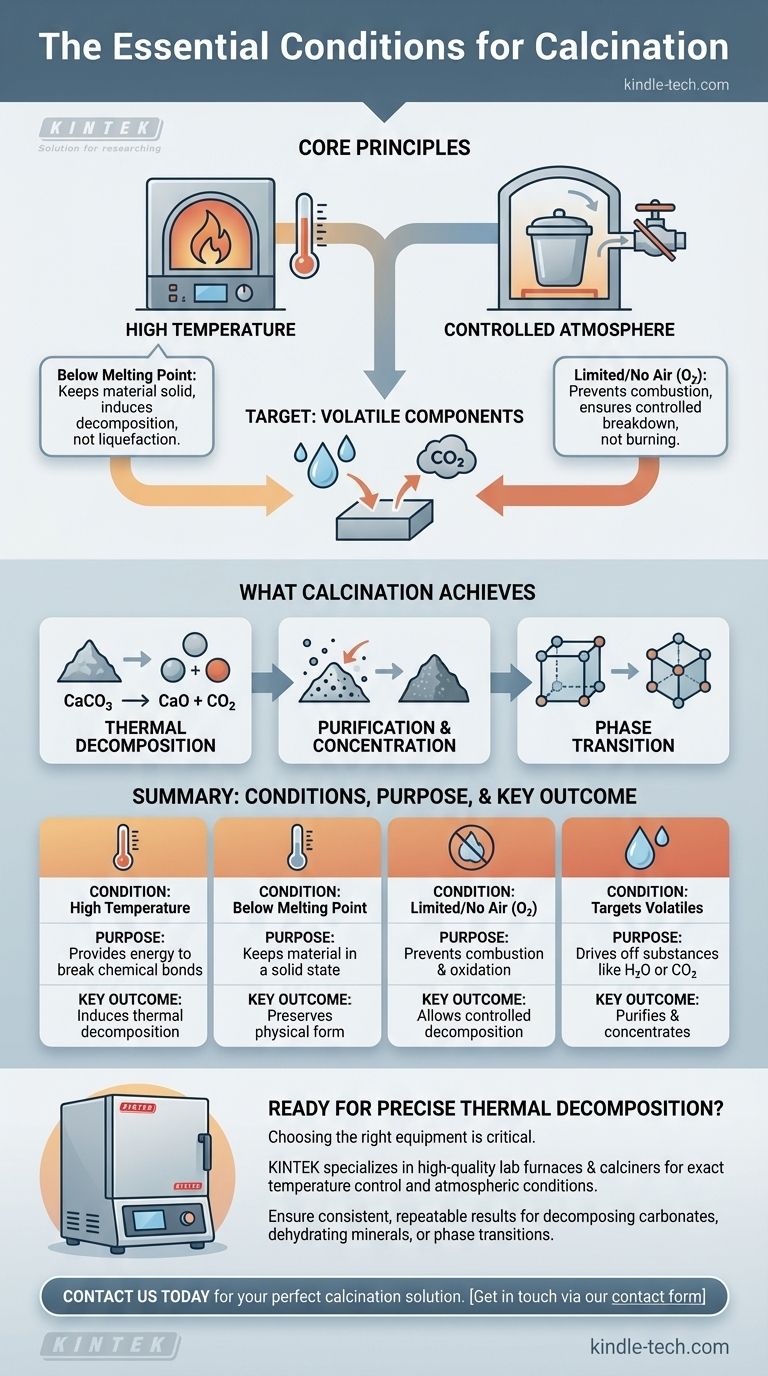
The essential condition for calcination is heating a solid material to a high temperature, but below its melting point, in an environment with a limited supply or complete absence of air. This specific set of conditions is not for burning the material, but for inducing thermal decomposition, driving off volatile substances like water or carbon dioxide, or triggering a change in the material's physical form.

The core principle of calcination is to use heat to break down a substance, not to burn it. Controlling the atmosphere by limiting or eliminating air is the critical factor that prevents combustion and allows for this controlled decomposition.
What is the condition for calcination? Mastering Heat and Atmosphere for Material Transformation

The Core Principles of Calcination

To understand calcination, we must look at its two defining parameters: heat and atmosphere. Each serves a distinct and critical purpose in achieving the desired chemical or physical change.

The Role of High Temperature

The primary driver of the process is heat. Applying a high temperature provides the necessary thermal energy to break chemical bonds within the solid material.

However, this temperature must be carefully controlled to remain below the substance's melting point. The goal is to alter a solid, not to liquefy it, which would fundamentally change the nature of the process and the end product.

Why the Atmosphere is Controlled

The most defining condition of calcination is the absence or limited supply of air (specifically, oxygen). This is what distinguishes it from other heat-treatment processes like roasting.

By restricting oxygen, you prevent combustion. The objective is to decompose the material through heat alone, causing components to be released as gas, rather than to have it react with oxygen in a burning process.

The Target: Volatile Components

Calcination specifically targets the removal of volatile fractions from a substance. These are components that can be turned into gas and driven off by heat.

Common examples include removing absorbed moisture (H₂O) or chemically bound water from hydrates, and driving off carbon dioxide (CO₂) from carbonate ores like limestone.

What Calcination Aims to Achieve

The specific conditions of calcination are designed to produce several key outcomes, primarily in the fields of metallurgy and materials science.

Thermal Decomposition

This is the most common goal. Heat is used to break down a compound into simpler substances. The classic example is the production of lime (calcium oxide) from limestone (calcium carbonate).

When heated, the calcium carbonate decomposes, releasing carbon dioxide gas and leaving behind the solid lime.

Purification and Concentration

By driving off volatile impurities like water and carbon dioxide, the remaining solid becomes more concentrated in the desired element or compound. This is a crucial step in preparing ores for further processing.

Phase Transition

In some applications, the heat from calcination is used not to decompose a material but to change its crystalline structure, or phase. This can alter the material's physical properties, such as its hardness or reactivity, making it suitable for specific industrial uses.

The Equipment: Calciners and Furnaces

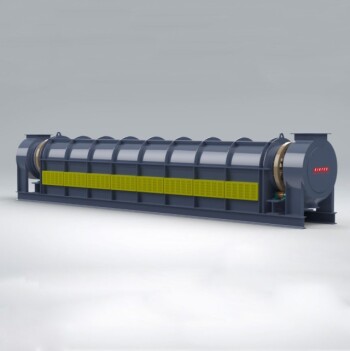
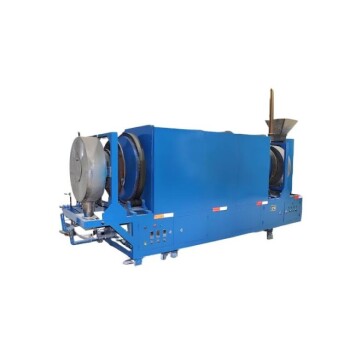
This process is conducted in specialized, high-temperature reactors. A calciner is a purpose-built piece of equipment, often a rotating cylinder, that allows for precise control over both temperature and the internal atmosphere, ensuring the conditions for calcination are met.

Making the Right Choice for Your Goal

Understanding the required conditions allows you to determine when calcination is the appropriate industrial process.

  • If your primary focus is decomposing a carbonate ore: Calcination is the correct method to drive off carbon dioxide and produce a metal oxide.
  • If your primary focus is removing water from a hydrated mineral: The process effectively dehydrates the material, concentrating the desired compound.
  • If your primary focus is to fully oxidize a substance (like a sulfide ore): Calcination is the wrong choice; you would need roasting, which involves heating in an excess of air.

Ultimately, mastering calcination is about the precise application of heat in a controlled atmosphere to achieve a specific chemical or physical transformation.

Summary Table:

Condition Purpose Key Outcome
High Temperature Provides energy to break chemical bonds Induces thermal decomposition
Temperature Below Melting Point Keeps the material in a solid state Preserves the physical form of the product
Limited or No Air (O₂) Prevents combustion and oxidation Allows for controlled decomposition, not burning
Targets Volatile Components Drives off substances like H₂O or CO₂ Purifies and concentrates the solid material

Ready to achieve precise thermal decomposition in your lab?

Choosing the right equipment is critical for successful calcination. KINTEK specializes in high-quality lab furnaces and calciners that provide the exact temperature control and atmospheric conditions your processes demand.

Whether you are decomposing carbonates, dehydrating minerals, or studying phase transitions, our reliable equipment ensures consistent, repeatable results.

Contact us today to find the perfect calcination solution for your laboratory needs. Get in touch via our contact form and let our experts help you enhance your material processing capabilities.

Visual Guide
What is the condition for calcination? Mastering Heat and Atmosphere for Material Transformation Visual Guide

Related Products

People Also Ask

Related Products

Electric Rotary Kiln Pyrolysis Furnace Plant Machine Calciner Small Rotary Kiln Rotating Furnace

Electric Rotary Kiln Pyrolysis Furnace Plant Machine Calciner Small Rotary Kiln Rotating Furnace

Electric rotary kiln - precisely controlled, it's ideal for calcination and drying of materials like lithium cobalate, rare earths, and non-ferrous metals.

Electric Rotary Kiln Continuous Working Small Rotary Furnace Heating Pyrolysis Plant

Electric Rotary Kiln Continuous Working Small Rotary Furnace Heating Pyrolysis Plant

Efficiently calcine and dry bulk powder and lump fluid materials with an electric heating rotary furnace. Ideal for processing lithium ion battery materials and more.

Vertical High Temperature Graphite Vacuum Graphitization Furnace

Vertical High Temperature Graphite Vacuum Graphitization Furnace

Vertical high temperature graphitization furnace for carbonization and graphitization of carbon materials up to 3100℃.Suitable for shaped graphitization of carbon fiber filaments and other materials sintered in a carbon environment.Applications in metallurgy, electronics, and aerospace for producing high-quality graphite products like electrodes and crucibles.

Graphite Vacuum Furnace High Thermal Conductivity Film Graphitization Furnace

Graphite Vacuum Furnace High Thermal Conductivity Film Graphitization Furnace

The high thermal conductivity film graphitization furnace has uniform temperature, low energy consumption and can operate continuously.

Ultra-High Temperature Graphite Vacuum Graphitization Furnace

Ultra-High Temperature Graphite Vacuum Graphitization Furnace

The ultra-high temperature graphitization furnace utilizes medium frequency induction heating in a vacuum or inert gas environment. The induction coil generates an alternating magnetic field, inducing eddy currents in the graphite crucible, which heats up and radiates heat to the workpiece, bringing it to the desired temperature. This furnace is primarily used for graphitization and sintering of carbon materials, carbon fiber materials, and other composite materials.

High Temperature Muffle Oven Furnace for Laboratory Debinding and Pre Sintering

High Temperature Muffle Oven Furnace for Laboratory Debinding and Pre Sintering

KT-MD High temperature debinding and pre-sintering furnace for ceramic materials with various molding processes. Ideal for electronic components such as MLCC and NFC.

Large Vertical Graphite Vacuum Graphitization Furnace

Large Vertical Graphite Vacuum Graphitization Furnace

A large vertical high-temperature graphitization furnace is a type of industrial furnace used for the graphitization of carbon materials, such as carbon fiber and carbon black. It is a high-temperature furnace that can reach temperatures of up to 3100°C.

Graphite Vacuum Furnace Bottom Discharge Graphitization Furnace for Carbon Materials

Graphite Vacuum Furnace Bottom Discharge Graphitization Furnace for Carbon Materials

Bottom-out graphitization furnace for carbon materials, ultra-high temperature furnace up to 3100°C, suitable for graphitization and sintering of carbon rods and carbon blocks. Vertical design, bottom discharging, convenient feeding and discharging, high temperature uniformity, low energy consumption, good stability, hydraulic lifting system, convenient loading and unloading.

Dental Porcelain Zirconia Sintering Ceramic Furnace Chairside with Transformer

Dental Porcelain Zirconia Sintering Ceramic Furnace Chairside with Transformer

Experience top-notch sintering with Chairside Sintering Furnace with Transformer. Easy to operate, noise-free pallet, and automatic temperature calibration. Order now!

Graphite Vacuum Continuous Graphitization Furnace

Graphite Vacuum Continuous Graphitization Furnace

High-temperature graphitization furnace is a professional equipment for graphitization treatment of carbon materials. It is a key equipment for the production of high-quality graphite products. It has high temperature, high efficiency and uniform heating. It is suitable for various high-temperature treatments and graphitization treatments. It is widely used in metallurgy, electronics, aerospace, etc. industry.

Horizontal High Temperature Graphite Vacuum Graphitization Furnace

Horizontal High Temperature Graphite Vacuum Graphitization Furnace

Horizontal Graphitization Furnace: This type of furnace is designed with the heating elements placed horizontally, allowing for uniform heating of the sample. It's well-suited for graphitizing large or bulky samples that require precise temperature control and uniformity.

Dental Porcelain Zirconia Sintering Ceramic Vacuum Press Furnace

Dental Porcelain Zirconia Sintering Ceramic Vacuum Press Furnace

Get precise dental results with Dental Vacuum Press Furnace. Automatic temperature calibration, low noise tray, and touch screen operation. Order now!

1200℃ Split Tube Furnace with Quartz Tube Laboratory Tubular Furnace

1200℃ Split Tube Furnace with Quartz Tube Laboratory Tubular Furnace

KT-TF12 split tube furnace: high-purity insulation, embedded heating wire coils, and max. 1200C. Widely used for new materials and chemical vapour deposition.

Vacuum Arc Induction Melting Furnace

Vacuum Arc Induction Melting Furnace

Discover the power of Vacuum Arc Furnace for melting active & refractory metals. High-speed, remarkable degassing effect, and free of contamination. Learn more now!

Laboratory Muffle Oven Furnace Bottom Lifting Muffle Furnace

Laboratory Muffle Oven Furnace Bottom Lifting Muffle Furnace

Efficiently produce batches with excellent temperature uniformity using our Bottom Lifting Furnace. Features two electric lifting stages and advanced temperature control up to 1600℃.

Vacuum Heat Treat and Pressure Sintering Furnace for High Temperature Applications

Vacuum Heat Treat and Pressure Sintering Furnace for High Temperature Applications

Vacuum pressure sintering furnaces are designed for high temperature hot pressing applications in metal and ceramic sintering. Its advanced features ensure precise temperature control, reliable pressure maintenance, and a robust design for seamless operation.

Mesh belt controlled atmosphere furnace

Mesh belt controlled atmosphere furnace

Discover our KT-MB mesh belt sintering furnace - perfect for high-temperature sintering of electronic components & glass insulators. Available for open air or controlled atmosphere environments.

Vertical Laboratory Tube Furnace

Vertical Laboratory Tube Furnace

Elevate your experiments with our Vertical Tube Furnace. Versatile design allows for operation under various environments and heat treatment applications. Order now for precise results!

Non Consumable Vacuum Arc Induction Melting Furnace

Non Consumable Vacuum Arc Induction Melting Furnace

Explore the benefits of Non-Consumable Vacuum Arc Furnace with high melting point electrodes. Small, easy to operate & eco-friendly. Ideal for laboratory research on refractory metals & carbides.

Electric Rotary Kiln Small Rotary Furnace for Activated Carbon Regeneration

Electric Rotary Kiln Small Rotary Furnace for Activated Carbon Regeneration

Revitalize your activated carbon with KinTek's Electric Regeneration Furnace. Achieve efficient and cost-effective regeneration with our highly automated rotary kiln and intelligent thermal controller.


Leave Your Message