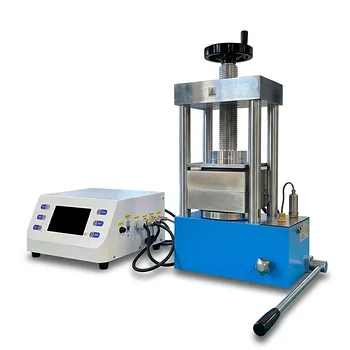
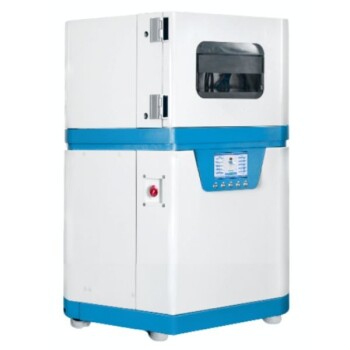
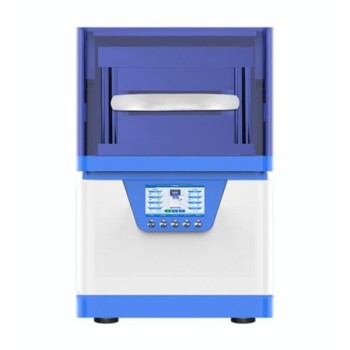
The primary function of a hydraulic heat press is to densify and shape polymer materials into functional battery separators. specifically for solid-state lithium-sulfur batteries, this equipment applies precise temperature control alongside mechanical pressure to process polymer electrolytes, such as PEO-based composites. The goal is to compress these materials into dense, flat, and uniform films—typically targeting a thickness of approximately 50 micrometers—to ensure they are structurally sound and chemically active.
Core Takeaway While raw chemical composition determines the potential of a polymer electrolyte, the hydraulic heat press determines its physical viability. By simultaneously applying heat and pressure, this process eliminates internal microscopic defects and ensures the membrane is mechanically robust enough to serve as a self-supporting component in a battery assembly.
The Critical Role of Densification
Creating a Uniform Physical Structure
The hydraulic heat press does not simply flatten material; it standardizes it. By applying heat, the machine softens the polymer matrix, allowing the mechanical pressure to distribute the material evenly.
This results in a film with a consistent thickness (often around 50 micrometers). Uniformity is vital because variations in thickness can lead to uneven current distribution and premature battery failure.
Eliminating Internal Defects
Raw polymer composites often contain microscopic voids, air pockets, or porosity that can impede performance. The combination of heat and compression forces the material to flow into these voids.
This effectively "heals" internal defects, creating a dense, continuous barrier. A dense membrane is essential to prevent lithium dendrites from growing through the separator and causing short circuits.
Ensuring Mechanical Strength
For a polymer electrolyte to be useful, it is often required to be a "self-supporting" membrane. This means it must hold its own shape without a backing substrate.
The pressing process consolidates the composite materials, enhancing their mechanical integrity. This ensures the film can withstand the physical stresses of handling during the subsequent battery assembly steps.
Optimizing Electrochemical Performance
Reducing Interfacial Resistance
One of the greatest challenges in solid-state batteries is the "solid-solid" contact problem. Unlike liquid electrolytes that wet surfaces easily, solid polymers struggle to make perfect contact with electrodes.
The heat press creates a smoother, flatter surface area on the membrane. When assembled, this optimized surface maximizes the contact area with the electrodes, facilitating better ion transfer.
Enhancing Ion Transport Pathways
The densification process brings the active components of the composite closer together. This reduces the distance lithium ions must travel between particles.
By minimizing porosity and increasing the density of the material, the press effectively opens clearer, more efficient highways for ion transport, which is critical for the battery's overall power capability.
Understanding the Trade-offs
The Balance of Temperature and Pressure
Using a hydraulic heat press requires a delicate balance that differs from the cold-pressing used for ceramic or powder-based electrolytes.
If the temperature is too high, the polymer may degrade or become too fluid, losing the desired thickness and structural dimensional stability.
Conversely, if the pressure is excessive without adequate heat, the polymer chain may not relax sufficiently. This can lock in mechanical stresses that lead to warping or cracking once the pressure is released.
Processing Efficiency vs. Material Integrity
While high pressure (like the 360 MPa used for powder pellets) creates density, polymers require a more nuance approach.
Applying extreme pressure to a soft polymer can over-compress the film, making it too thin to effectively separate the anode and cathode. The process must achieve density without compromising the minimum thickness required for electrical isolation.
Making the Right Choice for Your Goal
To maximize the effectiveness of your hydraulic heat press in polymer electrolyte preparation, consider the following:
- If your primary focus is mechanical durability: Prioritize a processing protocol that emphasizes longer hold times at moderate temperatures to allow full polymer relaxation and bonding.
- If your primary focus is electrochemical efficiency: Focus on achieving the thinnest possible uniform film (close to 50 micrometers) to minimize the distance ions must travel, while ensuring zero porosity.
Ultimately, the hydraulic heat press transforms a theoretical chemical mixture into a tangible, high-performance engineering component.
Summary Table:
| Feature | Function in Polymer Processing | Benefit for Battery Performance |
|---|---|---|
| Thermal Softening | Relaxes polymer chains for flow | Eliminates internal voids and microscopic defects |
| Mechanical Pressure | Compresses composites into films | Ensures uniform thickness (e.g., 50µm) for even current |
| Densification | Increases material density | Prevents lithium dendrite growth and short circuits |
| Surface Flattening | Creates smooth membrane interface | Reduces interfacial resistance and improves ion transfer |
| Structural Consolidation | Enhances mechanical integrity | Produces robust, self-supporting electrolyte membranes |
Elevate Your Battery Research with KINTEK Precision
Achieving the perfect 50-micrometer uniform membrane requires a delicate balance of temperature and pressure. KINTEK specializes in high-performance laboratory equipment designed for the most demanding material science applications.
Our extensive portfolio includes:
- Precision Hydraulic Presses: Manual, electric, and heated options for pellet and film preparation.
- Advanced Thermal Solutions: High-temperature furnaces (muffle, vacuum, tube) and specialized dental furnaces.
- Material Processing: Crushing, milling systems, and high-pressure reactors for chemical synthesis.
- Energy Storage Tools: Battery research consumables, electrolytic cells, and high-purity ceramics.
Whether you are developing solid-state lithium-sulfur batteries or exploring advanced polymer composites, KINTEK provides the reliable tools and expertise needed to ensure your materials are structurally sound and chemically active. Maximize your lab’s efficiency and research accuracy—contact us today to find the perfect solution for your workflow!
Related Products
- 24T 30T 60T Heated Hydraulic Press Machine with Heated Plates for Laboratory Hot Press
- Heated Hydraulic Press Machine with Heated Plates for Vacuum Box Laboratory Hot Press
- Heated Hydraulic Press Machine with Integrated Manual Heated Plates for Lab Use
- Automatic Heated Hydraulic Press Machine with Heated Plates for Laboratory Hot Press 25T 30T 50T
- Automatic High Temperature Heated Hydraulic Press Machine with Heated Plates for Lab
People Also Ask
- What role does a heated hydraulic press play in Cold Sintering (CSP)? Enhancing LATP-Halide Densification
- Why is the heating function of a laboratory hydraulic press essential for MEA assembly in DEFC? Optimize Cell Bonding
- What technical conditions does a heated hydraulic press provide for PEO batteries? Optimize Solid-State Interfaces
- How is a heated hydraulic press used for Li-LLZO batteries? Optimize Interfacial Bonding with Thermal-Pressure
- What is the core function of a laboratory heated hydraulic press in CSP? Revolutionize Low-Temp Ceramic Sintering