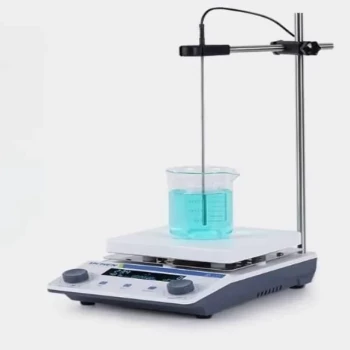
In the sol-gel preparation of zeolite-titanate photocatalysts, the magnetic stirrer acts as the primary source of continuous kinetic circulation. Its fundamental function is to ensure the complete and rigorous mixing of titanium precursors—specifically titanium isopropoxide and ethanol—with the zeolite carrier. This mechanical agitation is the specific mechanism that allows the precursors to make full contact with the support material, transitioning the mixture from a simple suspension to a chemically active system.
The magnetic stirrer prevents local aggregation of chemical components, ensuring the formation of a stable, uniform titanium oxide coating on the zeolite surface—a prerequisite for high catalytic activity.
The Mechanics of Uniform Coating
Promoting Kinetic Circulation
To achieve a successful sol-gel reaction, simple diffusion is insufficient. The magnetic stirrer introduces kinetic circulation, which forces the reagents to interact continuously.
This movement ensures that the titanium isopropoxide and ethanol do not stagnate, but rather circulate around the porous zeolite structure.
Ensuring Full Component Contact
The porous nature of zeolite requires active force to ensure reagents penetrate effective surface areas.
Stirring guarantees full contact between the liquid precursors and the solid zeolite carrier. Without this, the titanium source would not adequately adhere to or penetrate the zeolite framework.
Preventing Local Aggregation
A static mixture inevitably leads to the clumping of particles or chemicals.
Continuous stirring is the only effective method to prevent local aggregation of the titanium components. By keeping the solution dynamic, the equipment ensures that the titanium oxides precipitate evenly rather than forming large, inactive clusters.
The Impact on Catalytic Performance
Creating Stable Structures
The physical stability of the final catalyst is determined during the mixing phase.
A well-stirred sol-gel process promotes the formation of a stable coating. This durability is essential for the material to withstand subsequent drying and calcination steps without delaminating.
Maximizing Surface Activity
The ultimate goal of the synthesis is catalytic power.
Uniform stirring leads to a uniform distribution of titanium oxides. This maximization of the active surface area is directly responsible for developing high-activity catalytic structures capable of effective photocatalysis.
Common Pitfalls and Considerations
The Risk of Insufficient Agitation
If the stirring speed is too low or intermittent, the mixture becomes heterogeneous.
This lack of uniform dispersion leads to "hotspots" of high titanium concentration and areas with no coating at all. This results in unpredictable catalytic performance and wasted precursor materials.
Duration and Consistency
The synthesis process is not instantaneous; it often requires extended periods of mechanical action.
Consistent agitation over time—comparable to the extended durations used in wet impregnation—is necessary to achieve precise loading levels. Stopping the agitation prematurely can result in an incomplete reaction or uneven settling of the solid carriers.
Optimizing Your Synthesis Strategy
To ensure high-performance zeolite-titanate photocatalysts, align your stirring protocols with your specific goals:
- If your primary focus is Structural Stability: Ensure continuous, vigorous circulation to prevent aggregation and create a cohesive, durable coating.
- If your primary focus is Catalytic Activity: Prioritize maximizing the contact time and mixing uniformity to ensure the titanium oxides are evenly dispersed across the entire zeolite surface.
The quality of your final photocatalyst is directly proportional to the consistency and uniformity of the kinetic energy applied during synthesis.
Summary Table:
| Key Function | Mechanical Impact | Resulting Catalyst Benefit |
|---|---|---|
| Kinetic Circulation | Prevents reagent stagnation | Ensures reagents penetrate porous zeolite structures |
| Component Contact | Forces interaction between liquid & solid | Guarantees full adhesion of titanium precursors |
| Aggregation Control | Eliminates local clumping/hotspots | Creates a stable, uniform titanium oxide coating |
| Dynamic Mixing | Maintains dispersion over time | Maximizes active surface area for high catalytic power |
Elevate Your Material Synthesis with KINTEK Precision
Achieving high-activity photocatalysts requires more than just chemistry—it requires precise, reliable mechanical control. At KINTEK, we specialize in the high-performance laboratory equipment essential for complex sol-gel processes and material research.
Whether you are synthesizing zeolite-titanate structures or developing advanced battery materials, our comprehensive range of laboratory stirring equipment, high-temperature furnaces (CVD, Vacuum, Muffle), and high-pressure reactors provides the consistency your research demands. From ultrasonic homogenizers to precision crushing and milling systems, we empower labs to achieve perfect uniformity every time.
Ready to optimize your catalytic activity? Contact our technical experts today to find the ideal equipment solution for your specific application.
References
- Narges Farhadi, Fazel Amiri. Optimization and characterization of zeolite-titanate for ibuprofen elimination by sonication/hydrogen peroxide/ultraviolet activity. DOI: 10.1016/j.ultsonch.2020.105122
This article is also based on technical information from Kintek Solution Knowledge Base .
Related Products
- Laboratory Small Constant Temperature Heated Magnetic Stirrer Heater and Stirrer
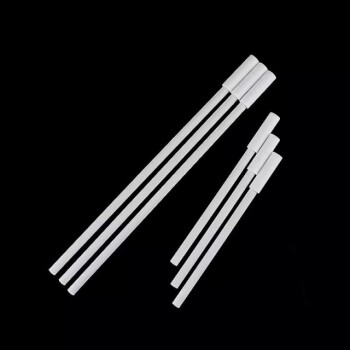
- Custom PTFE Teflon Parts Manufacturer for Magnetic Stirring Bar
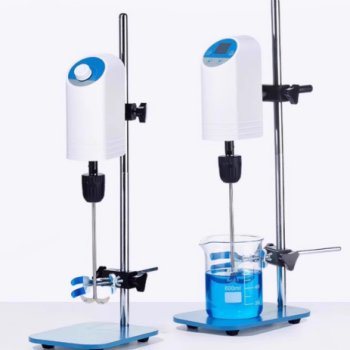
- High Performance Laboratory Stirrers for Diverse Applications
- Three-dimensional electromagnetic sieving instrument
- Custom PTFE Teflon Parts Manufacturer for PTFE Stirring Bar Recovery Rod
People Also Ask
- What role does a magnetic stirrer with heating play in ZnO nanoparticle synthesis? Precision Control for Quality Results
- What role does a constant temperature heating magnetic stirrer play in MFC-HAp synthesis? Achieve Material Homogeneity
- What is the function of a laboratory magnetic stirrer in Ni–Cr–P electrodeposition? Optimize Ion Transport & Coating
- Why is a laboratory magnetic stirrer required for benzoic acid esters? Boost Reaction Speed & Yield with High RPM
- What role does a laboratory magnetic stirrer play in TiO2 and TiO2-Ag sol preparation? Master Chemical Kinetics