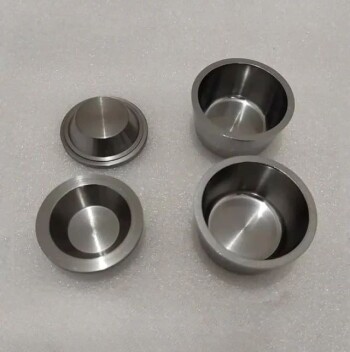
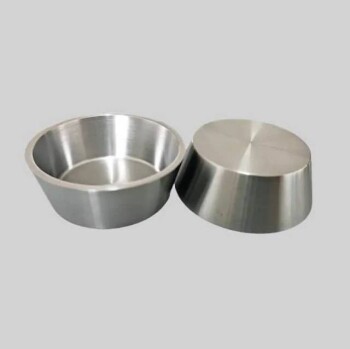
A por4 grade filtering crucible serves as the primary instrument for precise solid-liquid separation following a hydrothermal liquefaction reaction. Its specific function is to capture solid residues, such as unconverted biomass and biochar, while allowing the liquid bio-oil and aqueous phases to pass through for further analysis and processing.
By effectively isolating solid byproducts from the liquid phase, the por4 crucible ensures the purity of the bio-oil and enables the accurate quantification of unconverted biomass residues.
The Mechanics of Separation
Isolating Solid Residues
The primary role of the crucible is to act as a physical barrier against solids. In hydrothermal liquefaction, not all biomass is converted into fuel; a portion remains as unconverted biomass or biochar.
The por4 grade, indicating a specific fine pore size, efficiently traps these solid particles. This residue forms a "filter cake" within the crucible, which can later be dried and weighed to calculate conversion efficiency.
Recovering the Liquid Phase
While retaining solids, the crucible must allow the valuable reaction products to pass through unimpeded. The liquid stream, often referred to as the filtrate, contains the bio-oil and the aqueous phase.
This separation is critical because the liquid phase holds the target fuel precursors. Once separated, these liquids can be further processed or analyzed without interference from particulate matter.
The Role in the Wider Workflow
Defining Product Streams
Using a laboratory filtration system with a por4 crucible is a definitive step in the recovery workflow. It effectively splits the reaction output into two distinct streams: the filtrate (liquid) and the filter cake (solid).
Facilitating Downstream Applications
This separation dictates how the products are utilized next. The isolated liquid phase is processed for energy applications, such as upgrading into liquid fuels. Conversely, the solid phase containing lignin and cellulose residues can be directed toward other uses, such as raw material for polymers or paper pulping.
Understanding the Trade-offs
Filtration Speed vs. Retention
A por4 crucible offers fine filtration, which is excellent for retention. However, the trade-off is often filtration speed.
The fine pores required to capture small biochar particles create high resistance to flow. This can make the filtration process slower compared to coarser filters, especially if the mixture is viscous.
Risk of Clogging
The efficiency of a por4 crucible can lead to pore blinding or clogging. If the solid load is high or the particles are particularly fine, they can block the pores entirely, halting the recovery process and potentially requiring high pressure or vacuum assistance to complete the separation.
Optimizing Your Recovery Process
To get the most out of this separation step, align your technique with your specific analysis goals:
- If your primary focus is Bio-oil Yield: Ensure you thoroughly wash the filter cake within the crucible with a solvent to recover any bio-oil trapped in the solid pores.
- If your primary focus is Mass Balance: Dry the crucible containing the solid residue completely before weighing to ensure the water or solvent weight does not skew your calculation of unconverted biomass.
Mastering this physical separation step is the prerequisite for accurate characterization of your hydrothermal liquefaction products.
Summary Table:
| Feature | Function in Hydrothermal Liquefaction |
|---|---|
| Pore Size (por4 Grade) | Specifically engineered to trap fine biochar and unconverted biomass. |
| Solid-Liquid Separation | Acts as a barrier to isolate solid residues from valuable liquid bio-oils. |
| Product Quantification | Allows for accurate measurement of filter cake weight to calculate conversion yield. |
| Downstream Readiness | Produces clear filtrate (bio-oil & aqueous phase) ready for upgrading or analysis. |
Maximize Your Research Precision with KINTEK
Precise filtration is the backbone of accurate material characterization. At KINTEK, we specialize in providing high-performance laboratory equipment designed for the rigors of hydrothermal research and chemical processing.
Whether you need por4 grade crucibles, high-temperature high-pressure reactors, or specialized ceramics, our solutions ensure the purity of your bio-oil and the accuracy of your yields. From vacuum systems to PTFE consumables and cooling solutions, we offer the complete toolkit for modern labs.
Ready to optimize your recovery process? Contact KINTEK today for expert guidance and premium equipment.
References
- Salih Genel. Hydrothermal liquefaction of <i>Datura stramonium</i> L.: Influence of temperature and heterogeneous catalysts. DOI: 10.1002/ep.14322
This article is also based on technical information from Kintek Solution Knowledge Base .
Related Products
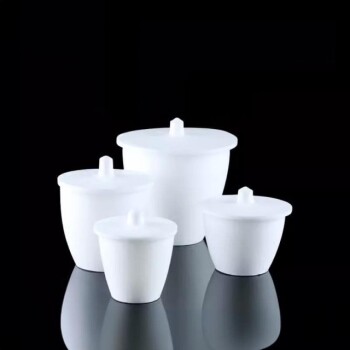
- Custom Machined and Molded PTFE Teflon Parts Manufacturer with PTFE Crucible and Lid
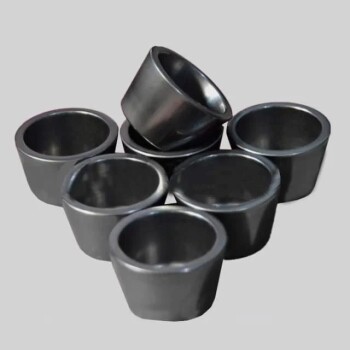
- High Purity Pure Graphite Crucible for Evaporation
- High Purity Pure Graphite Crucible for Electron Beam Evaporation
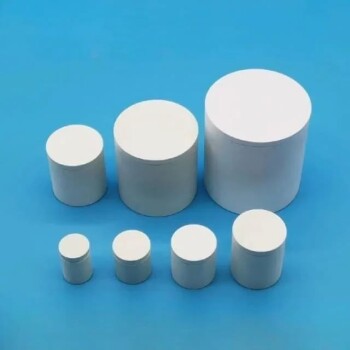
- Boron Nitride (BN) Crucible for Phosphorous Powder Sintered
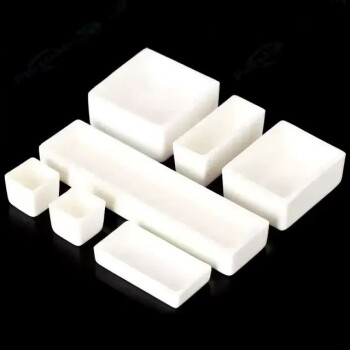
- Engineering Advanced Fine Alumina Al2O3 Ceramic Crucible for Laboratory Muffle Furnace
People Also Ask
- Why is a PTFE crucible preferred for plasma etching? Ensure Chemical Integrity and Targeted Action
- What essential consumables are required for laboratory processes? Expert Guide to PTFE, Ceramics, and Crucibles
- Why are PTFE molds used for dental resin specimens? Ensure Pure Samples and Accurate Testing
- What are the advantages of using PTFE molds for preparing PUA hybrid films? Ensure High Purity and Easy Demolding
- What advantages do PTFE molds offer for composite polymer electrolyte casting? Ensure Defect-Free Membrane Fabrication