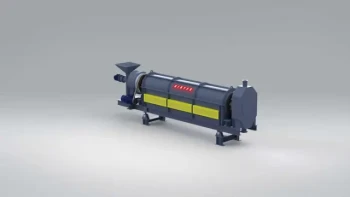
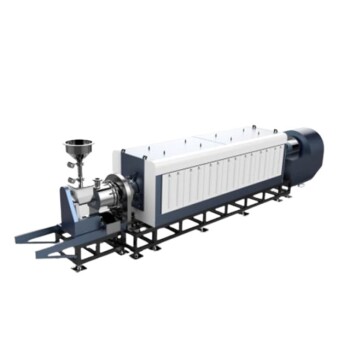
The tube furnace serves as a precision thermal reactor that provides a strictly controlled, high-temperature environment and a stable inert atmosphere. Its primary function is to facilitate the thermochemical transformation of precursors into carbon while preventing oxidative loss by isolating the material from oxygen.
Core Takeaway: A tube furnace is the critical tool for achieving the high-surface-area structures of modified porous carbon by providing the oxygen-free, high-heat conditions necessary for stable carbonization and precise chemical activation.
Atmospheric Control and Oxygen Isolation
Prevention of Oxidative Combustion
At the high temperatures required for carbonization (often exceeding 800°C), carbon reacts readily with oxygen. The tube furnace’s sealing integrity allows for a continuous flow of inert gases like nitrogen (N2) or argon, which displaces oxygen. This ensures the carbon source does not burn away, but instead transforms into a stable, porous skeleton.
Facilitating Thermochemical Reactions
The inert atmosphere is not just protective; it is functional. In processes involving chemical agents like potassium hydroxide (KOH), the furnace provides the stable environment needed for metallic vapors to penetrate the carbon matrix. This specific interaction is what drives the creation of dense microporous and mesoporous structures.
Driving Structural Transformation
Precise Temperature Regulation
Modified activated carbons require specific thermal profiles, such as heating at a rate of 10°C per minute. The tube furnace allows for this granular control, ensuring that volatile components are removed steadily. This precision prevents the structural collapse of the material and promotes the formation of nanoporous carbon structures.
Support for Multistage Processing
For specialized materials like porous carbon nanofibers, the furnace facilitates different chemical phases. It can manage air pre-oxidation at lower temperatures (e.g., 280°C) to create heat-resistant "ladder" molecular structures. Subsequently, it transitions to high-heat carbonization to complete dehydrogenation and polycondensation.
Induction of Adsorption Activity
When processing metal-ion-loaded carbons, the furnace provides the thermal energy required to trigger reactions between metal ions and surface functional groups. This process intentionally induces the collapse of macropores to generate numerous micropores. The result is a significant increase in the material’s specific surface area and overall adsorption activity.
Understanding the Trade-offs and Limitations
Heating Uniformity and Sample Size
While tube furnaces offer excellent atmospheric control, they are often limited by the thermal gradient across the tube. Large samples may experience uneven heating, where the core of the material does not reach the same temperature as the exterior, leading to inconsistent pore distribution.
Seal Degradation and Contamination
The integrity of the process relies entirely on the quality of the vacuum seals and gaskets. Over time, high-temperature cycling can degrade these seals, allowing trace amounts of oxygen to enter. This "micro-oxidation" can result in lower yields and a reduction in the functionalized surface groups of the carbon.
Applying This to Your Material Goals
How to Apply This to Your Project
To optimize the performance of your modified activated porous carbon, you must align the furnace settings with your specific material objectives:
- If your primary focus is High Energy Storage: Prioritize the activation phase between 700°C and 900°C to maximize the induction of micropores through chemical agents like KOH.
- If your primary focus is Structural Integrity (e.g., Nanofibers): Focus on the pre-oxidation stage at lower temperatures to ensure the molecular chains stabilize before the high-heat carbonization begins.
- If your primary focus is Maximizing Yield: Ensure the nitrogen flow is constant and the tube seals are tested for leaks to prevent any oxidative loss of the biomass precursor.
By mastering the thermal and atmospheric variables within the tube furnace, you can precisely engineer the pore size and surface chemistry of modified activated carbon.
Summary Table:
| Key Function | Mechanism | Impact on Material |
|---|---|---|
| Oxygen Isolation | Inert gas flow (N2/Ar) | Prevents oxidative loss; ensures carbon yield |
| Thermal Precision | Granular heating rates | Prevents structural collapse; forms nanopores |
| Chemical Activation | Controlled high-heat environment | Triggers micropore induction via agents like KOH |
| Multistage Processing | Pre-oxidation to Carbonization | Enables complex phases like dehydrogenation |
Elevate Your Materials Research with KINTEK Precision
Achieving the perfect porous structure in activated carbon requires more than just heat—it requires absolute atmospheric control and thermal stability. KINTEK specializes in providing high-performance laboratory equipment designed to meet the rigorous demands of carbonization and chemical activation.
Our portfolio includes:
- Advanced Furnaces: High-temperature tube, rotary, muffle, vacuum, and CVD furnaces for precise thermal profiles.
- Sample Processing: High-pressure reactors, autoclaves, and crushing/milling systems for material preparation.
- Specialized Consumables: High-purity ceramics, crucibles, and PTFE products to ensure contamination-free results.
- Comprehensive Research Tools: Battery research consumables, electrolytic cells, and cooling solutions (ULT freezers).
Whether you are focusing on high-energy storage or advanced adsorption, KINTEK provides the reliability and technical support your lab needs to succeed.
Contact our technical experts today to find the ideal furnace for your project!
References
- Siqi Lv, Zichuan Ma. Removal of Hexamethyldisiloxane via a Novel Hydrophobic (3–Aminopropyl)Trimethoxysilane-Modified Activated Porous Carbon. DOI: 10.3390/molecules28186493
This article is also based on technical information from Kintek Solution Knowledge Base .
Related Products
- Electric Rotary Kiln Small Rotary Furnace for Activated Carbon Regeneration
- Vertical Laboratory Tube Furnace
- Customer Made Versatile CVD Tube Furnace Chemical Vapor Deposition Chamber System Equipment
- Graphite Vacuum Furnace Bottom Discharge Graphitization Furnace for Carbon Materials
- Multi Heating Zones CVD Tube Furnace Machine Chemical Vapor Deposition Chamber System Equipment
People Also Ask
- What is a rotary kiln electric furnace? Achieve Superior Uniform Heating for Your Materials
- What is the temperature of activated carbon regeneration? Unlock the 1000°F Process for Reuse
- What is the regeneration temperature of activated carbon? Optimize Your Process with the Right Method
- What are the characteristics of the slipping, slumping, and rolling modes of bed motion? Optimize Your Rotary Process
- What are the parts of a carbon regeneration kiln? A Guide to Its Core Components and Function