Knowledge What is the function of high-energy sand milling in Si2N2O-based ceramic composites? Optimize Powder Refinement Today
Author avatar

Tech Team · Kintek Solution

Updated 1 day ago

What is the function of high-energy sand milling in Si2N2O-based ceramic composites? Optimize Powder Refinement Today


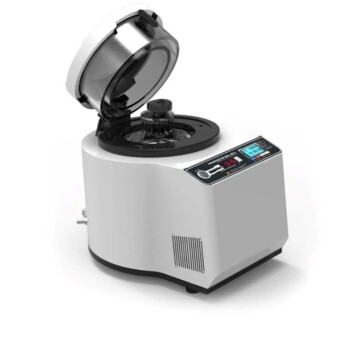
High-energy sand milling systems function as a critical refinement step in the processing of silicon and silica powders. Through a high-efficiency wet grinding mechanism, these systems drastically reduce the average particle size of raw materials from several micrometers down to approximately 600 nanometers.

While standard commercial powders are generally too coarse for advanced composite manufacturing, high-energy sand milling bridges the gap. By achieving sub-micron particle sizes, this process ensures the material has both the chemical reactivity and the physical fluidity required to infiltrate complex fiber architectures.

The Mechanism of Particle Refinement

Transitioning to the Sub-Micron Scale

Commercial silicon and silica powders typically arrive with particle sizes in the micrometer range. High-energy sand milling utilizes high-efficiency grinding to break these particles down.

The target output is a significant reduction to an average size of roughly 600 nanometers.

Utilizing Wet Grinding

This process is performed as "wet grinding," creating a slurry rather than a dry powder. This method allows for more uniform particle reduction and facilitates the subsequent handling of the material as a fluid medium.

Why Refinement is Critical for Si2N2O Composites

Enhancing Chemical Reactivity

The reduction to 600 nanometers creates a massive increase in the specific surface area of the powder. This physical change directly enhances the reactivity of the powder.

For Si2N2O-based composites, this increased reactivity is essential for ensuring the precursor materials react fully and efficiently during the thermal processing stages.

Solving the Infiltration Challenge

The most practical function of this milling is enabling the infiltration of 3D fiber preforms. These preforms contain complex, microscopic pore structures that provide the structural backbone of the composite.

Raw, micrometer-sized powders are often too large to penetrate these tiny voids, leading to blockage and poor densification.

Ensuring Successful Slurry Penetration

By reducing particles to the sub-micron level, the milling system creates a slurry capable of navigating these intricate geometries. The fine particles can travel deep into the preform, ensuring a dense and uniform matrix.

Understanding the Trade-offs

Process Intensity vs. Material Performance

Implementing high-energy sand milling introduces an additional, energy-intensive step to the manufacturing workflow. It requires specialized equipment and precise control over the wet grinding parameters.

However, relying on unmilled commercial powders is generally not a viable alternative. Without this refinement, the inability to infiltrate the fiber preform results in a composite with voids and compromised structural integrity.

Making the Right Choice for Your Goal

To maximize the quality of your Si2N2O-based ceramic matrix composites, consider how particle size dictates your processing success:

  • If your primary focus is chemical homogeneity: The sub-micron refinement ensures high reactivity, leading to a more consistent formation of the ceramic matrix.
  • If your primary focus is structural density: The ability of the 600nm slurry to infiltrate 3D fiber preforms is the deciding factor in minimizing porosity and maximizing strength.

Refining your raw materials is not just about size; it is about enabling the physics required for high-performance composite fabrication.

Summary Table:

Feature Description Impact on Si2N2O Composites
Mechanism High-efficiency wet grinding Reduces particle size from micrometers to ~600nm
Reactivity Increased specific surface area Ensures full chemical reaction during thermal processing
Infiltration Fluid slurry transition Enables penetration into complex 3D fiber preforms
Structural Goal Sub-micron refinement Minimizes porosity and maximizes matrix density

Elevate Your Material Research with KINTEK Precision Solutions

Achieving the perfect sub-micron particle size is critical for the success of your Si2N2O-based ceramic matrix composites. At KINTEK, we specialize in the high-performance laboratory equipment you need to bridge the gap between raw materials and advanced composites.

Our extensive portfolio features cutting-edge crushing and milling systems, high-temperature furnaces (vacuum, CVD, and atmosphere), and hydraulic presses designed for superior material densification. Whether you are focused on improving chemical reactivity or mastering the infiltration of complex fiber architectures, KINTEK provides the reliability and precision your lab demands.

Ready to optimize your composite fabrication? Contact us today to explore our full range of laboratory solutions and discover how KINTEK can enhance your research outcomes.

References

  1. Brice Taillet, F. Teyssandier. Densification of Ceramic Matrix Composite Preforms by Si2N2O Formed by Reaction of Si with SiO2 under High Nitrogen Pressure. Part 1: Materials Synthesis. DOI: 10.3390/jcs5070178

This article is also based on technical information from Kintek Solution Knowledge Base .

Related Products

People Also Ask

Related Products

High Energy Planetary Ball Mill for Laboratory Horizontal Tank Type Milling Machine

High Energy Planetary Ball Mill for Laboratory Horizontal Tank Type Milling Machine

KT-P4000H uses the unique Y-axis planetary motion trajectory, and utilizes the collision, friction and gravity between the sample and the grinding ball to have a certain anti-sinking ability, which can obtain better grinding or mixing effects and further improve the sample output.

High Energy Planetary Ball Mill Milling Machine for Laboratory

High Energy Planetary Ball Mill Milling Machine for Laboratory

Experience fast and effective sample processing with the F-P2000 high-energy planetary ball mill. This versatile equipment offers precise control and excellent grinding capabilities. Perfect for laboratories, it features multiple grinding bowls for simultaneous testing and high output. Achieve optimal results with its ergonomic design, compact structure, and advanced features. Ideal for a wide range of materials, it ensures consistent particle size reduction and low maintenance.

High Energy Planetary Ball Mill Milling Machine for Laboratory

High Energy Planetary Ball Mill Milling Machine for Laboratory

The biggest feature is that the high energy planetary ball mill can not only perform fast and effective grinding, but also has good crushing ability

Laboratory Ten-Body Horizontal Jar Mill for Lab Use

Laboratory Ten-Body Horizontal Jar Mill for Lab Use

The Ten-body horizontal jar mill is for 10 ball mill pots (3000ml or less). It has frequency conversion control, rubber roller movement, and PE protective cover.

XRF & KBR plastic ring lab Powder Pellet Pressing Mold for FTIR

XRF & KBR plastic ring lab Powder Pellet Pressing Mold for FTIR

Get precise XRF samples with our plastic ring lab powder pellet pressing mold. Fast tableting speed and customizable sizes for perfect molding every time.

Manual High Temperature Heated Hydraulic Press Machine with Heated Plates for Lab

Manual High Temperature Heated Hydraulic Press Machine with Heated Plates for Lab

The High Temperature Hot Press is a machine specifically designed for pressing, sintering and processing materials in a high temperature environment. It is capable of operating in the range of hundreds of degrees Celsius to thousands of degrees Celsius for a variety of high temperature process requirements.

Automatic High Temperature Heated Hydraulic Press Machine with Heated Plates for Lab

Automatic High Temperature Heated Hydraulic Press Machine with Heated Plates for Lab

The High Temperature Hot Press is a machine specifically designed for pressing, sintering and processing materials in a high temperature environment. It is capable of operating in the range of hundreds of degrees Celsius to thousands of degrees Celsius for a variety of high temperature process requirements.

Automatic Lab Cold Isostatic Press CIP Machine Cold Isostatic Pressing

Automatic Lab Cold Isostatic Press CIP Machine Cold Isostatic Pressing

Efficiently prepare samples with our Automatic Lab Cold Isostatic Press. Widely used in material research, pharmacy, and electronic industries. Provides greater flexibility and control compared to electric CIPs.

Single Punch Electric Tablet Press Machine TDP Tablet Punching Machine

Single Punch Electric Tablet Press Machine TDP Tablet Punching Machine

The electric tablet punching machine is a laboratory equipment designed for pressing various granular and powdery raw materials into discs and other geometric shapes. It is commonly used in pharmaceutical, healthcare products, food, and other industries for small batch production and processing. The machine is compact, lightweight, and easy to operate, making it suitable for use in clinics, schools, laboratories, and research units.

Laboratory Test Sieves and Vibratory Sieve Shaker Machine

Laboratory Test Sieves and Vibratory Sieve Shaker Machine

Efficiently process powders, granules, and small blocks with a high-frequency vibration sieve. Control vibration frequency, screen continuously or intermittently, and achieve accurate particle size determination, separation, and classification.

Laboratory Vibratory Sieve Shaker Machine for Dry and Wet Three-Dimensional Sieving

Laboratory Vibratory Sieve Shaker Machine for Dry and Wet Three-Dimensional Sieving

KT-VD200 can be used for sieving tasks of dry and wet samples in the laboratory. The screening quality is 20g-3kg. The product is designed with a unique mechanical structure and an electromagnetic vibrating body with a vibration frequency of 3000 times per minute.

Electric Split Lab Cold Isostatic Press CIP Machine for Cold Isostatic Pressing

Electric Split Lab Cold Isostatic Press CIP Machine for Cold Isostatic Pressing

Split cold isostatic presses are capable of providing higher pressures, making them suitable for testing applications that require high pressure levels.

Precision Machined Yttrium Stabilized Zirconia Ceramic Rod for Engineering Advanced Fine Ceramics

Precision Machined Yttrium Stabilized Zirconia Ceramic Rod for Engineering Advanced Fine Ceramics

Zirconia ceramic rods are prepared by isostatic pressing, and a uniform, dense and smooth ceramic layer and transition layer are formed at high temperature and high speed.

Vibratory Sieve Shaker Machine Dry Three-Dimensional Vibrating Sieve

Vibratory Sieve Shaker Machine Dry Three-Dimensional Vibrating Sieve

The KT-V200 product focuses on solving common sieving tasks in the laboratory. It is suitable for sieving 20g-3kg dry samples.

Benchtop Laboratory Freeze Dryer for Lab Use

Benchtop Laboratory Freeze Dryer for Lab Use

Premium benchtop laboratory freeze dryer for lyophilization, preserving samples with ≤ -60°C cooling. Ideal for pharmaceuticals & research.

Automatic Heated Hydraulic Press Machine with Heated Plates for Laboratory Hot Press 25T 30T 50T

Automatic Heated Hydraulic Press Machine with Heated Plates for Laboratory Hot Press 25T 30T 50T

Efficiently prepare your samples with our Automatic Heated Lab Press. With a pressure range up to 50T and precise control, it's perfect for various industries.

Automatic Laboratory Hydraulic Pellet Press Machine for Lab Use

Automatic Laboratory Hydraulic Pellet Press Machine for Lab Use

Experience efficient sample preparation with our Automatic Lab Press Machine. Ideal for material research, pharmacy, ceramics, and more. Features a compact size and hydraulic press functionality with heating plates. Available in various sizes.

Chemical Vapor Deposition CVD Equipment System Chamber Slide PECVD Tube Furnace with Liquid Gasifier PECVD Machine

Chemical Vapor Deposition CVD Equipment System Chamber Slide PECVD Tube Furnace with Liquid Gasifier PECVD Machine

KT-PE12 Slide PECVD System: Wide power range, programmable temp control, fast heating/cooling with sliding system, MFC mass flow control & vacuum pump.

Heated Hydraulic Press Machine with Integrated Manual Heated Plates for Lab Use

Heated Hydraulic Press Machine with Integrated Manual Heated Plates for Lab Use

Efficiently process heat-pressing samples with our Integrated Manual Heated Lab Press. With a heating range up to 500°C, it's perfect for various industries.

Metallographic Specimen Mounting Machine for Laboratory Materials and Analysis

Metallographic Specimen Mounting Machine for Laboratory Materials and Analysis

Precision metallographic mounting machines for labs—automated, versatile, and efficient. Ideal for sample prep in research and quality control. Contact KINTEK today!


Leave Your Message