The rolling press process functions as the critical consolidation step that utilizes mechanical pressure to transform loose active materials into a cohesive, high-performance electrode. Specifically, it combines conductive carbon black, activated carbon powder, and Polytetrafluoroethylene (PTFE) binders into a uniform thin film, typically achieving a thickness between 0.3 and 0.4 mm.
The primary purpose of this process is to balance structural integrity with electrochemical efficiency. By compacting the material to a target density, it minimizes electrical resistance while preserving the necessary porosity for effective oxygen transport.
Structural Formation and Integrity
The rolling press does more than simply flatten material; it engineers the physical structure of the air cathode to ensure durability and consistency.
Creating a Uniform Film
The process takes a mixture of conductive and active powders along with PTFE binders and compresses them into a unified layer.
This mechanical pressure ensures the formation of a uniform thin film, eliminating irregularities that could lead to uneven current distribution.
Adhesion to the Current Collector
A vital function of the rolling press is ensuring the active material adheres firmly to the substrate, typically a stainless steel wire mesh.
This physical bonding is essential for the mechanical stability of the electrode, preventing delamination during operation.
It also significantly enhances the contact between the active particles and the current collector, which is necessary for efficient electron transfer.
Optimizing Electrochemical Performance
Beyond physical structure, the rolling press directly influences how the cathode performs chemically and electrically.
Controlling Porosity and Oxygen Transport
The pressure applied during rolling dictates the final porosity of the electrode.
This control is crucial for optimizing oxygen transport paths, allowing gas to permeate the layer and reach the reaction sites efficiently.
By managing the pore structure, the process stabilizes the three-phase reaction interface (where gas, electrolyte, and catalyst meet), which is the heart of the air cathode's function.
Reducing Contact Resistance
Supplementary data indicates that the rolling press compacts electrode material to a target density, such as 3.0 g per cubic centimeter.
This compaction forces active particles closer together, increasing particle-to-particle contact.
The result is a significant reduction in contact resistance and an increase in the battery's volumetric energy density.
Understanding the Trade-offs
While the rolling press is essential, it requires precise calibration to avoid compromising electrode performance.
The Density vs. Permeability Conflict
Applying too much pressure can lead to an overly dense electrode.
While this maximizes electrical conductivity, it can crush the pore structure, choking off the oxygen supply required for the reaction.
Conversely, insufficient pressure preserves porosity but results in high electrical resistance and poor mechanical adhesion, leading to unstable performance.
Optimizing the Process for Your Goals
To achieve the best results in air cathode preparation, you must tailor the rolling press parameters to your specific performance targets.
- If your primary focus is minimizing ohmic loss: Increase the rolling pressure slightly to maximize particle contact and target a higher density (e.g., near 3.0 g/cm³).
- If your primary focus is high-rate discharge capability: Prioritize a lighter compression to maintain open oxygen transport paths and a robust three-phase interface.
The ultimate goal is to achieve a film thickness of 0.3–0.4 mm that perfectly balances mechanical adhesion with the porosity required for efficient gas diffusion.
Summary Table:
| Feature | Function in Rolling Press Process | Impact on Performance |
|---|---|---|
| Material Consolidation | Transforms loose powder & PTFE into a 0.3-0.4mm film | Ensures mechanical integrity and film uniformity |
| Porosity Control | Adjusts pressure to manage pore structure | Optimizes oxygen transport and 3-phase interface |
| Adhesion | Bonds active material to stainless steel mesh | Enhances electron transfer and prevents delamination |
| Compaction | Increases particle-to-particle contact density | Reduces contact resistance and boosts energy density |
Elevate Your Battery Research with Precision Engineering
High-performance air cathodes require the perfect balance of density and porosity. KINTEK provides the specialized laboratory hydraulic presses, rolling systems, and essential PTFE consumables needed to achieve consistent 0.3–0.4 mm film thickness and optimal electrochemical efficiency.
Whether you are focusing on minimizing ohmic loss or maximizing high-rate discharge, our equipment is designed for the rigorous demands of battery research and material science. Let our experts help you select the right tools for your lab—from crushing and milling systems to advanced electrolytic cells.
Ready to optimize your electrode fabrication? Contact KINTEK today for a tailored solution!
References
- Xiaoyu Han, Xin Zhao. Simultaneous Phosphate Removal and Power Generation by the Aluminum–Air Fuel Cell for Energy Self-Sufficient Electrocoagulation. DOI: 10.3390/app13074628
This article is also based on technical information from Kintek Solution Knowledge Base .
Related Products
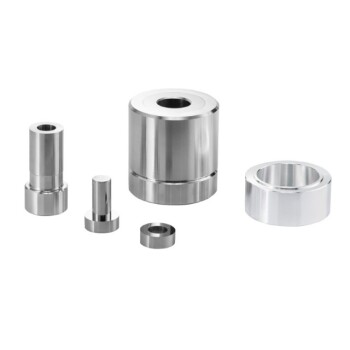
- Round Bidirectional Press Mold for Lab
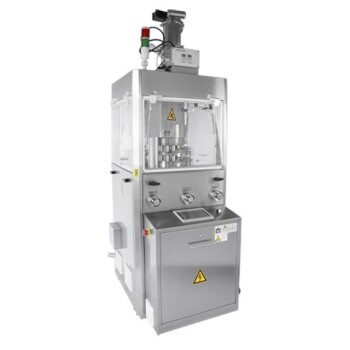
- Single Punch Tablet Press Machine and Mass Production Rotary Tablet Punching Machine for TDP
- Ring Press Mold for Lab Applications
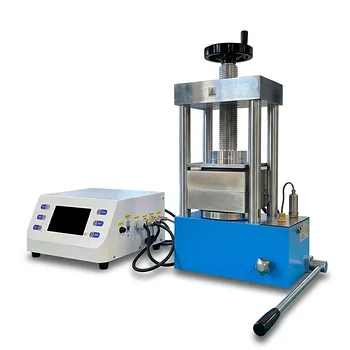
- Manual Lab Heat Press
- Vacuum Hot Press Furnace Machine for Lamination and Heating
People Also Ask
- How to use a press mold? Master the Art of Creating Consistent Ceramic Forms
- What is the press mould method? A Guide to Consistent, Detailed Ceramic Forms
- What is the function of press molds during the preparation of SiCf/Ti-43Al-9V composites? Achieve Structural Precision
- What is a press mold used for? Achieve Repeatable Precision and Efficiency
- What is the purpose of specialized pressure devices in sulfide solid-state batteries? Ensure Chemo-Mechanical Stability