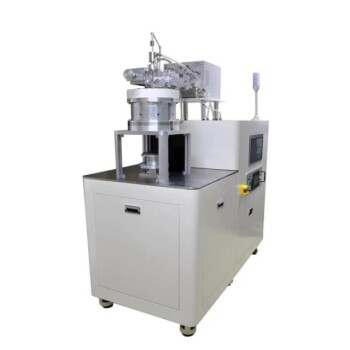
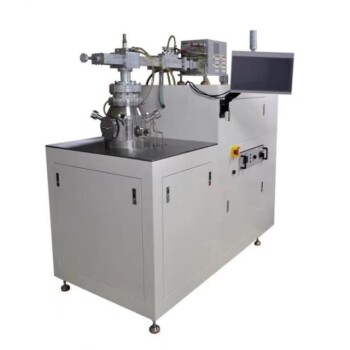
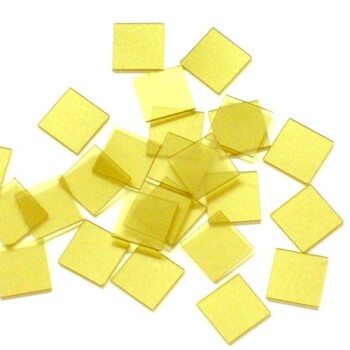
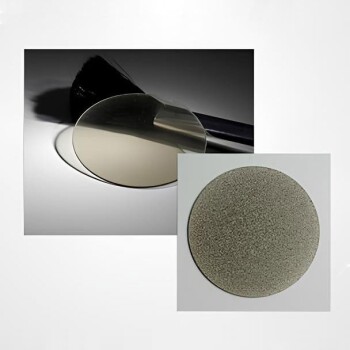
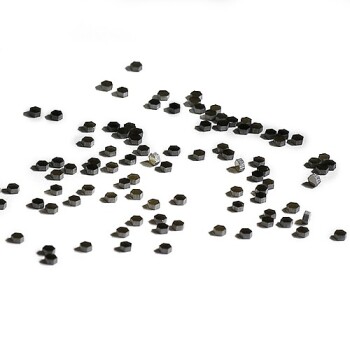
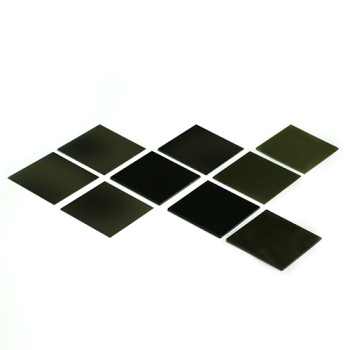
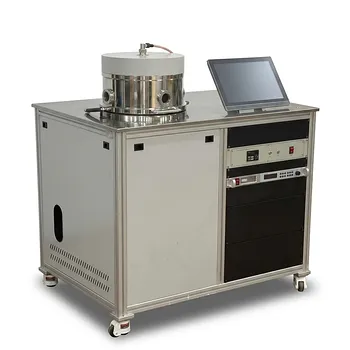
Chemical Vapor Deposition (CVD) is a high-tech process that grows diamonds atom by atom by breaking down hydrocarbon gases in a vacuum chamber. The general workflow involves placing a prepared substrate (often a diamond seed) into the chamber, heating it to approximately 800°C, and introducing a precise mixture of gases. An energy source then ionizes these gases into plasma, causing pure carbon to precipitate out and crystallize onto the substrate layer by layer.
The Core Mechanism: CVD relies on ionization. By blasting a specific gas mixture with energy, the molecular bonds break, creating chemically active radicals that allow carbon atoms to "rain" down onto a seed crystal, mimicking the formation of diamond but at much lower pressures than natural geologic processes.
Phase 1: Preparation and Environment
Preparing the Substrate
The process begins with the selection of a substrate, typically a thin diamond seed or a material capable of supporting diamond growth.
This material must be meticulously cleaned to ensure high-quality growth. The surface is often abraded with diamond powder to create nucleation sites—microscopic rough spots where the new diamond structure can anchor itself.
Optimizing the Chamber Conditions
Once the substrate is placed inside the vacuum chamber, the environment must be tightly controlled. The substrate is heated to a precise operating temperature, typically around 800°C (roughly 1500°F).
Stability is key here; if the temperature fluctuates significantly, the crystal structure may fail to form correctly, or the seed may degrade.
Phase 2: Gas Introduction and Chemistry
The Critical Gas Ratio
With the temperature set, specific gases are introduced into the chamber. The mixture always includes a carbon source (usually methane) and hydrogen.
According to standard protocols, the ratio is heavily skewed toward hydrogen. A typical mixture consists of 1 part methane to 99 parts hydrogen. This specific balance is essential because hydrogen helps "etch" away non-diamond carbon (like graphite) that might try to form during the process.
Creating the Plasma
The gases alone will not form a diamond; they must be energized. An external power source is applied to the gas mixture to induce ionization.
Common energy sources used to drive this reaction include:
- Microwave power (creating a microwave plasma).
- Hot filaments (heating the gas directly).
- Arc discharges.
- Lasers.
Phase 3: Deposition and Growth
From Gas to Solid
The applied energy turns the gas mixture into chemically active radicals (plasma). In this high-energy state, the molecular bonds of the methane break apart.
Free carbon atoms separate from the gas cloud and deposit onto the cooler substrate below. These atoms bond to the crystal lattice of the seed, slowly building the diamond up layer by layer.
Maintenance Cycles
Growth is not always continuous. The process may be paused every few days. This allows technicians to remove the developing diamond and polish the top surface.
This step is necessary to remove any non-diamond carbon (graphite) that has accumulated. If left unchecked, these impurities would interrupt the crystal structure and stop the diamond from growing. The entire cycle can take days to weeks, depending on the target size.
Understanding the Trade-offs
While CVD allows for precise control over impurities, it is a complex balancing act.
- Graphite Contamination: The primary challenge is preventing graphite from forming instead of diamond. The high hydrogen concentration helps, but regular interruptions for cleaning are often required, extending production time.
- Growth Rate vs. Quality: Pushing the process to go faster (by increasing methane concentration) often degrades the crystal quality. High-quality Type IIa diamonds require slower growth rates to ensure purity.
Making the Right Choice for Your Goal
The CVD process is highly flexible, allowing for the creation of gem-quality stones or specialized industrial materials.
- If your primary focus is Purity: Prioritize processes that utilize a high hydrogen-to-methane ratio (99:1) and lower growth rates to produce Type IIa diamonds.
- If your primary focus is Scalability: Look for systems that utilize microwave plasma energy, as this method is effective for maintaining uniform conditions over larger areas or multiple stones.
Success in CVD growth depends not just on the equipment, but on the precise maintenance of the thermal and chemical environment inside the chamber.
Summary Table:
| Phase | Key Process Step | Description |
|---|---|---|
| Preparation | Substrate Cleaning & Seeding | Diamond seeds are cleaned and abraded to create nucleation sites. |
| Atmosphere | Gas Introduction | A precise mixture (typically 99% Hydrogen, 1% Methane) is introduced. |
| Ionization | Plasma Generation | Microwave or filament energy breaks gas bonds into active carbon radicals. |
| Deposition | Atomic Crystallization | Carbon atoms precipitate and bond layer-by-layer onto the seed crystal. |
| Refinement | Maintenance & Polishing | Periodic cleaning to remove graphite impurities and ensure crystal purity. |
Elevate Your Material Science with KINTEK Precision
Ready to achieve superior results in diamond growth or advanced material deposition? KINTEK specializes in providing the high-performance laboratory equipment essential for the most demanding CVD processes.
Our extensive portfolio supports every stage of your research and production, featuring:
- High-Temperature Vacuum Furnaces & CVD Systems: Precise thermal control for stable crystal growth.
- Crushing, Milling & Sieving Systems: For meticulous substrate and material preparation.
- Specialized Consumables: High-quality ceramics, crucibles, and PTFE products designed for extreme environments.
- Advanced Lab Solutions: From high-pressure reactors to cooling systems (ULT freezers and freeze dryers).
Maximize your lab's potential today. Contact our specialists to find the perfect equipment solution and see how KINTEK can streamline your path to innovation.
Related Products
- 915MHz MPCVD Diamond Machine Microwave Plasma Chemical Vapor Deposition System Reactor
- Microwave Plasma Chemical Vapor Deposition MPCVD Machine System Reactor for Lab and Diamond Growth
- Cylindrical Resonator MPCVD Machine System Reactor for Microwave Plasma Chemical Vapor Deposition and Lab Diamond Growth
- HFCVD Machine System Equipment for Drawing Die Nano-Diamond Coating
- CVD Diamond Domes for Industrial and Scientific Applications
People Also Ask
- How does a microwave plasma reactor facilitate the synthesis of diamond? Master MPCVD with Precision Technology
- What are the advantages of a Microwave Plasma CVD reactor for MCD/NCD coatings? Precision Multilayer Diamond Engineering
- How do vacuum pumps and valves collaborate in MPCVD? Achieve Precise Pressure Control for Superior CNT Synthesis
- What are the primary advantages of the CVD method for growing diamonds? Engineering High-Purity Gems and Components
- How is a diamond formed from CVD? The Science of Growing Diamonds Atom by Atom