Knowledge Graphitization furnace What is the graphite furnace method? Achieve Ultra-High Temperatures with Purity & Speed
Author avatar

Tech Team · Kintek Solution

Updated 2 months ago

What is the graphite furnace method? Achieve Ultra-High Temperatures with Purity & Speed


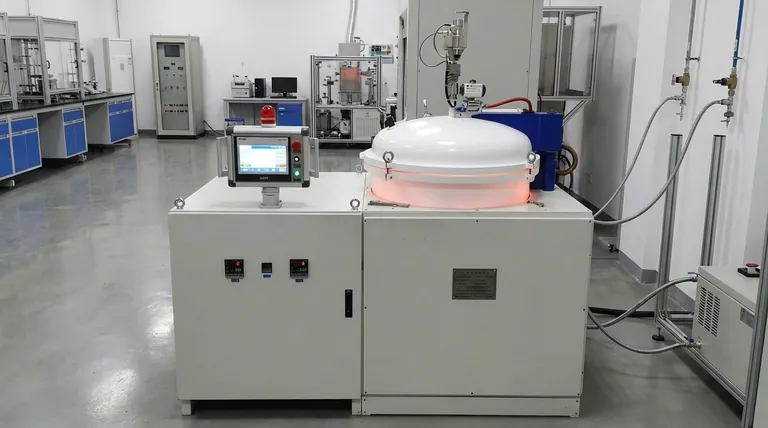
In essence, the graphite furnace method is a form of high-temperature electrothermal processing where the furnace's heating elements and chamber are constructed from graphite. An electric current is passed through the graphite, which resists the flow and generates intense, uniform heat. This process is nearly always conducted in a vacuum or a controlled, inert atmosphere to prevent the graphite from oxidizing at extreme temperatures.

The core value of the graphite furnace method lies in its ability to achieve exceptionally high and uniform temperatures very quickly. This makes it an indispensable tool for advanced materials processing where precise thermal control in an oxygen-free environment is critical.
What is the graphite furnace method? Achieve Ultra-High Temperatures with Purity & Speed

How a Graphite Furnace Works: The Core Principles

The effectiveness of this method stems from the unique properties of graphite and the controlled environment in which it operates. Understanding these principles is key to leveraging its power.

Electrical Resistance Heating

A graphite furnace is a type of resistance furnace. The fundamental principle is simple: electricity is passed through the graphite heating elements.

Due to graphite's natural electrical resistance, this electrical energy is converted directly into thermal energy, generating immense heat inside the furnace chamber.

The Critical Role of Graphite

Graphite is not just a convenient choice; its properties are central to the furnace's performance.

It possesses a low thermal capacity, meaning it heats up and cools down very rapidly. This allows for fast processing cycles.

Critically, a graphite chamber creates near-perfect black body conditions. This ensures that heat is radiated with exceptional uniformity, eliminating hot spots and ensuring the entire workpiece receives the same thermal treatment.

Controlled Atmosphere (Vacuum or Inert Gas)

Graphite furnaces cannot operate in the presence of oxygen at high temperatures. Doing so would cause the graphite components to rapidly oxidize and burn away.

Therefore, the process is always performed within a sealed chamber that is either evacuated to a vacuum or filled with a protective, inert gas like argon. This protects not only the furnace itself but also the material being processed from unwanted chemical reactions.

Key Advantages of the Graphite Furnace Method

The combination of these principles gives the method several distinct advantages over other heating technologies.

Rapid and Uniform Heating

The low density and low thermal mass of graphite allow for exceptionally fast heating and cooling rates. Combined with its black body radiation properties, this results in superior temperature uniformity across the entire heating zone.

High-Temperature Capability

Graphite maintains its structural integrity at extreme temperatures, far exceeding the limits of most metallic heating elements. This makes it ideal for processes that require temperatures well over 2000°C, such as graphitization or sintering of advanced ceramics.

Process Purity and Control

Operating in a vacuum or inert atmosphere creates an ultra-clean environment. This prevents oxidation and contamination of sensitive materials during heat treatment, ensuring high product purity.

Understanding the Trade-offs and Limitations

No technology is without its compromises. Objectivity requires acknowledging the limitations of the graphite furnace method.

Requires a Controlled Atmosphere

The absolute necessity for a vacuum or inert gas environment adds complexity and cost to the system. It is not suitable for applications that must be performed in air.

Potential for Carbon Reactivity

At very high temperatures, carbon can react with certain materials, forming unwanted carbides. This makes it unsuitable for processing specific reactive metals or compounds without careful consideration or protective barriers.

Consumable Components

Graphite heating elements and insulation are consumable. Over time and repeated thermal cycles, they will degrade and require periodic replacement, which is a key operational cost.

How to Apply This to Your Project

Your choice of furnace technology must align directly with your material and process requirements.

  • If your primary focus is achieving ultra-high temperatures (>2000°C): The graphite furnace method is an industry standard for processes like graphitizing, sintering advanced ceramics, and melting refractory metals.
  • If your primary focus is process purity and avoiding oxidation: The vacuum or inert gas environment inherent to this method makes it a superior choice for treating sensitive materials.
  • If your primary focus is processing in an air atmosphere or your material reacts with carbon: You must consider alternative furnaces with metallic (Kanthal, Moly-D) or ceramic (SiC, MoSi2) heating elements.

Ultimately, selecting the graphite furnace method is a strategic decision for applications demanding high performance, speed, and purity in a controlled environment.

Summary Table:

Feature Benefit
Graphite Heating Elements Enables rapid heating & cooling with superior temperature uniformity.
Vacuum/Inert Atmosphere Ensures process purity by preventing oxidation and contamination.
High-Temperature Capability Ideal for processes exceeding 2000°C, like sintering and graphitization.
Black Body Conditions Provides uniform thermal treatment across the entire workpiece.

Ready to leverage the power of the graphite furnace method for your lab?

KINTEK specializes in high-performance lab equipment, including graphite furnace systems designed for demanding applications. Whether you're sintering advanced ceramics, graphitizing materials, or processing sensitive compounds, our solutions deliver the rapid heating, ultra-high temperatures, and contamination-free environment you require.

Contact our experts today to discuss how a KINTEK graphite furnace can enhance your materials processing capabilities and drive your research forward.

Visual Guide

What is the graphite furnace method? Achieve Ultra-High Temperatures with Purity & Speed Visual Guide

Related Products

People Also Ask

Related Products

Ultra-High Temperature Graphite Vacuum Graphitization Furnace

Ultra-High Temperature Graphite Vacuum Graphitization Furnace

The ultra-high temperature graphitization furnace utilizes medium frequency induction heating in a vacuum or inert gas environment. The induction coil generates an alternating magnetic field, inducing eddy currents in the graphite crucible, which heats up and radiates heat to the workpiece, bringing it to the desired temperature. This furnace is primarily used for graphitization and sintering of carbon materials, carbon fiber materials, and other composite materials.

Graphite Vacuum Furnace IGBT Experimental Graphitization Furnace

Graphite Vacuum Furnace IGBT Experimental Graphitization Furnace

IGBT experimental graphitization furnace, a tailored solution for universities and research institutions, with high heating efficiency, user-friendliness, and precise temperature control.

Graphite Vacuum Furnace High Thermal Conductivity Film Graphitization Furnace

Graphite Vacuum Furnace High Thermal Conductivity Film Graphitization Furnace

The high thermal conductivity film graphitization furnace has uniform temperature, low energy consumption and can operate continuously.

Horizontal High Temperature Graphite Vacuum Graphitization Furnace

Horizontal High Temperature Graphite Vacuum Graphitization Furnace

Horizontal Graphitization Furnace: This type of furnace is designed with the heating elements placed horizontally, allowing for uniform heating of the sample. It's well-suited for graphitizing large or bulky samples that require precise temperature control and uniformity.

2200 ℃ Graphite Vacuum Heat Treat Furnace

2200 ℃ Graphite Vacuum Heat Treat Furnace

Discover the power of the KT-VG Graphite Vacuum Furnace - with a maximum working temperature of 2200℃, it's perfect for vacuum sintering of various materials. Learn more now.

Vertical High Temperature Graphite Vacuum Graphitization Furnace

Vertical High Temperature Graphite Vacuum Graphitization Furnace

Vertical high temperature graphitization furnace for carbonization and graphitization of carbon materials up to 3100℃.Suitable for shaped graphitization of carbon fiber filaments and other materials sintered in a carbon environment.Applications in metallurgy, electronics, and aerospace for producing high-quality graphite products like electrodes and crucibles.

Graphite Vacuum Continuous Graphitization Furnace

Graphite Vacuum Continuous Graphitization Furnace

High-temperature graphitization furnace is a professional equipment for graphitization treatment of carbon materials. It is a key equipment for the production of high-quality graphite products. It has high temperature, high efficiency and uniform heating. It is suitable for various high-temperature treatments and graphitization treatments. It is widely used in metallurgy, electronics, aerospace, etc. industry.

Graphite Vacuum Furnace Negative Material Graphitization Furnace

Graphite Vacuum Furnace Negative Material Graphitization Furnace

Graphitization furnace for battery production has uniform temperature and low energy consumption. Graphitization furnace for negative electrode materials: an efficient graphitization solution for battery production and advanced functions to enhance battery performance.

Large Vertical Graphite Vacuum Graphitization Furnace

Large Vertical Graphite Vacuum Graphitization Furnace

A large vertical high-temperature graphitization furnace is a type of industrial furnace used for the graphitization of carbon materials, such as carbon fiber and carbon black. It is a high-temperature furnace that can reach temperatures of up to 3100°C.

Graphite Vacuum Furnace Bottom Discharge Graphitization Furnace for Carbon Materials

Graphite Vacuum Furnace Bottom Discharge Graphitization Furnace for Carbon Materials

Bottom-out graphitization furnace for carbon materials, ultra-high temperature furnace up to 3100°C, suitable for graphitization and sintering of carbon rods and carbon blocks. Vertical design, bottom discharging, convenient feeding and discharging, high temperature uniformity, low energy consumption, good stability, hydraulic lifting system, convenient loading and unloading.

Carbon Graphite Boat -Laboratory Tube Furnace with Cover

Carbon Graphite Boat -Laboratory Tube Furnace with Cover

Covered Carbon Graphite Boat Laboratory Tube Furnaces are specialized vessels or vessels made of graphite material designed to withstand extreme high temperatures and chemically aggressive environments.

High Purity Pure Graphite Crucible for Evaporation

High Purity Pure Graphite Crucible for Evaporation

Vessels for high temperature applications, where materials are kept at extremely high temperatures to evaporate, allowing thin films to be deposited on substrates.

High Purity Pure Graphite Crucible for Electron Beam Evaporation

High Purity Pure Graphite Crucible for Electron Beam Evaporation

A technology mainly used in the field of power electronics. It is a graphite film made of carbon source material by material deposition using electron beam technology.

High Temperature Muffle Oven Furnace for Laboratory Debinding and Pre Sintering

High Temperature Muffle Oven Furnace for Laboratory Debinding and Pre Sintering

KT-MD High temperature debinding and pre-sintering furnace for ceramic materials with various molding processes. Ideal for electronic components such as MLCC and NFC.

1200℃ Split Tube Furnace with Quartz Tube Laboratory Tubular Furnace

1200℃ Split Tube Furnace with Quartz Tube Laboratory Tubular Furnace

KT-TF12 split tube furnace: high-purity insulation, embedded heating wire coils, and max. 1200C. Widely used for new materials and chemical vapour deposition.

Vacuum Arc Induction Melting Furnace

Vacuum Arc Induction Melting Furnace

Discover the power of Vacuum Arc Furnace for melting active & refractory metals. High-speed, remarkable degassing effect, and free of contamination. Learn more now!

Laboratory Muffle Oven Furnace Bottom Lifting Muffle Furnace

Laboratory Muffle Oven Furnace Bottom Lifting Muffle Furnace

Efficiently produce batches with excellent temperature uniformity using our Bottom Lifting Furnace. Features two electric lifting stages and advanced temperature control up to 1600℃.

Dental Porcelain Zirconia Sintering Ceramic Furnace Chairside with Transformer

Dental Porcelain Zirconia Sintering Ceramic Furnace Chairside with Transformer

Experience top-notch sintering with Chairside Sintering Furnace with Transformer. Easy to operate, noise-free pallet, and automatic temperature calibration. Order now!

Laboratory Rapid Thermal Processing (RTP) Quartz Tube Furnace

Laboratory Rapid Thermal Processing (RTP) Quartz Tube Furnace

Get lightning-fast heating with our RTP Rapid Heating Tube Furnace. Designed for precise, high-speed heating and cooling with convenient sliding rail and TFT touch screen controller. Order now for ideal thermal processing!

Mesh belt controlled atmosphere furnace

Mesh belt controlled atmosphere furnace

Discover our KT-MB mesh belt sintering furnace - perfect for high-temperature sintering of electronic components & glass insulators. Available for open air or controlled atmosphere environments.


Leave Your Message