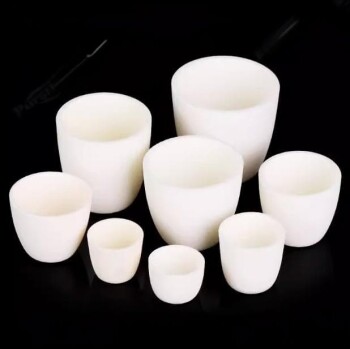
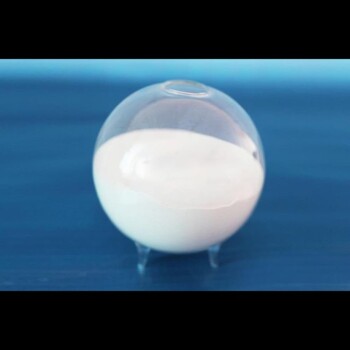
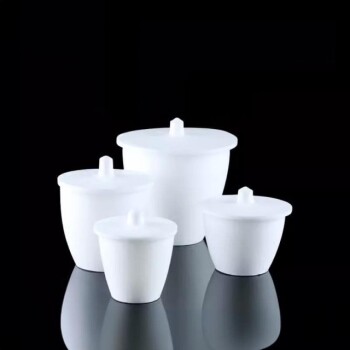
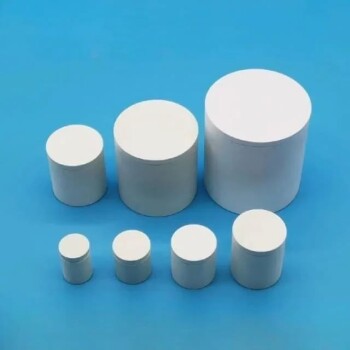
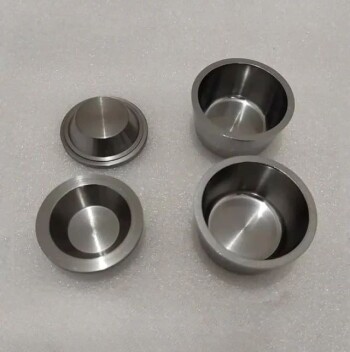
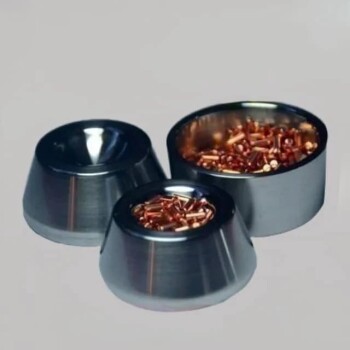
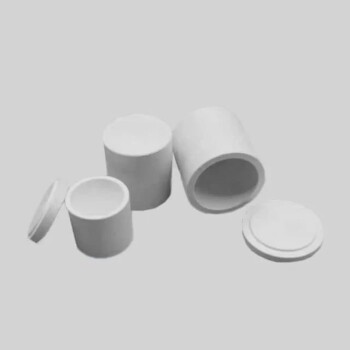
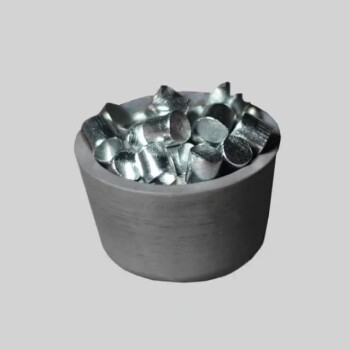
High-purity ceramic crucibles serve as the critical foundation for valid subcritical crack growth studies. In the context of melting or sintering, their primary function is to act as a chemically inert barrier that prevents container components from leaching into the sample at high temperatures. This ensures that the material being synthesized—such as hematite or corundum—retains its exact intended chemical composition without interference from the vessel itself.
Core Takeaway: Accuracy in stress corrosion cracking research relies entirely on material purity. High-purity crucibles eliminate the variable of container-induced contamination, ensuring that observed crack growth thresholds reflect the material's intrinsic properties rather than the behavior of external impurities.
The Critical Role of Inertness
Preventing High-Temperature Leaching
When materials are subjected to the extreme heat required for melting or sintering, standard containment vessels often degrade. This degradation releases container components into the molten sample.
High-purity ceramic crucibles are designed to remain chemically stable under these conditions. By resisting degradation, they stop the introduction of foreign elements into the sample matrix.
Preserving Intrinsic Material Properties
The goal of material synthesis in this context is to study the material's natural behavior. If the sample absorbs elements from the crucible, its fundamental properties change.
Using high-purity ceramics ensures that the intrinsic corrosion resistance of the material remains uncompromised. This allows researchers to isolate the specific material characteristics they intend to study.
The Connection to Crack Growth Data
Sensitivity to Impurities
Subcritical crack growth and oxide dissolution are not static processes; they are highly reactive to chemical environments. The source material emphasizes that these mechanisms are highly sensitive to impurities.
Even trace amounts of contamination from a crucible can alter how a material dissolves or cracks under stress. This sensitivity makes purity a non-negotiable variable in experimental design.
Ensuring Accurate Threshold Data
The ultimate output of these studies is the collection of stress corrosion cracking (SCC) threshold data. This data defines the limits of a material's structural integrity under specific conditions.
If the sample is contaminated, the resulting threshold data will be skewed. High-purity crucibles are the only way to ensure this data is accurate, repeatable, and representative of the true material.
The Risks of Material Contamination
The Hidden Variable
The danger of using lower-purity crucibles is that contamination is often invisible until the data analysis phase. Leached components can act as hidden variables that distort experimental results.
Compromised Corrosion Resistance
When impurities enter the sample, they often degrade the material's natural ability to resist corrosion. This leads to premature failure or accelerated crack growth that does not reflect the material's actual capabilities.
Researchers relying on contaminated samples risk drawing incorrect conclusions about the material's lifespan and safety limits.
Making the Right Choice for Your Goal
To ensure the validity of your subcritical crack growth studies, you must align your equipment choices with your precision requirements.
- If your primary focus is synthesizing hematite or corundum: You must use high-purity ceramic crucibles to prevent oxide dissolution variances caused by external contaminants.
- If your primary focus is establishing safety thresholds: You must prioritize chemical inertness in your processing vessels to ensure stress corrosion cracking data is chemically valid.
By eliminating the crucible as a source of error, you ensure that your data reflects the true limits of the material.
Summary Table:
| Feature | Importance in Crack Growth Studies | Impact on Research Data |
|---|---|---|
| Chemical Inertness | Prevents leaching of container components into samples | Ensures material intrinsic properties are preserved |
| High-Temp Stability | Resists degradation during melting and sintering | Eliminates hidden variables and impurities |
| Purity Control | Maintains exact chemical composition (e.g., Hematite/Corundum) | Guarantees accurate SCC threshold measurements |
| Contamination Prevention | Stops external elements from altering corrosion resistance | Provides repeatable and valid experimental results |
Elevate Your Material Research with KINTEK Precision
Don't let crucible contamination compromise your research integrity. KINTEK specializes in high-performance laboratory equipment, providing the high-purity ceramic crucibles and advanced sintering systems essential for subcritical crack growth studies. Whether you are synthesizing hematite or establishing safety thresholds, our chemically inert solutions ensure your data reflects the true intrinsic properties of your materials.
From high-temperature furnaces and autoclaves to precision ceramic consumables, KINTEK supports your lab with unmatched reliability. Contact us today to optimize your material synthesis process!
References
- Levi C. Felix, Boris I. Yakobson. Ab Initio Molecular Dynamics Insights into Stress Corrosion Cracking and Dissolution of Metal Oxides. DOI: 10.3390/ma18030538
This article is also based on technical information from Kintek Solution Knowledge Base .
Related Products
- High Purity Pure Graphite Crucible for Evaporation
- High Purity Pure Graphite Crucible for Electron Beam Evaporation
- Arc-Shaped Alumina Ceramic Crucible High Temperature Resistant for Engineering Advanced Fine Ceramics
- Engineering Advanced Fine Alumina Al2O3 Ceramic Crucible for Laboratory Muffle Furnace
- Alumina Al2O3 Ceramic Crucible Semicircle Boat with Lid for Engineering Advanced Fine Ceramics
People Also Ask
- Why are high-purity graphite crucibles preferred for sulfide solid electrolytes? Achieve Superior Material Purity
- Why is a high-purity graphite crucible required for Chromel-TaC composites? Ensure Peak Purity at 1400°C
- What role do high-purity graphite crucibles play in molten salt corrosion research? Ensure Reactor-Grade Precision
- Why are high-purity graphite crucibles used for magnesium distillation? Ensure 3N8 Purity & Thermal Stability
- Why is a high-purity graphite crucible ideal for nitrogen-doped graphene at 1500 °C? Maximize Purity and Stability