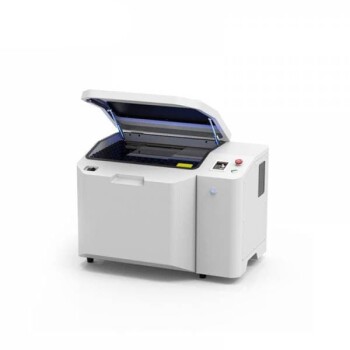
Precise powder preparation is the backbone of High Entropy Alloy (HEA) fabrication. Powder sieving and mixing systems serve as the critical foundation for these advanced materials by ensuring exact elemental ratios and exceptional mixing uniformity. By establishing these conditions, you enable the additive manufacturing equipment to perform in-situ alloying, resulting in specialized, high-performance materials that far exceed the capabilities of standard alloys.
Creating High Entropy Alloys requires more than just combining metals; it demands exact stoichiometric architecture. Powder sieving and mixing systems provide the requisite uniformity for in-situ alloying, unlocking the creation of the non-equilibrium microstructures that define the material's superior performance.
The Role of Precision in Material Development
Controlling Elemental Ratios
High Entropy Alloys depend on the presence of multiple principal elements in roughly equal proportions. Sieving and mixing systems allow for the precise control of these elemental powder ratios.
Without this granular control, achieving the specific chemical composition required for a viable HEA is impossible.
Achieving Mixing Uniformity
Having the correct amount of each element is only half the battle; the distribution must be homogeneous. These systems ensure high mixing uniformity throughout the entire powder batch.
This prevents the segregation of heavier or lighter particles, which is essential for consistent melting and solidification.
Enabling Advanced Manufacturing Capabilities
Facilitating In-Situ Alloying
Unlike standard printing that uses pre-alloyed powders, HEA development often relies on in-situ alloying. This process involves fusing elemental powders together chemically during the actual printing process.
Properly prepared powder beds provide the necessary conditions for this reaction to occur seamlessly layer by layer.
Creating Non-Equilibrium Microstructures
The ultimate goal of using HEAs is to access material properties not found in conventional metallurgy. The uniformity provided by these systems enables the production of non-equilibrium microstructures.
These unique atomic arrangements are responsible for the specialized high-performance characteristics, such as extreme strength or heat resistance, associated with bulk metallic glasses and HEAs.
Understanding the Trade-offs
Complexity of Preparation
While essential for performance, relying on in-situ alloying introduces significant complexity. The mixing process must be rigorously validated, as it adds a critical variable that does not exist when using pre-alloyed commercial powders.
Sensitivity to Heterogeneity
The process is unforgiving of error. If the sieving and mixing system fails to achieve perfect uniformity, the resulting part will suffer from inconsistent mechanical properties.
This sensitivity means that equipment calibration and powder quality assurance become potential bottlenecks in the production workflow.
Making the Right Choice for Your Goal
To leverage these systems effectively, assess your specific manufacturing objectives:
- If your primary focus is alloy discovery: Prioritize systems that offer the most granular control over elemental ratios to rapidly test different stoichiometric combinations.
- If your primary focus is mechanical performance: Prioritize systems known for exceptional mixing uniformity to ensure the consistent creation of non-equilibrium microstructures.
Mastering the science of powder preparation is the only way to reliably unlock the transformative potential of High Entropy Alloys.
Summary Table:
| Feature | Impact on HEA Production | Benefit for Additive Manufacturing |
|---|---|---|
| Elemental Ratio Control | Precise stoichiometry architecture | Enables custom alloy discovery and development |
| Mixing Uniformity | Homogeneous powder distribution | Prevents particle segregation for consistent melting |
| In-Situ Alloying | Direct chemical fusion during printing | Eliminates the need for expensive pre-alloyed powders |
| Microstructure Control | Formation of non-equilibrium structures | Achieves superior strength and thermal resistance |
Elevate Your HEA Research with KINTEK Precision Solutions
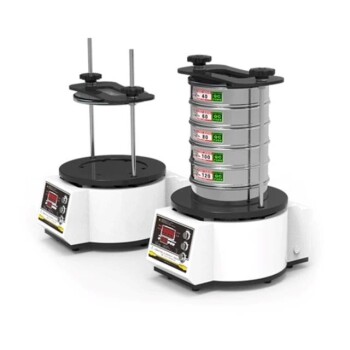
Unlock the full potential of High Entropy Alloys by mastering the science of powder preparation. At KINTEK, we specialize in the high-performance laboratory equipment essential for cutting-edge material science. Whether you are focused on alloy discovery or achieving peak mechanical performance, our comprehensive range of crushing and milling systems, sieving equipment, and high-temperature furnaces provides the granular control you need for successful in-situ alloying.
From preparing uniform powder batches to the final heat treatment in our advanced vacuum or atmosphere furnaces, KINTEK supports every stage of your additive manufacturing workflow. Our team is dedicated to providing researchers and manufacturers with the tools required to create the next generation of non-equilibrium microstructures.
Ready to optimize your powder preparation process? Contact KINTEK today to discuss your specific laboratory requirements!
References
- Alexander Katz‐Demyanetz, Andrey Koptyug. Powder-bed additive manufacturing for aerospace application: Techniques, metallic and metal/ceramic composite materials and trends. DOI: 10.1051/mfreview/2019003
This article is also based on technical information from Kintek Solution Knowledge Base .
Related Products
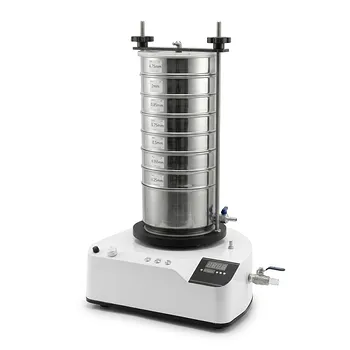
- Laboratory Test Sieves and Sieving Machines
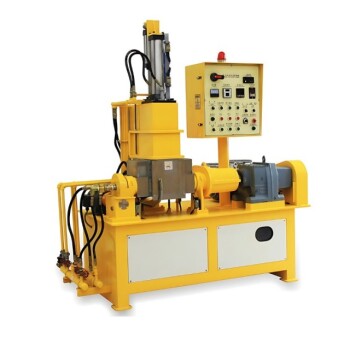
- Lab Internal Rubber Mixer Rubber Kneader Machine for Mixing and Kneading
- Three-dimensional electromagnetic sieving instrument
- Laboratory Vibratory Sieve Shaker Machine for Dry and Wet Three-Dimensional Sieving
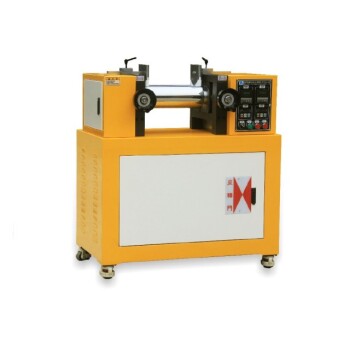
- Open Type Two Roll Mixing Mill Machine for Rubber Crusher
People Also Ask
- What are laboratory test sieves used for? A Guide to Particle Size Analysis
- How do you calculate the sieve test? Master Particle Size Distribution for Quality Control
- How does a lab test sieve contribute to biomass charcoal powder preparation? Achieve Uniform Particle Size
- What are the specifications for test sieves? A Guide to ASTM & ISO Standards for Accurate Particle Analysis
- What materials are required for sieving? Achieve Accurate Particle Size Analysis