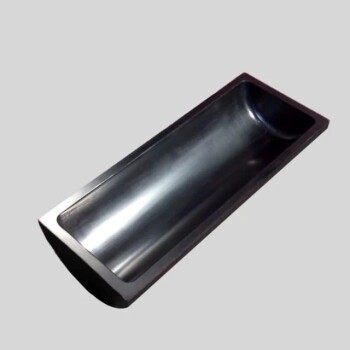
Preserving chemical stoichiometry is the critical reason for using a sealed crucible. When processing Wollastonite/Colemanite powders at 1000°C, a sealed crucible acts as a barrier to prevent the escape of volatile substances. This ensures the chemical composition remains constant throughout the sintering process.
By maintaining a controlled micro-environment, a sealed crucible ensures complete phase evolution, allowing the formation of pure, single-phase compounds without the loss of vital chemical constituents.
The Role of the Micro-Environment
Minimizing Volatile Loss
At high temperatures like 1000°C, specific components within Wollastonite/Colemanite mixtures are prone to volatilization.
If these elements vaporize and escape into the furnace atmosphere, the fundamental "recipe" of your material changes.
A sealed crucible traps these vapors, maintaining equilibrium within the vessel.
Maintaining Chemical Stability
The integrity of the final product depends entirely on the ratio of its starting ingredients.
By preventing material loss, the sealed crucible ensures that the powder does not undergo unwanted changes in chemical composition.
This stability is necessary for the material to react as predicted during thermal processing.
Impact on Phase Evolution
Achieving Single-Phase Compounds
The ultimate goal of this sintering process is the preparation of single-phase Wollastonite/Colemanite compounds.
A single-phase material has a uniform crystal structure and properties throughout.
The sealed environment is identified as a vital factor in achieving this level of purity and structural homogeneity.
Supporting Long Duration Sintering
The process requires a holding time of approximately 4 hours to complete.
Over this extended period, an open system would experience significant cumulative loss of volatiles.
The seal protects the material for the full duration, ensuring complete phase evolution occurs without interruption or degradation.
Understanding the Risks of Improper Sealing
Compositional Drift
If the crucible is not adequately sealed, the stoichiometry of the compound will shift.
This results in a final product that chemically differs from the intended design, potentially degrading its mechanical or thermal properties.
Incomplete Phase Formation
Changing the chemical balance often prevents the material from resolving into a single phase.
Instead of a pure compound, you may end up with a mixture of phases or unreacted powders, rendering the sintering process a failure.
Making the Right Choice for Your Goal
To ensure the successful synthesis of Wollastonite/Colemanite compounds, align your process with the following guidelines:
- If your primary focus is Phase Purity: Ensure the crucible seal is airtight to maintain the precise chemical ratios required for single-phase formation.
- If your primary focus is Process Reliability: Verify the seal integrity prior to the 4-hour hold to prevent compositional drift during the long heat soak.
Control the micro-environment within the crucible to guarantee the chemical integrity of your final material.
Summary Table:
| Factor | Impact of Sealed Crucible | Consequence of Open System |
|---|---|---|
| Chemical Composition | Maintains stoichiometry by trapping volatiles | Compositional drift; loss of vital elements |
| Phase Evolution | Ensures formation of pure single-phase compounds | Incomplete phase formation; mixed phases |
| Micro-Environment | Creates stable equilibrium for 4-hour holds | Uncontrolled material evaporation |
| Material Integrity | High purity and structural homogeneity | Degraded mechanical and thermal properties |
Elevate Your Material Synthesis with KINTEK Precision
Achieving perfect chemical stoichiometry in high-temperature sintering requires more than just skill—it demands the right equipment. KINTEK specializes in high-performance laboratory solutions designed to maintain the integrity of your research. Whether you are processing Wollastonite/Colemanite or advanced ceramics, our comprehensive range of muffle and vacuum furnaces, high-purity alumina and ceramic crucibles, and crushing and milling systems ensure your powders are processed with absolute precision.
From pellet and isostatic hydraulic presses for sample preparation to high-temperature reactors for complex phase evolution, KINTEK provides the tools global researchers trust for reliable, repeatable results.
Ready to optimize your sintering process and ensure phase purity? Contact KINTEK today to find the perfect equipment for your lab!
References
- Ethem İlhan Şahin, Mehriban Emek. Wollastanit/PANI/Kolemanit Kompozitlerin Elektromanyetik Kalkanlama Etkinliği. DOI: 10.31590/ejosat.816145
This article is also based on technical information from Kintek Solution Knowledge Base .
Related Products
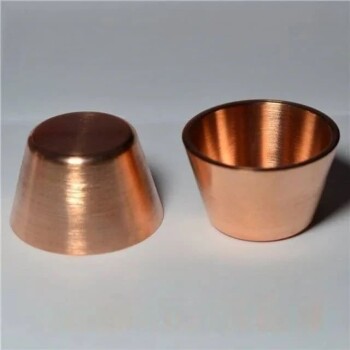
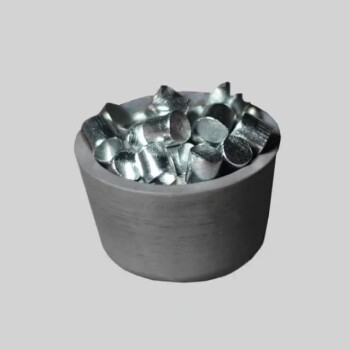
- Electron Beam Evaporation Coating Oxygen-Free Copper Crucible and Evaporation Boat
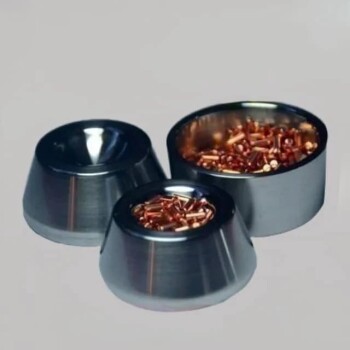
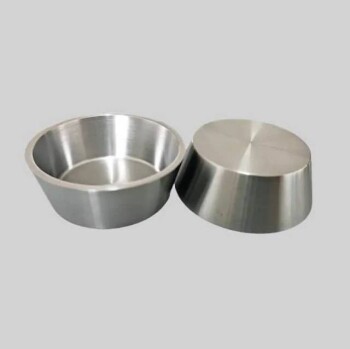
- Electron Beam Evaporation Coating Gold Plating Tungsten Molybdenum Crucible for Evaporation
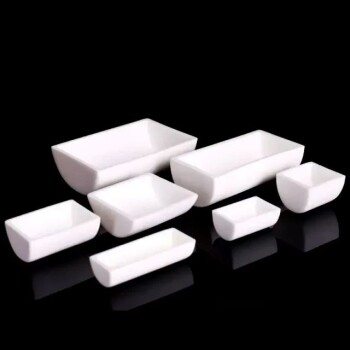
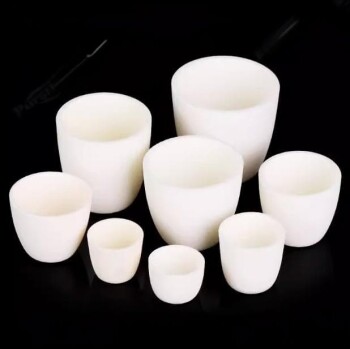
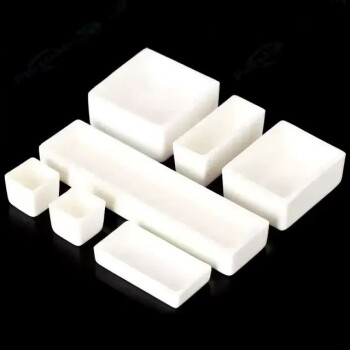
- Alumina Al2O3 Ceramic Crucible Semicircle Boat with Lid for Engineering Advanced Fine Ceramics
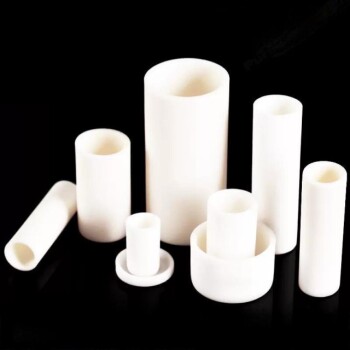
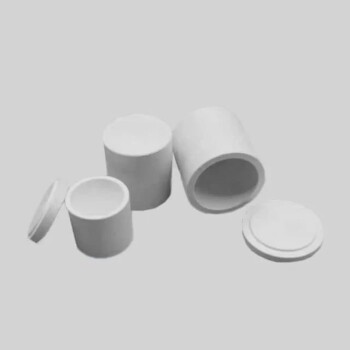
- Engineering Advanced Fine Ceramics Alumina Al2O3 Crucible With Lid Cylindrical Laboratory Crucible
- Sealed Jaw Crusher High Efficiency Environmental Protection Safe and Reliable
People Also Ask
- What is the container that holds the metal source material called in e-beam evaporation? Ensure Purity and Quality in Your Thin-Film Deposition
- What is e-beam evaporation? Achieve High-Purity Thin Film Deposition for Your Lab
- What is the voltage of e-beam evaporation? Achieve Precise Thin-Film Deposition
- What is the current of e-beam evaporation? A Guide to High-Purity Thin Film Deposition
- What are the applications of e-beam evaporation? Achieve High-Purity Coatings for Optics & Electronics