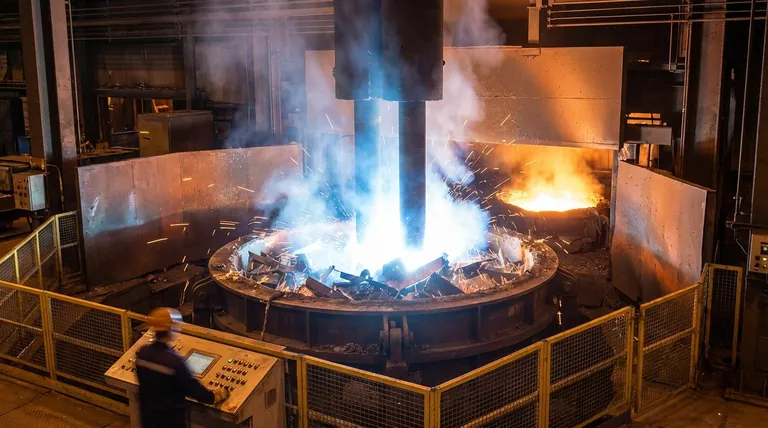
At its core, the electric arc furnace (EAF) process melts metal using a controlled, high-power electric arc—essentially a continuous lightning strike. This arc is generated between large graphite electrodes and a metallic charge (typically scrap steel), creating intense heat that quickly liquefies the material.
The EAF is a process of raw power conversion. It transforms immense electrical energy into thermal energy, with operational success hinging on the ability to efficiently transfer the arc's intense heat into the steel scrap while protecting the furnace itself.
The Core Principle: A Contained Electrical Storm
The entire EAF operation is designed around creating and managing an incredibly powerful electric arc to serve as the primary heat source for melting.
Generating the Arc
The process begins when graphite electrodes are lowered into the furnace, which has been loaded with scrap metal. A very high-voltage, high-current electrical potential is applied, causing an arc to jump from the electrodes to the nearest pieces of scrap.
The Role of the Metal Charge
The scrap metal itself is a key part of the electrical circuit. It acts as the ground terminal, completing the circuit and allowing the arc to form. As the top layer melts, it creates a molten pool that improves conductivity.
Immense Heat Generation
The electric arc is plasma—an ionized gas with temperatures that can exceed 3,000°C (5,400°F). This focused, intense energy radiates onto the scrap, rapidly melting it from the top down.
Key Stages of the Melting Cycle
A typical EAF "heat," or cycle, follows a sequence of well-defined stages designed for maximum efficiency and speed.
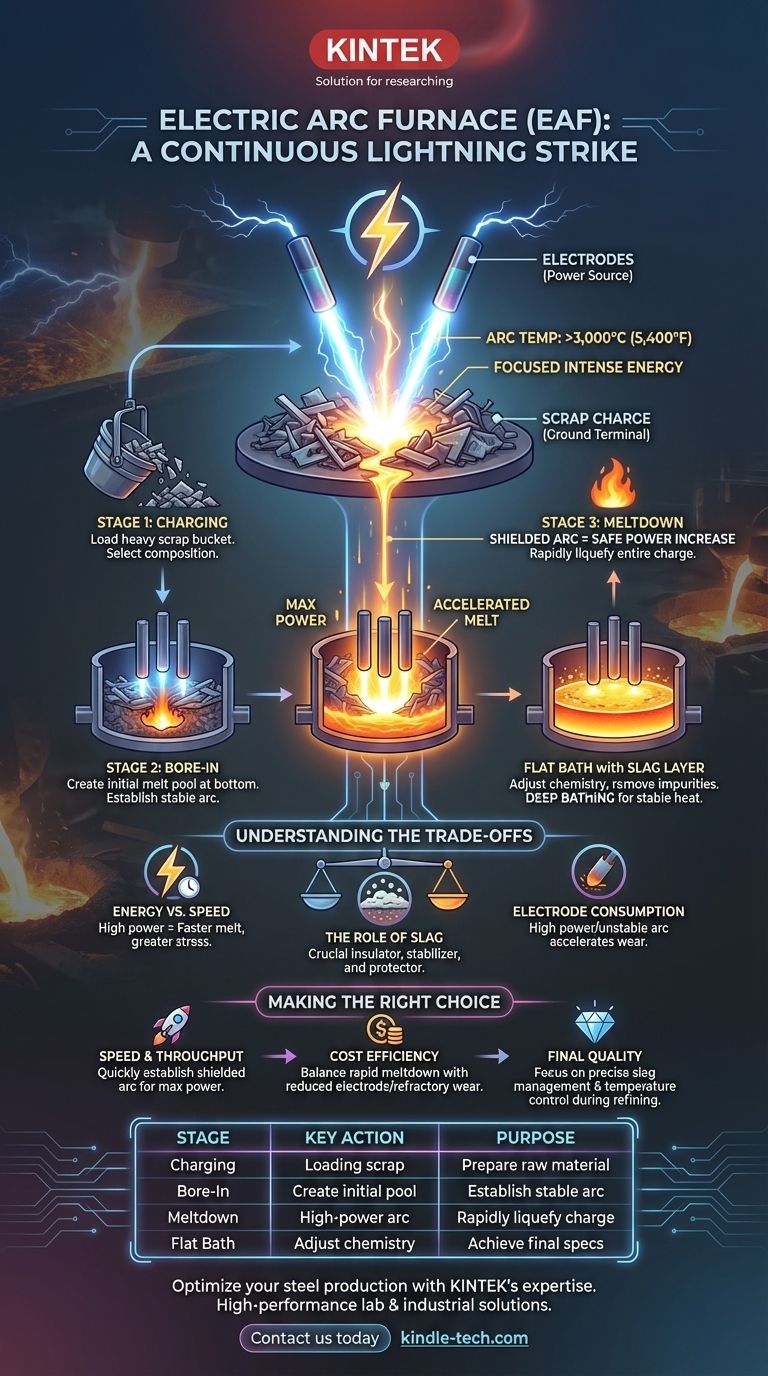
Stage 1: Charging
The cycle begins by loading the furnace with a large, heavy "bucket" of scrap steel. The composition of this scrap is carefully selected to meet the chemical requirements of the final steel grade.
Stage 2: The "Bore-In"
Initially, the electrodes are carefully lowered to strike an arc on the topmost layer of scrap. They begin to "bore in," creating a tunnel through the solid charge and forming an initial pool of liquid metal at the bottom of the furnace.
Stage 3: The Meltdown
This is the most energy-intensive phase. Once the electrodes have bored deep enough into the scrap pile, the arc becomes shielded. This is a critical moment.
The surrounding scrap contains the intense radiation, protecting the furnace's refractory walls and roof from damage. With the arc shielded, operators can safely increase the voltage and power, dramatically accelerating the meltdown.
Stage 4: Flat Bath and Refining
Once all the scrap is melted, the furnace contains a "flat bath" of molten steel covered by a layer of slag. The electrodes are brought closer to the bath, a technique sometimes called "deep bathing," to ensure efficient and stable heat transfer during the final refining stage where the steel's chemistry is adjusted.
Understanding the Trade-offs
The EAF is a powerful tool, but its operation involves a constant balance between competing factors.
Energy vs. Speed
The EAF is a massive consumer of electricity. Running at maximum power accelerates the melt and increases throughput, but it also puts immense stress on the electrical grid and the furnace components. Efficiency is a constant focus.
Electrode Consumption
The graphite electrodes are not permanent; they are slowly consumed by the intense heat and chemical reactions during the melting process. Running at higher power or with an unstable arc can accelerate this consumption, which is a major operational cost.
The Role of Slag
Slag is often seen as a byproduct, but in an EAF, it is a critical operational tool. A good, foamy slag layer insulates the molten steel, stabilizes the electric arc, protects the furnace walls from radiation, and helps remove impurities from the steel.
Making the Right Choice for Your Goal
Understanding the EAF process allows for targeted operational strategies depending on the desired outcome.
- If your primary focus is speed and throughput: The key is to establish a shielded arc as quickly as possible to allow for maximum power input, supported by a deep, foamy slag to facilitate stable and efficient heat transfer.
- If your primary focus is cost efficiency: The goal is to balance a rapid meltdown with practices that minimize electrode consumption and refractory wear, requiring precise control over arc stability and slag chemistry.
- If your primary focus is final product quality: The process must be viewed beyond simple melting, focusing on the refining stage where slag management and temperature control are critical for removing impurities to precise levels.
Ultimately, the electric arc furnace is a highly flexible and powerful instrument for turning scrap metal into high-quality new steel.
Summary Table:
| Stage | Key Action | Purpose |
|---|---|---|
| Charging | Loading scrap metal | Prepare raw material for melting |
| Bore-In | Electrodes create initial melt pool | Establish a stable arc and liquid metal base |
| Meltdown | High-power arc melts remaining scrap | Rapidly liquefy the entire charge |
| Flat Bath & Refining | Adjusting steel chemistry and temperature | Achieve final product quality specifications |
Optimize your steel production with KINTEK's expertise.
Whether your goal is maximizing throughput, improving cost efficiency, or achieving superior steel quality, the right equipment and consumables are critical. KINTEK specializes in high-performance lab and industrial equipment, serving the precise needs of metallurgical operations.
Contact us today to discuss how our solutions can enhance your EAF process and help you meet your production goals.
Visual Guide
Related Products
- Non Consumable Vacuum Arc Induction Melting Furnace
- Vacuum Arc Induction Melting Furnace
- Electric Rotary Kiln Pyrolysis Furnace Plant Machine Calciner Small Rotary Kiln Rotating Furnace
- Electric Rotary Kiln Small Rotary Furnace for Activated Carbon Regeneration
- Electric Rotary Kiln Continuous Working Small Rotary Furnace Heating Pyrolysis Plant
People Also Ask
- What is the temperature range of the induction melting furnace? Find the Right Heat for Your Metals
- What is the primary function of a vacuum arc melting furnace in RHEA preparation? Achieving Extreme Thermal Fusion
- How do specialized industrial-grade small melting furnaces address challenges in precision jewelry casting? Expert Guide
- What is the function of vacuum arc melting equipment? Creating High-Purity Ferrochrome (CrFe) Alloys
- What is the primary function of a laboratory-scale vacuum arc melting furnace? Fast-Track Your Alloy Research