The jaw crusher acts as the initial gatekeeper in the ore preparation workflow. It functions as the primary crushing equipment, specifically tasked with breaking down large raw ore blocks of magnesite and limonite. This mechanical reduction is critical to prepare the material for the subsequent stages of fine crushing.
The jaw crusher's specific role is coarse reduction. It transforms unwieldy raw ore into manageable sizes, ensuring the downstream double roll crusher operates efficiently without damage or blockages.
The Role of Primary Crushing
Handling Raw Ore Blocks
In the context of magnesite and limonite processing, raw material often arrives in large, irregular blocks.
The jaw crusher is designed to handle this initial impact. Its primary function is to accept these large inputs and mechanically fracture them.
This process reduces the physical dimensions of the ore, bringing it down to a specific particle size range.
Creating a Qualified Feed
The output of the jaw crusher is not the final product; rather, it is an intermediate step.
The goal is to produce a qualified feed. This means the ore is small enough to be processed by the next machine in the line but hasn't yet reached the fineness required for final grinding.
Workflow Integration
Feeding the Double Roll Crusher
According to the established workflow for these ores, the jaw crusher directly serves the double roll crusher.
The double roll crusher requires a feed that is consistent and free of excessively large boulders.
By regulating the output size, the jaw crusher protects the double roll crusher from wear and ensures the secondary crushing phase proceeds smoothly.
Ensuring System Efficiency
The efficiency of the entire fine crushing and grinding operation depends on this first step.
If the primary crushing is ineffective, downstream equipment will struggle with oversized material.
Therefore, the jaw crusher determines the stability of the entire crushing and screening workflow.
Understanding the Trade-offs
Limited Reduction Ratio
While the jaw crusher is excellent for heavy-duty initial crushing, it is not designed for precision sizing.
It cannot produce the fine particle sizes required for final product application on its own.
Dependency on Secondary Crushing
Using a jaw crusher implies a multi-stage system.
You must pair it with a secondary unit, such as the double roll crusher mentioned, to achieve the necessary fineness for magnesite and limonite processing.
Optimizing Your Crushing Circuit
To ensure your pre-treatment process is effective, consider the specific needs of your workflow:
- If your primary focus is equipment longevity: Ensure the jaw crusher is set to produce a size small enough to prevent excessive wear on the subsequent double roll crusher.
- If your primary focus is process efficiency: Monitor the jaw crusher's output to guarantee a consistent "qualified feed" that maintains a steady flow into the fine crushing stage.
The jaw crusher is the foundational step that dictates the reliability of your entire ore preparation line.
Summary Table:
| Feature | Function & Impact |
|---|---|
| Primary Role | Coarse reduction of large raw ore blocks |
| Target Materials | Magnesite and Limonite ores |
| Output Goal | Creating a 'qualified feed' for secondary crushers |
| Key Benefit | Protects double roll crushers from damage and blockages |
| System Role | Foundations of the crushing and screening workflow |
Streamline Your Ore Processing with KINTEK Precision Solutions
Don't let inefficient primary crushing bottleneck your laboratory or production workflow. KINTEK specializes in high-performance crushing and milling systems, including heavy-duty jaw crushers and secondary double-roll units designed specifically for the rigorous demands of magnesite and limonite research.
Our comprehensive range of laboratory equipment—from high-temperature furnaces and hydraulic presses to precision sieving equipment—is engineered to provide consistent, reliable results for material scientists and mining engineers alike.
Ready to optimize your ore preparation circuit? Contact KINTEK today to discover how our expert-grade tools and consumables can enhance your lab's efficiency and material throughput.
Related Products
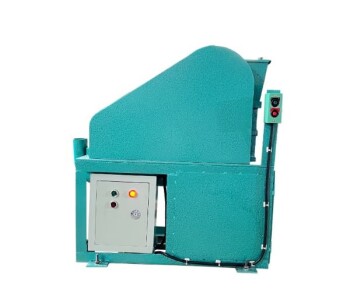
- Sealed Jaw Crusher High Efficiency Environmental Protection Safe and Reliable
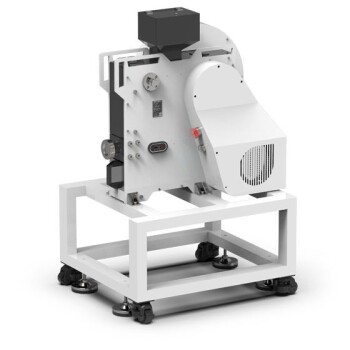
- Laboratory Jaw Crusher
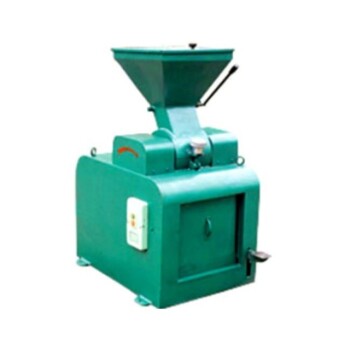
- Laboratory Sealed Hammer Crusher for Efficient Sample Preparation
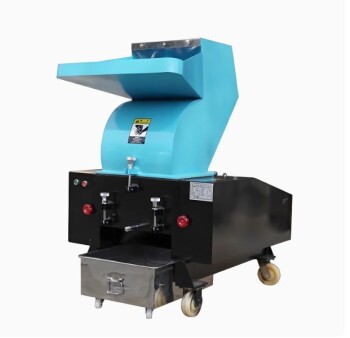
- Powerful Plastic Crusher Machine
People Also Ask
- How does a jaw crusher contribute to the primary processing of slate waste? Optimize Your Size Reduction Workflow
- What is the use of jaw crusher in laboratory? The Essential First Step for Sample Reduction
- What is a laboratory crusher? The First Step to Accurate Sample Analysis
- What is a jaw crusher for labs? The Essential First Step for Accurate Sample Analysis
- What role do laboratory crushers and standard sieves play in Datura stramonium pretreatment? Optimize Your HTL Yield