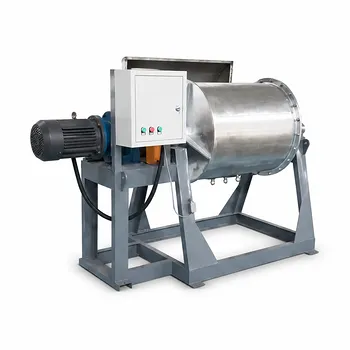
The primary function of high-energy ball milling in Copper-Molybdenum (Cu-Mo) alloy preparation is to mechanically force atomic mixing between two elements that are naturally immiscible. Because Cu and Mo resist mixing in both solid and liquid states, this process utilizes high-frequency, high-energy impacts to overcome thermodynamic limitations and create a solid solution that cannot be achieved through conventional melting.
Core Takeaway: High-energy ball milling acts as a non-equilibrium processing tool. It circumvents standard thermodynamic rules by using intense kinetic energy to drive the formation of supersaturated solid solutions and atomic-level mixing in material systems that otherwise refuse to combine.
Overcoming Thermodynamic Barriers
The Challenge of Immiscibility
In standard equilibrium conditions, Copper and Molybdenum do not mix.
They remain separate phases even when melted, similar to oil and water.
This makes traditional thermal alloying methods ineffective for creating a true Cu-Mo alloy.
Kinetic Energy vs. Thermal Energy
High-energy ball milling replaces thermal energy with mechanical kinetic energy.
The process utilizes the collision of grinding balls to deliver intense energy directly to the powder particles.
This energy input is sufficient to bypass the natural thermodynamic tendency of these metals to segregate.
Achieving Supersaturation
The ultimate goal is to extend the solid solubility limit.
The process forces Mo atoms into the Cu lattice (or vice versa) beyond what is naturally possible.
This results in a metastable solid solution that retains its structure at room temperature.
The Mechanical Alloying Mechanism
Continuous Impact Cycles
The process relies on a repetitive cycle of mechanical forces.
Powder particles are subjected to continuous cold welding, fracturing, and re-welding.
This prevents the powder from simply agglomerating or remaining as distinct elemental particles.
Particle Size Reduction
High-frequency impacts drastically reduce the particle size of the raw powders.
As the particles become smaller, the diffusion distance between Copper and Molybdenum atoms decreases.
This facilitates interaction at the atomic level, which is necessary for alloying.
Induced Defects and Diffusion
The intense impact creates a high density of crystal defects.
These defects act as "fast tracks" for atomic diffusion.
This accelerated diffusion allows the elements to mix intimately, even in the solid state.
Understanding the Trade-offs
Process Efficiency vs. Time
While effective, mechanical alloying is a time-intensive process.
Achieving atomic-level homogeneity requires prolonged milling durations to ensure complete solid solution formation.
Energy Intensity
The "high-energy" aspect requires significant power input.
The equipment must generate sufficient impact velocity to fracture and weld metal particles repeatedly.
Contamination Risks
The aggressive nature of the milling media impacts can introduce impurities.
Debris from the grinding balls or the jar lining can contaminate the Cu-Mo mixture if not carefully monitored.
Making the Right Choice for Your Goal
When employing high-energy ball milling for Cu-Mo or similar immiscible systems, tailor your approach to your specific endpoint:
- If your primary focus is Atomic-Level Homogeneity: Prioritize longer milling durations to ensure the complete formation of a solid solution and the elimination of distinct elemental phases.
- If your primary focus is Nanostructural Refinement: Focus on the intensity of the impact frequency to maximize grain size reduction and increase grain boundary density.
This process transforms the impossible into the possible, leveraging mechanical force to engineer materials that nature forbids.
Summary Table:
| Process Aspect | Mechanism | Key Outcome |
|---|---|---|
| Energy Source | Mechanical kinetic energy (impacts) | Bypasses thermal equilibrium limits |
| Particle Dynamics | Repetitive cold welding & fracturing | Significant reduction in particle size |
| Atomic Interaction | High-density crystal defects | Accelerated diffusion and atomic mixing |
| Solubility | Extending solid solubility limits | Formation of supersaturated solid solutions |
| Structure | Non-equilibrium processing | Metastable phase with nanostructural refinement |
Unlock Superior Material Engineering with KINTEK
Push the boundaries of material science and overcome thermodynamic limitations with KINTEK’s precision-engineered laboratory solutions. Whether you are developing immiscible Cu-Mo alloys or advanced nanostructures, our high-performance crushing and milling systems and sieving equipment provide the intense kinetic energy required for successful mechanical alloying.
At KINTEK, we specialize in empowering researchers with a comprehensive range of tools, including:
- Advanced Synthesis: High-temperature furnaces (muffle, vacuum, and CVD) and high-pressure reactors.
- Sample Preparation: Hydraulic pellet presses, isostatic presses, and high-purity crucibles.
- Material Processing: Homogenizers, ultrasonic cleaners, and specialized PTFE laboratory consumables.
Don't let natural immiscibility hinder your innovation. Contact KINTEK today to optimize your lab's efficiency and find the perfect equipment tailored to your specific material research goals.
References
- O. Hernández, A. Medína. Effects of Mo Concentration on the Structural and Corrosion Properties of Cu–Alloy. DOI: 10.3390/met9121307
This article is also based on technical information from Kintek Solution Knowledge Base .
Related Products
- High Energy Planetary Ball Mill Milling Machine for Laboratory
- High Energy Planetary Ball Mill for Laboratory Horizontal Tank Type Milling Machine
- High-Energy Omnidirectional Planetary Ball Mill Milling Machine for Laboratory
- High Energy Planetary Ball Mill Milling Machine for Laboratory
- High Energy Planetary Ball Mill Machine for Laboratory Horizontal Tank Type
People Also Ask
- What role do planetary ball mills and zirconia media play in LLZT preparation? Optimize Your Solid Electrolyte Research
- What is the primary function of a planetary ball mill? Mastering SiC/Al Composite Mixing for Homogeneity
- What is the primary purpose of using a planetary ball mill for LAGP? Achieve High-Purity Solid-State Electrolytes
- What role does a planetary ball mill play in the preparation of LGVO powders? Precision Refinement for Aerosol Deposition
- What is the function of a planetary ball mill in the preparation of high-entropy rare earth silicate multi-phase ceramics?