Knowledge What is the primary function of industrial freeze-drying in 3D graphene aerogel electrodes? Preserve Structural Integrity
Author avatar

Tech Team · Kintek Solution

Updated 2 weeks ago

What is the primary function of industrial freeze-drying in 3D graphene aerogel electrodes? Preserve Structural Integrity


The primary function of industrial-grade freeze-drying equipment is to remove moisture from graphene aerogels while strictly preserving their delicate three-dimensional structural integrity. By subjecting the material to sublimation under vacuum for extended periods, the equipment allows water to exit the structure without passing through the liquid phase, thereby avoiding the destructive capillary forces that typically cause collapse during standard evaporation.

Core Insight: Freeze-drying is not merely a drying technique; it is a structural preservation strategy. It creates the physical environment necessary to retain the high porosity, large specific surface area, and mechanical stability required for the aerogel to function effectively as an electrode substrate.

The Physics of Structure Preservation

Bypassing the Liquid Phase

The fundamental value of this equipment lies in its ability to facilitate sublimation.

Instead of boiling water off as steam (evaporation), the vacuum environment allows frozen water within the gel to transition directly into vapor.

Eliminating Capillary Forces

When water evaporates naturally, it creates surface tension and capillary forces.

These forces pull on the pore walls of the material. In a delicate 3D graphene network, this pressure is strong enough to crush the microporous structure, causing shrinkage and cracking.

Preventing Structural Collapse

By removing the liquid phase from the equation, freeze-drying effectively neutralizes these capillary forces.

This ensures the 3D-printed graphene framework maintains its original shape and volume. It prevents the network from collapsing into a dense, non-porous solid.

Critical Impacts on Electrode Performance

Maximizing Specific Surface Area

A successful electrode requires a massive surface area to facilitate chemical reactions.

Freeze-drying ensures the material retains a high porosity and a hierarchical pore structure. This provides an ideal, accessible substrate for loading active materials or catalysts.

Inhibiting Agglomeration

Standard drying methods often cause graphene sheets to stack and stick together (agglomerate).

Freeze-drying inhibits this severe agglomeration. It keeps the graphene sheets separated in a 3D arrangement, maintaining efficient channels for mass transfer in electrochemical applications.

Understanding the Trade-offs

Time Intensity

While effective, this process is significantly slower than conventional drying.

The primary reference notes that sublimation must occur under vacuum for extended periods. This creates a bottleneck in manufacturing throughput compared to rapid heat drying.

Complexity and Cost

Achieving the necessary vacuum and temperature control requires sophisticated, energy-intensive hardware.

This adds to the operational cost and complexity of the fabrication line, which is the price paid for achieving superior material quality.

Making the Right Choice for Your Goal

To optimize your fabrication process, align your drying strategy with your performance metrics:

  • If your primary focus is Maximizing Active Material Loading: You must use freeze-drying to maintain the high porosity and specific surface area required to host the active materials.
  • If your primary focus is Mechanical Durability: You must rely on vacuum sublimation to prevent the cracking and structural collapse associated with capillary stress.

Ultimately, industrial freeze-drying is the non-negotiable gateway to producing aerogels that are physically stable enough to serve as high-performance electrodes.

Summary Table:

Feature Impact of Freeze-Drying Impact of Conventional Drying
Structural Phase Sublimation (Solid to Gas) Evaporation (Liquid to Gas)
Capillary Forces Eliminated; prevents collapse High; causes shrinkage & cracking
Surface Area Maximized for chemical reactions Low due to sheet agglomeration
Porosity High hierarchical pore structure Dense, non-porous solid
Mechanical State Stable 3D framework Brittle and collapsed
Process Time Extended (Sublimation phase) Rapid (Heat-driven)

Elevate Your Advanced Material Research with KINTEK

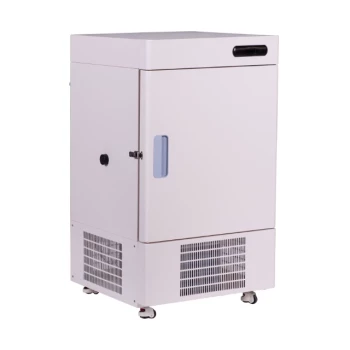
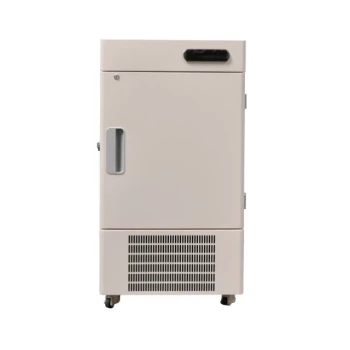
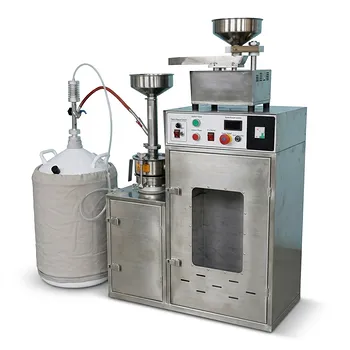
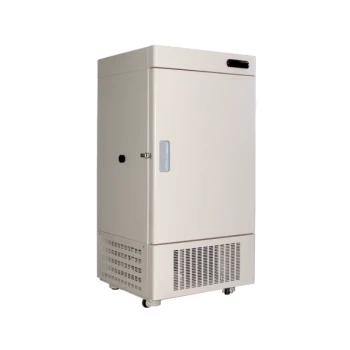
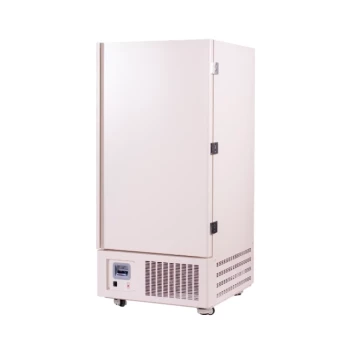
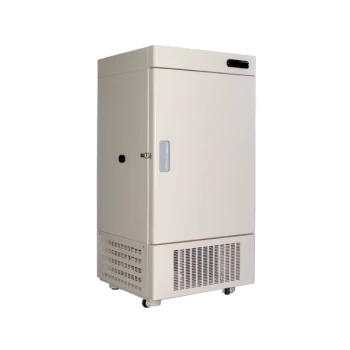
Precision is the foundation of high-performance electrochemical applications. At KINTEK, we understand that the integrity of your 3D graphene aerogels depends on superior thermal and vacuum control. Our specialized cooling solutions—including industrial-grade freeze dryers (lyophilizers), ULT freezers, and cold traps—are engineered to eliminate destructive capillary forces and maximize your material's specific surface area.

Beyond drying, KINTEK offers a comprehensive ecosystem for energy research, from battery research tools and electrolytic cells to high-temperature furnaces and vacuum systems. Whether you are optimizing active material loading or ensuring mechanical durability, our equipment delivers the reliability your laboratory demands.

Ready to scale your fabrication process? Contact our experts today to find the perfect freeze-drying or cooling solution for your lab!

References

  1. Ankitha Menon, Peter Samora Owuor. Advances in 3D Printing for Electrochemical Energy Storage Systems. DOI: 10.31875/2410-4701.2021.08.7

This article is also based on technical information from Kintek Solution Knowledge Base .

Related Products

People Also Ask

Related Products

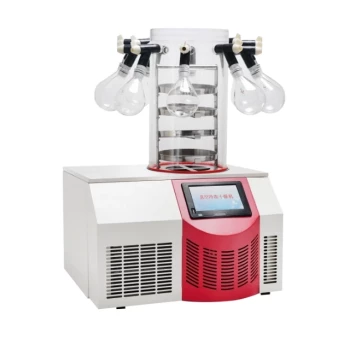
Benchtop Laboratory Freeze Dryer for Lab Use

Benchtop Laboratory Freeze Dryer for Lab Use

Premium benchtop laboratory freeze dryer for lyophilization, preserving samples with ≤ -60°C cooling. Ideal for pharmaceuticals & research.

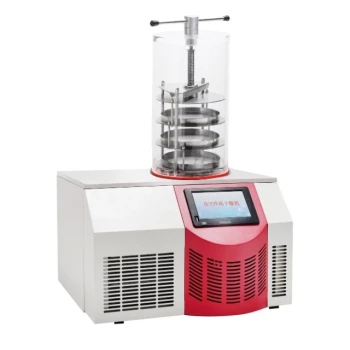
Benchtop Laboratory Vacuum Freeze Dryer

Benchtop Laboratory Vacuum Freeze Dryer

Benchtop laboratory freeze dryer for efficient lyophilization of biological, pharmaceutical, and food samples. Features intuitive touchscreen, high-performance refrigeration, and durable design. Preserve sample integrity—consult now!

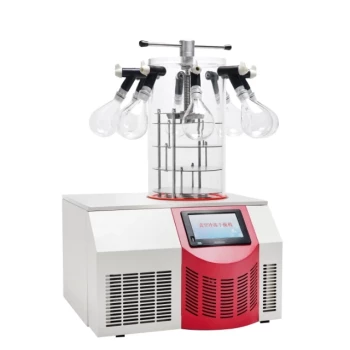
High Performance Laboratory Freeze Dryer for Research and Development

High Performance Laboratory Freeze Dryer for Research and Development

Advanced laboratory freeze dryer for lyophilization, preserving sensitive samples with precision. Ideal for biopharmaceuticals, research & food industries.

Desktop Fast Laboratory Autoclave Sterilizer 35L 50L 90L for Lab Use

Desktop Fast Laboratory Autoclave Sterilizer 35L 50L 90L for Lab Use

The desktop fast steam sterilizer is a compact and reliable device used for rapid sterilization of medical, pharmaceutical, and research items. It efficiently sterilizes surgical instruments, glassware, medicines, and resistant materials, making it suitable for various applications.

Automatic Lab Cold Isostatic Press CIP Machine Cold Isostatic Pressing

Automatic Lab Cold Isostatic Press CIP Machine Cold Isostatic Pressing

Efficiently prepare samples with our Automatic Lab Cold Isostatic Press. Widely used in material research, pharmacy, and electronic industries. Provides greater flexibility and control compared to electric CIPs.

Small Vacuum Heat Treat and Tungsten Wire Sintering Furnace

Small Vacuum Heat Treat and Tungsten Wire Sintering Furnace

The small vacuum tungsten wire sintering furnace is a compact experimental vacuum furnace specially designed for universities and scientific research institutes. The furnace features a CNC welded shell and vacuum piping to ensure leak-free operation. Quick-connect electrical connections facilitate relocation and debugging, and the standard electrical control cabinet is safe and convenient to operate.

Rubber Vulcanizer Vulcanizing Machine Plate Vulcanizing Press for Lab

Rubber Vulcanizer Vulcanizing Machine Plate Vulcanizing Press for Lab

The Plate vulcanizing press is a kind of equipment used in the production of rubber products, mainly used for the vulcanization of rubber products. Vulcanization is a key step in rubber processing.

Manual High Temperature Heated Hydraulic Press Machine with Heated Plates for Lab

Manual High Temperature Heated Hydraulic Press Machine with Heated Plates for Lab

The High Temperature Hot Press is a machine specifically designed for pressing, sintering and processing materials in a high temperature environment. It is capable of operating in the range of hundreds of degrees Celsius to thousands of degrees Celsius for a variety of high temperature process requirements.

Automatic Heated Hydraulic Press Machine with Heated Plates for Laboratory Hot Press 25T 30T 50T

Automatic Heated Hydraulic Press Machine with Heated Plates for Laboratory Hot Press 25T 30T 50T

Efficiently prepare your samples with our Automatic Heated Lab Press. With a pressure range up to 50T and precise control, it's perfect for various industries.

Automatic High Temperature Heated Hydraulic Press Machine with Heated Plates for Lab

Automatic High Temperature Heated Hydraulic Press Machine with Heated Plates for Lab

The High Temperature Hot Press is a machine specifically designed for pressing, sintering and processing materials in a high temperature environment. It is capable of operating in the range of hundreds of degrees Celsius to thousands of degrees Celsius for a variety of high temperature process requirements.

Custom PTFE Teflon Parts Manufacturer for PTFE Tweezers

Custom PTFE Teflon Parts Manufacturer for PTFE Tweezers

PTFE tweezers inherit the excellent physical and chemical properties of PTFE, such as high temperature resistance, cold resistance, acid and alkali resistance, and corrosion resistance to most organic solvents.

Circulating Water Vacuum Pump for Laboratory and Industrial Use

Circulating Water Vacuum Pump for Laboratory and Industrial Use

Efficient circulating water vacuum pump for labs - oil-free, corrosion-resistant, quiet operation. Multiple models available. Get yours now!

Vacuum Hot Press Furnace Machine for Lamination and Heating

Vacuum Hot Press Furnace Machine for Lamination and Heating

Experience clean and precise lamination with Vacuum Lamination Press. Perfect for wafer bonding, thin-film transformations, and LCP lamination. Order now!

Ultra-High Temperature Graphite Vacuum Graphitization Furnace

Ultra-High Temperature Graphite Vacuum Graphitization Furnace

The ultra-high temperature graphitization furnace utilizes medium frequency induction heating in a vacuum or inert gas environment. The induction coil generates an alternating magnetic field, inducing eddy currents in the graphite crucible, which heats up and radiates heat to the workpiece, bringing it to the desired temperature. This furnace is primarily used for graphitization and sintering of carbon materials, carbon fiber materials, and other composite materials.

High Pressure Laboratory Vacuum Tube Furnace Quartz Tubular Furnace

High Pressure Laboratory Vacuum Tube Furnace Quartz Tubular Furnace

KT-PTF High Pressure Tube Furnace: Compact split tube furnace with strong positive pressure resistance. Working temp up to 1100°C and pressure up to 15Mpa. Also works under controller atmosphere or high vacuum.

Graphite Vacuum Furnace High Thermal Conductivity Film Graphitization Furnace

Graphite Vacuum Furnace High Thermal Conductivity Film Graphitization Furnace

The high thermal conductivity film graphitization furnace has uniform temperature, low energy consumption and can operate continuously.

Dental Porcelain Zirconia Sintering Ceramic Vacuum Press Furnace

Dental Porcelain Zirconia Sintering Ceramic Vacuum Press Furnace

Get precise dental results with Dental Vacuum Press Furnace. Automatic temperature calibration, low noise tray, and touch screen operation. Order now!

1400℃ Muffle Oven Furnace for Laboratory

1400℃ Muffle Oven Furnace for Laboratory

Get precise high-temperature control up to 1500℃ with KT-14M Muffle furnace. Equipped with a smart touch screen controller and advanced insulation materials.

Engineering Advanced Fine Ceramics Head Tweezers with Pointed Elbow Zirconia Ceramic Tip

Engineering Advanced Fine Ceramics Head Tweezers with Pointed Elbow Zirconia Ceramic Tip

Zirconia ceramic tweezers are a high-precision tool made of advanced ceramic materials, especially suitable for operating environments that require high precision and corrosion resistance. This type of tweezers not only has excellent physical properties, but is also popular in the medical and laboratory fields because of its biocompatibility.

Platinum Sheet Electrode for Laboratory and Industrial Applications

Platinum Sheet Electrode for Laboratory and Industrial Applications

Elevate your experiments with our Platinum Sheet Electrode. Crafted with quality materials, our safe and durable models can be tailored to fit your needs.


Leave Your Message