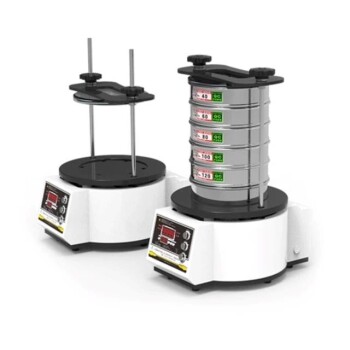
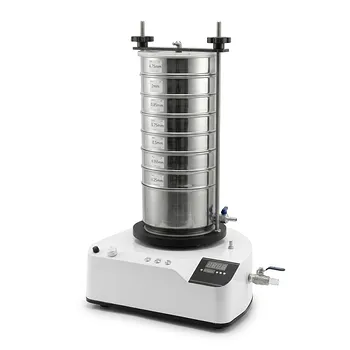
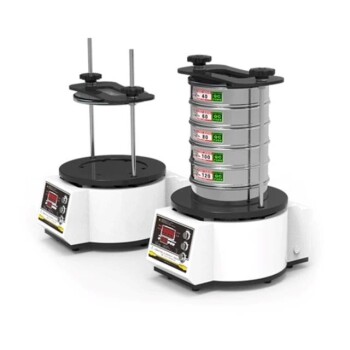
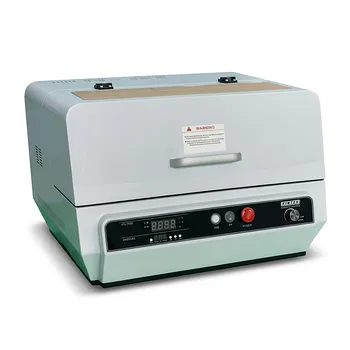
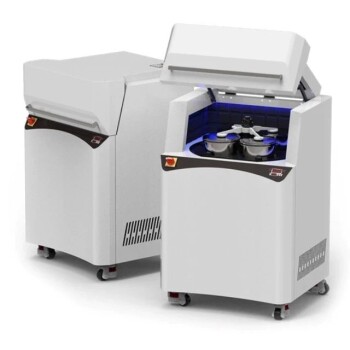
The primary purpose of using a precision vibrating sieve shaker in this context is to mechanically grade irregularly shaped alloy chips into distinct size fractions using multi-level standard mesh screens. This process quantifies the mass percentage of each size component, establishing the foundational physical data required to analyze the material's surface characteristics.
Core Takeaway Particle size directly dictates the surface area of alloy chips, which determines how much oil adheres to them and how effectively solvents can permeate the mass. The sieve shaker provides the essential quantitative data needed to predict and optimize the efficiency of subsequent cleaning and recovery processes.
The Mechanics of Quantitative Analysis
Multi-Level Mechanical Grading
The system utilizes a stack of standard mesh screens with varying aperture sizes. Through mechanical vibration, the equipment physically separates the sample, ensuring that chips are sorted according to their dimensions rather than mass alone.
Handling Irregular Geometries
Alloy chips are rarely uniform spheres; they are often irregular and jagged. The sieve shaker is specifically designed to manage these irregularities, ensuring that chips are categorized by their ability to pass through specific physical constraints.
Establishing Mass Percentage
The output of this analysis is not just a visual sort, but a precise calculation of mass distribution. By weighing the material retained on each screen, you obtain a quantitative breakdown of the size components present in the bulk material.
The Critical Link to Process Efficiency
Surface Area and Oil Content
There is a direct physical correlation between particle size and the total surface area of the batch. Smaller particles offer a larger cumulative surface area, which typically results in a higher amount of adhered oil that must be removed.
Assessing Solvent Permeability
For the recovery process to be effective, cleaning solvents must permeate the bulk material. The particle size distribution data allows engineers to assess the packing density and the potential flow paths for solvents, predicting how difficult the cleaning stage will be.
Optimizing Recovery Parameters
By understanding the specific size distribution, operators can adjust cleaning parameters. If the analysis reveals a high percentage of fines (small particles), the process may require more aggressive solvent application to account for the increased oil load.
Understanding the Limitations
Minimum Size Constraints
While highly effective for chips and standard powders, vibratory sieving has physical limits. It is generally most suitable for particle sizes down to approximately 50 µm; below this threshold, particles may agglomerate or require air-jet sieving for accuracy.
The Shape Factor
Sieving separates based on the second-smallest dimension of a particle (what fits through the square mesh). Therefore, extremely elongated or needle-like chips might pass through screens that would retain blocky chips of similar mass, potentially skewing surface area calculations slightly.
Making the Right Choice for Your Goal
To extract the most value from your particle size analysis, align your focus with your specific processing objectives:
- If your primary focus is Solvent Cleaning Efficiency: Prioritize the analysis of the finest fractions, as these contribute the most surface area and adhered oil, directly impacting solvent saturation requirements.
- If your primary focus is Material Consistency: Use the mass percentage data to verify that your upstream mechanical processes (such as milling or cutting) are producing a uniform output, reducing variability in downstream applications.
Accurate physical grading is not merely a sorting step; it is the diagnostic tool that ensures your chemical recovery processes are targeted, efficient, and cost-effective.
Summary Table:
| Feature | Function in Alloy Chip Analysis | Impact on Process Efficiency |
|---|---|---|
| Mechanical Grading | Separates chips into distinct mass fractions via multi-level screens | Establishes foundational data for material consistency |
| Surface Area Analysis | Quantifies the presence of fines and irregular particles | Determines solvent saturation and oil removal requirements |
| Permeability Assessment | Evaluates packing density of the chip batch | Predicts solvent flow paths and cleaning effectiveness |
| Quantitative Output | Calculates precise mass distribution percentages | Allows for data-driven adjustment of recovery parameters |
Elevate Your Material Analysis with KINTEK Precision
Achieving accurate particle size distribution is critical for optimizing solvent cleaning and maximizing material recovery from alloy chips. KINTEK specializes in high-performance laboratory equipment, offering advanced vibrating sieve shakers, crushing and milling systems, and precision sieving equipment designed to handle even the most irregular geometries.
Our comprehensive portfolio supports every stage of your research and production, from high-temperature furnaces and hydraulic presses to essential PTFE and ceramic consumables. Whether you are analyzing surface area for chemical processing or ensuring material consistency, KINTEK provides the reliability and precision your lab demands.
Ready to optimize your recovery process? Contact KINTEK today to find the perfect sieving solution!
References
- Sylwester Żelazny, Tomasz Świergosz. Recovery and Characterization Studies of Post-Production Alloy Waste from the Automotive Industry. DOI: 10.3390/ma13245600
This article is also based on technical information from Kintek Solution Knowledge Base .
Related Products
- Vibratory Sieve Shaker Machine Dry Three-Dimensional Vibrating Sieve
- Laboratory Test Sieves and Vibratory Sieve Shaker Machine
- Laboratory Vibratory Sieve Shaker Machine for Dry and Wet Three-Dimensional Sieving
- Laboratory Vibratory Sieve Shaker Machine Slap Vibrating Sieve
- Laboratory Wet Three-Dimensional Vibratory Sieve Shaker Machine
People Also Ask
- How is a vibratory sieve shaker used in the particle size analysis of mechanically alloyed powders? Expert Guide
- Why use a vibratory sieve shaker for PET powder? Achieve Precise Particle Size Control for Chemical Research
- What is the principle of vibratory sieve shaker? Achieve Accurate Particle Size Analysis
- What is the function of a vibratory sieve shaker? Achieve Precise Particle Size Analysis
- What is the use of vibratory sieve shaker? Achieve Precise Particle Size Analysis for Your Lab