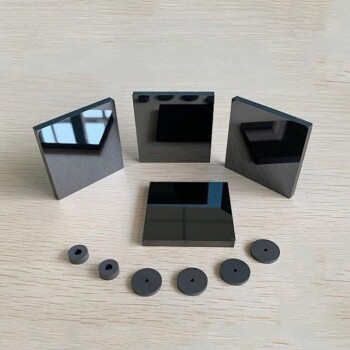
The primary purpose of using zirconia coatings in the directional infiltration of Tungsten-Copper (W-Cu) composites is to act as a non-wetting flow barrier. By applying this coating to the side walls of the tungsten skeleton, manufacturers restrict the molten copper from racing up the exterior surfaces, forcing it instead to penetrate through the internal structure.
By utilizing the non-wetting characteristics of zirconia, the coating prevents molten copper from sealing off gas escape paths on the outer walls. This ensures the copper infiltrates the skeleton unidirectionally, effectively eliminating trapped gas inclusions and producing a dense, uniform composite.
Optimizing the Infiltration Mechanism
Controlling the Path of Least Resistance
In a standard infiltration process, molten copper naturally seeks the easiest path to travel. Without intervention, it tends to flow rapidly along the smooth outer walls of the tungsten skeleton.
The Problem of Premature Sealing
When copper coats the exterior walls too quickly, it effectively creates a seal around the porous skeleton. This creates a "closed vessel" effect before the interior is fully saturated.
The Risk of Gas Inclusions
Once the outer shell is sealed by liquid copper, any air or gas remaining inside the tungsten skeleton is trapped. This results in voids and gas inclusions that compromise the mechanical integrity and thermal conductivity of the final composite.
The Specific Function of Zirconia
Leveraging Non-Wetting Properties
Zirconia is selected specifically because it is "non-wetting" to molten copper. This means the liquid copper repels off the coated surface rather than adhering to or flowing over it.
Enforcing Unidirectional Flow
By coating the side walls with zirconia, the process engineer effectively blocks the vertical flow of copper along the exterior. This leaves the internal pore network as the only viable path for the liquid.
Guiding Uniform Penetration
Because the external path is blocked, the pressure forces the copper to move progressively through the tungsten skeleton. This results in uniform, unidirectional penetration that pushes gas out ahead of the advancing copper front.
Operational Considerations and Trade-offs
Application Precision
The effectiveness of the process relies entirely on the precise application of the coating. If the zirconia does not fully cover the intended side walls, copper will bypass the barrier and the defect-prevention mechanism will fail.
Process Complexity
Using zirconia adds a consumable step to the manufacturing workflow. It requires careful preparation of the tungsten skeleton prior to infiltration, adding time and potential variability to production if not standardized.
Surface Interaction
While zirconia prevents wetting, it must be chemically stable enough to withstand the infiltration temperatures without contaminating the W-Cu composite. It is purely a guiding tool, not a structural component of the final part.
Ensuring Quality in W-Cu Composites
To maximize the density and performance of your composite, consider how you direct the flow of metal.
- If your primary focus is eliminating voids: Apply zirconia strictly to the side walls to keep the top surface open as a gas vent until the very last moment of infiltration.
- If your primary focus is structural uniformity: Use the coating to force the copper to travel the longest possible path through the skeleton, ensuring every internal pore is filled.
Control the flow path, and you control the quality of the material.
Summary Table:
| Feature | Function of Zirconia in W-Cu Infiltration |
|---|---|
| Material Property | Non-wetting to molten copper |
| Primary Role | Acts as a vertical flow barrier on side walls |
| Mechanism | Redirects molten metal from exterior to internal pores |
| Key Benefit | Eliminates gas inclusions and voids |
| Resulting Quality | High density and unidirectional penetration |
Elevate Your Composite Manufacturing Precision with KINTEK
Achieving the perfect Tungsten-Copper (W-Cu) composite requires more than just high-quality materials—it requires precise control over the infiltration process. At KINTEK, we specialize in the high-performance laboratory equipment and consumables essential for advanced metallurgy. From high-temperature furnaces (muffle, vacuum, and atmosphere) for precise infiltration to crushing and milling systems for skeleton preparation, we provide the tools you need to eliminate voids and maximize material density.
Whether you are refining W-Cu composites or conducting advanced battery research, our comprehensive range of ceramics, crucibles, and high-pressure reactors ensures your lab operates at peak efficiency.
Ready to optimize your production results? Contact KINTEK today to discover how our specialized equipment can enhance your material integrity!
References
- Jiří Matějíček. Preparation of W-Cu composites by infiltration of W skeletons – review. DOI: 10.37904/metal.2021.4248
This article is also based on technical information from Kintek Solution Knowledge Base .
Related Products
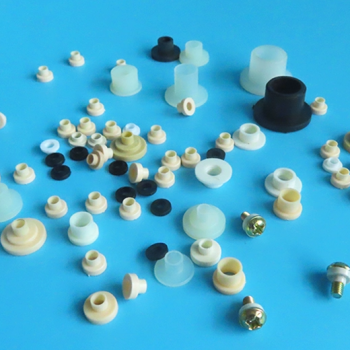
- Zirconia Ceramic Gasket Insulating Engineering Advanced Fine Ceramics
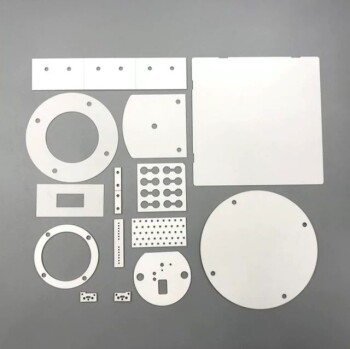
- Custom-Made Alumina Zirconia Special-Shaped Ceramic Plates for Engineering Advanced Fine Ceramics Processing
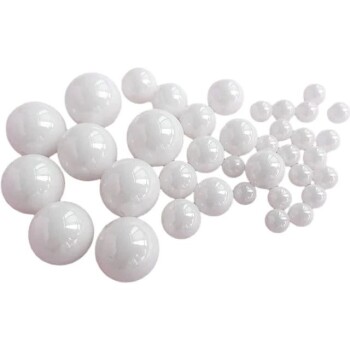
- Precision Machined Zirconia Ceramic Ball for Engineering Advanced Fine Ceramics
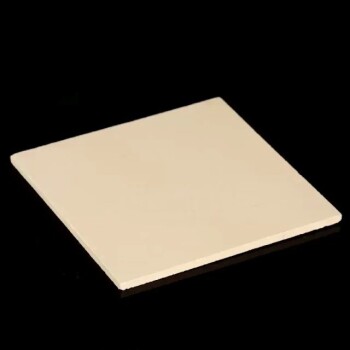
- Precision Machined Yttria Stabilized Zirconia Ceramic Plate for Engineering Advanced Fine Ceramics
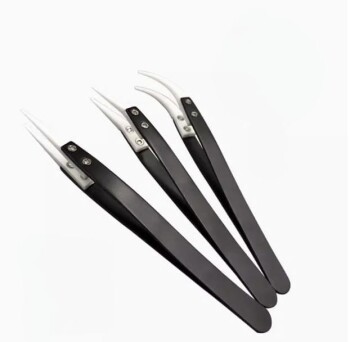
- Engineering Advanced Fine Ceramics Head Tweezers with Pointed Elbow Zirconia Ceramic Tip
People Also Ask
- What are the applications of zirconia ceramics? Unlock High-Performance Solutions for Extreme Environments
- What ceramics are used for insulation? Choose the Right Material for Thermal or Electrical Needs
- What is the main disadvantage of zirconia? Balancing Strength, Aesthetics, and Tooth Wear
- What is the strongest type of zirconia? A Guide to Choosing the Right Dental Zirconia
- What are the failures of zirconia? Avoid Fracture and Debonding with Proper Protocol