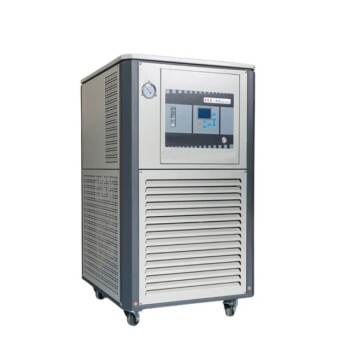
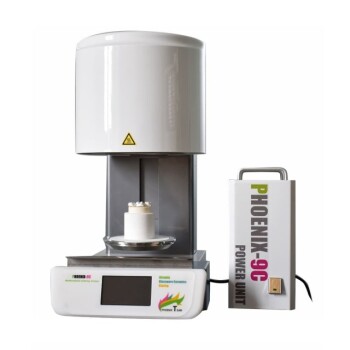
The fundamental purpose of heating and drying equipment, such as ovens or heating plates, is to drive the controlled evaporation of solvents from the PEO precursor solution. This thermal processing is the critical step that transforms the liquid coating applied to LiFePO4 cathodes into a solid, functional composite layer.
By precisely managing the removal of solvents like acetonitrile, heating equipment ensures the formation of a dense, uniform composite layer. This step is essential for establishing the structural integrity and ion transport pathways required for high-performance batteries.
The Mechanics of Layer Formation
Facilitating Solvent Evaporation
The primary function of this equipment is to remove the liquid carrier from the cathode coating. Specifically, the heat is used to evaporate solvents, such as acetonitrile, from the PEO precursor solution.
Creating a Solid Functional Layer
As the solvent evaporates, the remaining solid components bind together. This leaves behind a composite consisting of PEO (Polyethylene Oxide), lithium salts, and LLZTO fillers in a solidified state.
Ensuring Uniformity and Density
The heating process dictates the final physical quality of the layer. Accurate thermal control allows these materials to settle into a dense and uniform structure, rather than a porous or uneven one.
Impact on Battery Architecture
Establishing Tight Contact
The drying process is responsible for the interface between the coating and the cathode. Proper heating ensures tight physical contact between the PEO composite layer and the underlying LiFePO4 cathode surface.
Enabling Ion Transport
The ultimate goal of this solidification is electrochemical functionality. By forming a continuous solid layer, the equipment helps establish efficient ion transport channels within the battery structure, which are necessary for operation.
The Importance of Process Control
Precision is Key
Using heating equipment is not merely about drying; it is about accurate control. The primary reference highlights that the heating process must be carefully regulated to ensure the solvent is removed at the right rate.
Avoiding Structural Defects
If the heating is not controlled accurately, the layer may fail to form correctly. Inadequate control can compromise the uniformity of the solid layer, leading to poor contact and inefficient ion movement.
Making the Right Choice for Your Goal
When configuring your heating and drying process for PEO-based cathodes, consider your specific performance targets:
- If your primary focus is Structural Integrity: Prioritize thermal settings that promote a slow, steady evaporation to ensure a dense, uniform coating with tight cathode contact.
- If your primary focus is Electrochemical Performance: Ensure the process completely removes the solvent to establish clear, unobstructed ion transport channels through the PEO, salts, and fillers.
Mastering the heating phase is the difference between a simple coating and a high-efficiency functional layer.
Summary Table:
| Process Phase | Primary Function | Impact on Battery Quality |
|---|---|---|
| Solvent Evaporation | Removes carriers like acetonitrile from the PEO solution | Transforms liquid coating into a solid, functional layer |
| Structural Formation | Binds PEO, lithium salts, and LLZTO fillers | Ensures a dense, uniform structure with no structural defects |
| Interfacial Contact | Regulates drying rate for tight adhesion | Establishes efficient ion transport channels with LiFePO4 cathodes |
| Process Control | Maintains precise temperature regulation | Prevents porosity and ensures long-term electrochemical stability |
Elevate Your Battery Research with KINTEK Precision
Precision thermal processing is the cornerstone of high-performance PEO-based composite cathodes. At KINTEK, we specialize in providing the advanced laboratory equipment necessary to master these critical fabrication steps. From high-accuracy heating plates and laboratory ovens for uniform solvent evaporation to high-temperature furnaces, vacuum systems, and hydraulic pellet presses for material synthesis, we empower researchers to achieve superior structural integrity and ion transport.
Ready to optimize your battery architecture? Contact KINTEK today to discover how our comprehensive range of high-performance laboratory solutions can enhance your development workflow and deliver the results your research demands.
Related Products
- High Temperature Muffle Oven Furnace for Laboratory Debinding and Pre Sintering
- Laboratory Scientific Electric Heating Blast Drying Oven
- 56L Vertical Laboratory Vacuum Drying Oven
- 23L Laboratory Vacuum Drying Oven
- Laboratory Muffle Oven Furnace Bottom Lifting Muffle Furnace
People Also Ask
- Why is the annealing treatment in a high-temperature muffle furnace critical for the preparation of an Sb-SnO2 interlayer?
- What role does a high-temperature muffle furnace play in the synthesis of manganese/cobalt-modified ceramic catalysts?
- What role does a calcination furnace play in preparing hollow core-shell particles? Achieve Perfect Nano-Structures
- What is the role of a high-temperature muffle furnace in preparing Cs-aluminosilicate waste? Key Simulation Insights
- What is the primary function of high-temperature muffle or tube furnaces for ceramic coatings? Ensure Peak Durability