The primary function of mechanical pressure in Dye-Sensitized Solar Cell (DSSC) assembly is to physically secure the photoanode and counter electrode into a unified, stable device. By holding these components tightly together, the pressure establishes a consistent internal environment necessary for the chemical reactions to occur. This process is essential for defining the physical space where the electrolyte resides and preventing structural failure.
Applying uniform pressure creates a stable micro-gap between electrodes, facilitating even electrolyte distribution via capillary action while mechanically preventing leakage.
The Mechanics of the Electrode Interface
Establishing the Micro-Gap
The most critical structural requirement of a DSSC is the distance between the photoanode (typically Nickel Oxide) and the counter electrode (such as graphene/silver nanocomposites).
Mechanical pressure fixes these two components at a precise distance. This creates a stable micro-gap, ensuring the internal geometry of the cell does not fluctuate during handling or operation.
Facilitating Electrolyte Distribution
The electrolyte must touch every part of the active surface area to maximize efficiency.
The uniform micro-gap created by mechanical pressure allows the electrolyte to spread evenly between the poles. This distribution is driven by capillary action, a physical force that relies heavily on the consistency of the gap width.
Preventing Electrolyte Leakage
Liquid electrolyte is difficult to contain without a tight physical seal.
Pressure ensures the sandwich structure is held "tightly together." This compression acts as the primary mechanical barrier, keeping the corrosive liquid electrolyte inside the active area and preventing it from leaking out the sides of the cell.
Sealing and Encapsulation
Creating a Hermetic Seal
While mechanical pressure holds the parts together, it is often combined with thermal processing for long-term durability.
In many assembly protocols, pressure is applied simultaneously with heat (often around 125°C). This melts thermoplastic sealing gaskets, such as Surlyn, to bond the electrodes. This hermetic seal is vital for preventing solvent evaporation and blocking air penetration.
Ensuring Component Alignment
Pressure acts as a clamp during the bonding phase.
It prevents the photoanode and counter electrode from sliding out of alignment while the sealing agents cure or cool. This ensures that the active areas of both electrodes remain perfectly superimposed for maximum electron transfer.
Common Pitfalls to Avoid
The Risk of Non-Uniform Pressure
If pressure is applied unevenly, the micro-gap will vary across the cell.
This leads to inconsistent electrolyte thickness. In some areas, the resistance may increase, while in others, the electrolyte may not penetrate effectively, leading to reduced overall performance.
Mechanical Stress and Damage
While tightness is required, excessive force can be detrimental.
Over-tightening or applying pressure too aggressively can damage delicate electrode coatings or crack the conductive glass substrates. The objective is secure contact, not crushing force.
Optimizing Your Assembly Process
To achieve high-efficiency cells, you must view pressure as a precise variable rather than a brute-force tool.
- If your primary focus is consistent current generation: Ensure the pressure is perfectly uniform across the surface to maintain an even micro-gap for capillary action.
- If your primary focus is long-term device lifespan: Combine pressure with heat (hot pressing) to activate thermoplastic gaskets for a hermetic, evaporation-proof seal.
Precise mechanical pressure transforms a stack of loose components into a cohesive, chemically active system capable of sustained energy conversion.
Summary Table:
| Function | Mechanism | Benefit |
|---|---|---|
| Gap Stabilization | Creates a uniform micro-gap | Ensures consistent internal cell geometry |
| Electrolyte Management | Facilitates capillary action | Even distribution of liquid across active surfaces |
| Leakage Prevention | Forms a tight physical seal | Keeps corrosive electrolyte contained and stable |
| Alignment | Acts as a mechanical clamp | Prevents sliding and ensures active area superposition |
| Hermetic Sealing | Combines with heat for gaskets | Blocks air penetration and solvent evaporation |
Maximize Your Solar Research Efficiency with KINTEK
Precise cell assembly is the foundation of high-performance energy research. KINTEK specializes in precision laboratory equipment designed to help you master variables like uniform mechanical pressure and hermetic sealing. Whether you are developing Dye-Sensitized Solar Cells or advanced energy storage, our range of manual and automated hydraulic presses, hot presses, and battery research tools provides the consistency your data demands.
From high-temperature furnaces and CVD systems to specialized consumables like PTFE products and ceramics, we provide the tools to scale your innovation from the lab to the market. Let’s build more efficient devices together.
Contact KINTEK Experts Today to find the perfect assembly solution for your laboratory.
References
- Amani Kamil, Shvan H Mohammed. Photochemical synthesized NiO nanoparticles based dye-sensitized solar cells: a comparative study on the counter lectrodes and dye-sensitized concentrations. DOI: 10.15251/jor.2021.173.299
This article is also based on technical information from Kintek Solution Knowledge Base .
Related Products
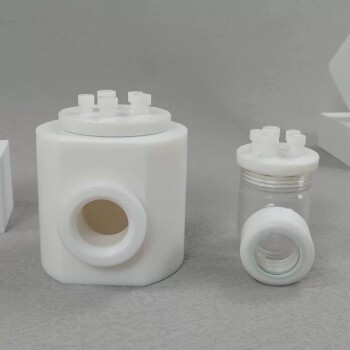
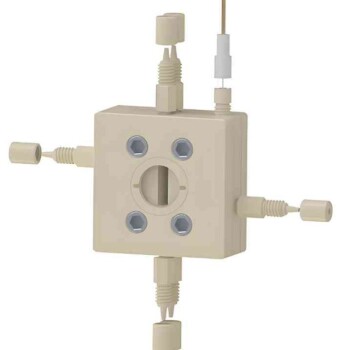
- Thin-Layer Spectral Electrolysis Electrochemical Cell
- Side Window Optical Electrolytic Electrochemical Cell
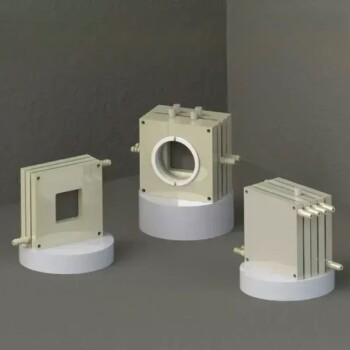
- Customizable Fuel Cell Stack Components for Diverse Applications
- Multifunctional Electrolytic Electrochemical Cell Water Bath Single Layer Double Layer
- Optical Water Bath Electrolytic Electrochemical Cell
People Also Ask
- What are the recommended post-experiment procedures for cleaning and storing the thin-layer spectroelectrochemical cell?
- What preparation steps are required before initiating an experiment with the thin-layer spectroelectrochemical cell?
- What operational environments and sealing options are available for the thin-layer spectroelectrochemical cell?
- For what types of systems, temperature ranges, and sealing configurations is the thin-layer spectroelectrochemical cell designed? Ideal for Aqueous and Non-Aqueous Analysis
- What are the necessary preparation steps before using a thin-layer spectroelectrochemical cell? A Guide to Reliable Results