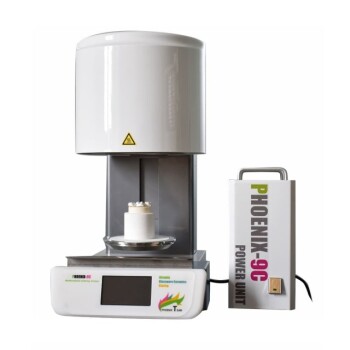
The purpose of utilizing a chamber furnace during the cold deformation of chromized tubes is to strategically lower the material's deformation resistance and restore its ductility. By performing intermediate heating at approximately 740°C, the furnace mitigates the hardening effects of cold working, ensuring the high-chromium steel does not suffer from brittle fracture during subsequent processing steps.
Core Takeaway: This heat treatment is the enabler for multi-pass cold rolling. It functions as a critical reset that allows the material to be worked repeatedly while maintaining dimensional accuracy and preventing catastrophic cracking.
Restoring Material Properties
The cold deformation process places immense stress on the metal structure. The chamber furnace addresses the physical limitations that arise during this work.
Reducing Deformation Resistance
As high-chromium steel is cold worked, it naturally hardens and resists further shaping. Intermediate heating reverses this effect. By raising the temperature to 740°C, the material becomes softer and more malleable, reducing the force required for further deformation.
Improving Fracture Resistance
Cold working increases the risk of the material snapping or shattering under stress. The furnace treatment significantly improves the steel's resistance to brittle fracture. This ensures the tube retains enough toughness to withstand the mechanical pressures of the rolling mill.
Ensuring Process Integrity
Beyond the material properties, the chamber furnace is essential for the success of the manufacturing workflow itself.
Enabling Multi-Pass Rolling
Complex tube shapes often cannot be formed in a single pass. Intermediate heating allows for multi-pass cold rolling sequences. It effectively "resets" the material between passes so operations can continue without failure.
Preventing Cracking
The most immediate risk in cold deformation is the formation of surface or internal cracks. Heating serves as a preventative measure against these defects. It ensures the material yields rather than breaks, preserving the structural integrity of the tube.
Maintaining Dimensional Accuracy
Heat treatment helps stabilize the tube during processing. By controlling the material's resistance, manufacturers can achieve tighter tolerances. This ensures the final product meets precise dimensional accuracy requirements.
Understanding the Operational Trade-offs
While beneficial, the inclusion of a chamber furnace introduces specific constraints that must be managed.
Temperature Specificity
The process relies on a specific thermal window, cited at 740°C. Deviating significantly from this temperature may fail to sufficiently reduce deformation resistance. Precise thermal control is required to achieve the desired material state without altering the chromized layer negatively.
Processing Complexity
This is an intermediate step, meaning it interrupts the continuous flow of cold deformation. It adds time to the production cycle compared to a single-pass operation. However, this added complexity is the necessary trade-off to prevent high scrap rates due to cracking.
Making the Right Choice for Your Goal
To maximize the effectiveness of your cold deformation process, consider your specific objectives:
- If your primary focus is Production Yield: Prioritize this heating step to eliminate scrap losses caused by brittle fracture and cracking.
- If your primary focus is Geometric Complexity: Utilize intermediate heating to enable the multi-pass rolling required for achieving precise dimensions and difficult shapes.
The chamber furnace is not just a heater; it is the control mechanism that balances workability with structural integrity.
Summary Table:
| Benefit | Purpose in Cold Deformation | Outcome |
|---|---|---|
| Reduced Resistance | Lowers force required for shaping | Easier material manipulation |
| Ductility Restoration | Softens material at 740°C | Enables multi-pass rolling |
| Fracture Prevention | Increases resistance to brittle fracture | Eliminates catastrophic cracking |
| Dimensional Stability | Controls material yield behavior | Achieves tighter tolerances |
Maximize Your Material Integrity with KINTEK
Precise thermal control is the backbone of high-performance manufacturing. KINTEK specializes in advanced laboratory and industrial solutions, offering a comprehensive range of high-temperature chamber and muffle furnaces designed to meet the rigorous demands of material science and metallurgical processing.
Whether you are performing intermediate heating to prevent brittle fracture or require high-precision hydraulic presses and crushing systems for sample preparation, our expert team is ready to help you achieve superior results. From high-chromium steel processing to battery research and dental applications, KINTEK provides the reliability your lab deserves.
Ready to enhance your production yield and dimensional accuracy? Contact KINTEK today for a customized consultation
References
- A. V. Hruzevych, D. О. Derecha. Diffusion-hardening effect on the technological properties of high-temperature steel. DOI: 10.1007/s42452-020-2943-5
This article is also based on technical information from Kintek Solution Knowledge Base .
Related Products
- Customer Made Versatile CVD Tube Furnace Chemical Vapor Deposition Chamber System Equipment
- Multi Heating Zones CVD Tube Furnace Machine Chemical Vapor Deposition Chamber System Equipment
- Dental Porcelain Zirconia Sintering Ceramic Furnace Chairside with Transformer
- High Temperature Muffle Oven Furnace for Laboratory Debinding and Pre Sintering
- Vertical High Temperature Graphite Vacuum Graphitization Furnace
People Also Ask
- What is a CVD tube furnace? A Complete Guide to Thin-Film Deposition
- What is the function of a high-temperature CVD tube furnace in 3D graphene foam prep? Master 3D Nanomaterial Growth
- What are the technical advantages of using a CVD tube furnace? Optimize Silicon-Carbon Battery Anodes
- How does a CVD tube furnace inhibit the sintering of silver supports? Boost Membrane Durability and Performance
- What is the function of a tube furnace in CVD SiC synthesis? Achieving Ultra-Pure Silicon Carbide Powders