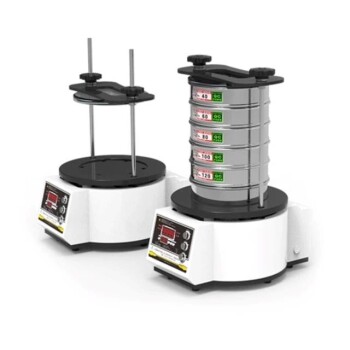
The primary role of a crushing and sieving system in mineral leaching kinetics is to transform raw, natural ores into strictly defined particle size ranges. This mechanical preparation is the critical control variable that establishes the specific surface area available for solid-liquid reactions, directly influencing the accuracy of subsequent kinetic modeling.
By standardizing particle size, researchers can isolate surface area as a variable. This isolation is essential for calculating reaction rate orders and determining the underlying mechanisms driving the leaching process.
The Mechanics of Kinetic Analysis
Regulating Specific Surface Area
The fundamental principle of leaching kinetics is that reaction rates are proportional to the contact area between the solid mineral and the liquid lixiviant.
Crushing reduces the ore from coarse aggregates to fine powders. This exponential increase in surface area exposes more mineral grains to the solvent, facilitating the chemical exchange necessary for extraction.
Distinguishing Reaction Mechanisms
A precise sieving system allows researchers to separate ground material into narrow size fractions (e.g., 0.075–0.106 mm).
By testing these different fractions, you can determine if the process is controlled by surface chemical reactions or by diffusion processes.
If the reaction rate changes linearly with surface area, it is likely chemically controlled. If the relationship is more complex, diffusion through a product layer may be the limiting factor.
Enhancing Reagent Penetration
While primary applications focus on minerals, the principle holds true for various substrates, such as biomass or medical stones.
Uniform, small particle sizes ensure that chemical reagents (acids or alkalis) can penetrate the material structure efficiently.
In porous materials, this preparation removes physical barriers, allowing the lixiviant to access internal pore structures where simple surface contact is insufficient.
Understanding the Trade-offs
The Risk of Over-Grinding
While smaller particles generally increase reaction rates, excessive crushing can produce "fines" or slime.
These ultra-fine particles can clog filtration systems and create channeling in leaching columns, leading to inconsistent kinetic data that does not accurately represent the bulk material.
Mechanochemical Activation
It is important to note that intense crushing does more than just reduce size; it can introduce defects into the crystal lattice.
This phenomenon, known as mechanochemical activation, increases the internal energy of the mineral. This can artificially accelerate reaction rates, potentially skewing kinetic calculations if not accounted for.
Making the Right Choice for Your Goal
To ensure your kinetic study produces valid data, tailor your preparation strategy to your specific analytical needs:
- If your primary focus is determining the Rate-Limiting Step: Prioritize narrow, distinct sieve cuts to clearly observe how changes in surface area correlate with reaction speed.
- If your primary focus is maximizing Extraction Efficiency: Focus on reducing the average particle size to the smallest practical diameter that still allows for effective liquid permeability and filtration.
The integrity of your kinetic model relies entirely on the precision of your initial physical preparation.
Summary Table:
| Aspect of Kinetic Study | Role of Crushing & Sieving | Impact on Research |
|---|---|---|
| Surface Area Control | Increases solid-liquid contact area | Establishes the baseline for reaction rate calculations |
| Mechanism Identification | Segregates material into precise size fractions | Distinguishes between chemical control and diffusion-limited processes |
| Reagent Penetration | Reduces physical barriers in ore structure | Ensures efficient lixiviant access to internal mineral grains |
| Data Integrity | Eliminates inconsistent "fines" and slimes | Prevents clogging and channeling for reproducible kinetic modeling |
Precision Sample Preparation for Reliable Kinetic Data
Ensure the accuracy of your mineralogical research with KINTEK’s high-performance laboratory solutions. As specialists in material science equipment, we provide the tools necessary to isolate variables and achieve consistent results.
Our extensive portfolio includes:
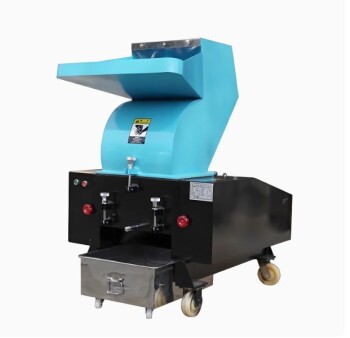
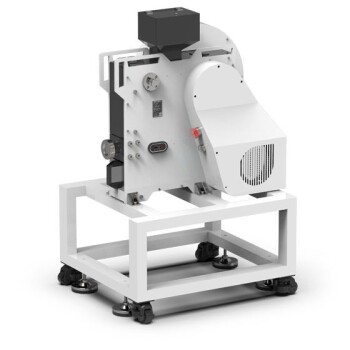
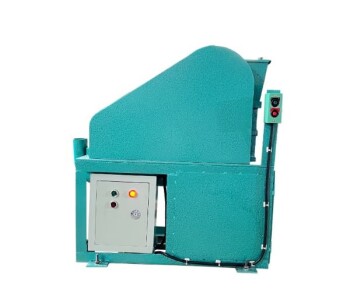
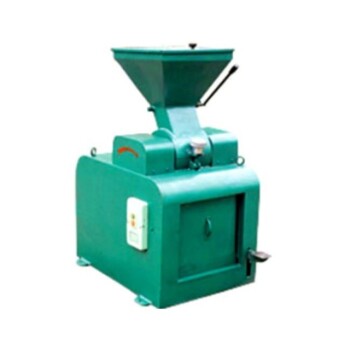
- Advanced Crushing and Milling Systems: Achieve uniform particle reduction for precise mechanochemical activation.
- High-Precision Sieving Equipment: Isolate narrow size fractions to accurately determine rate-limiting steps.
- Hydraulic Presses & High-Temperature Reactors: Support your post-leaching analysis and material synthesis.
- Premium Consumables: From durable ceramics to high-purity crucibles for extreme thermal processing.
Whether you are refining leaching kinetics or exploring battery research, KINTEK delivers the durability and precision your laboratory demands. Contact us today to optimize your research workflow!
References
- Yuri V. Shklyaev, Д. А. Рогожников. Kinetics of nitric acid leaching of bornite and chalcopyrite. DOI: 10.15826/chimtech.2023.10.4.10
This article is also based on technical information from Kintek Solution Knowledge Base .
Related Products
- Laboratory Test Sieves and Sieving Machines
- Three-dimensional electromagnetic sieving instrument
- Laboratory Vibratory Sieve Shaker Machine for Dry and Wet Three-Dimensional Sieving
- Powerful Plastic Crusher Machine
- Laboratory Jaw Crusher
People Also Ask
- What are laboratory test sieves used for? A Guide to Particle Size Analysis
- How do you calculate the sieve test? Master Particle Size Distribution for Quality Control
- How does a lab test sieve contribute to biomass charcoal powder preparation? Achieve Uniform Particle Size
- What are the specifications for test sieves? A Guide to ASTM & ISO Standards for Accurate Particle Analysis
- What materials are required for sieving? Achieve Accurate Particle Size Analysis