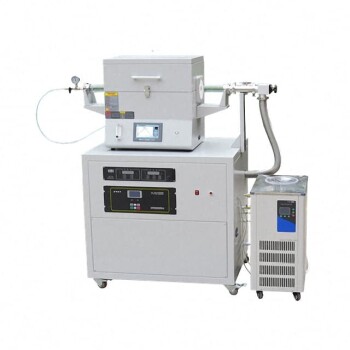
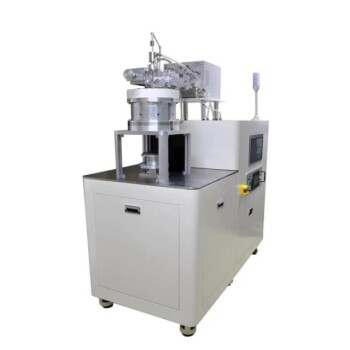
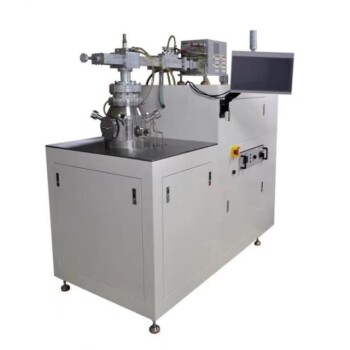
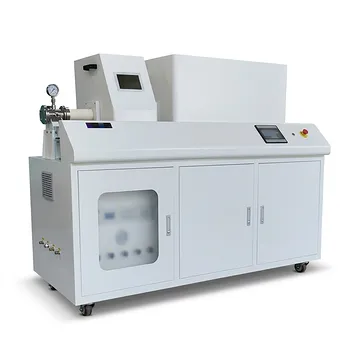
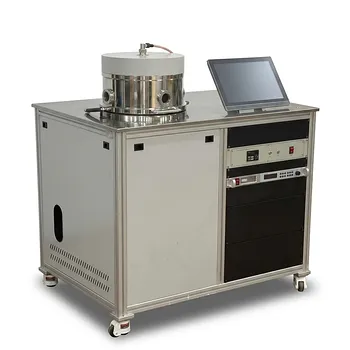
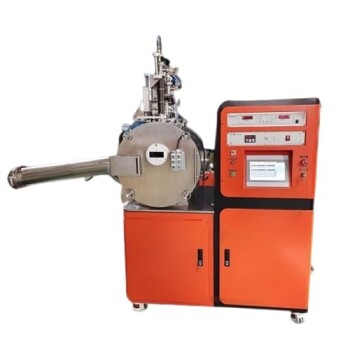
High-vacuum Chemical Vapor Deposition (CVD) systems are the critical infrastructure required to synthesize large-area, high-quality graphene films for anti-corrosion applications. These systems provide a precisely controlled high-temperature environment that facilitates the thermochemical decomposition of carbon-containing precursors onto metal substrates. By managing gas flow, pressure, and temperature, the CVD process creates a continuous, impermeable physical shielding layer that protects underlying metals from environmental degradation.
The high-vacuum CVD system transforms gaseous carbon sources into a dense, atomic-scale barrier by leveraging catalytic metal surfaces and extreme thermal control. Its primary role is to ensure the graphene film is continuous and low in defects, which is essential for preventing corrosive agents from penetrating the shield.
Establishing the Ideal Growth Environment
Thermal Decomposition of Precursors
The system uses a high-vacuum tube furnace to reach temperatures typically exceeding 1000°C, which is necessary to break the molecular bonds of carbon sources like methane (CH4). Within this high-temperature zone, the carbon atoms are liberated from the gas and begin to nucleate on the surface of a metal catalyst.
The Role of the Reducing Atmosphere
By introducing hydrogen (H2) into the chamber, the system maintains a reducing atmosphere that prevents the metal substrate from oxidizing during the heating process. This ensures that the catalytic surface of the copper or nickel remains active and clean for uniform graphene growth.
Maintaining High Purity
The high-vacuum environment is essential for excluding atmospheric contaminants such as oxygen and water vapor. Removing these impurities is vital to ensure the integrity of the graphene crystal lattice and to prevent the formation of unwanted oxides that could weaken the anti-corrosion film.
Precision Control of Film Quality and Uniformity
Atomic Layer Management
A primary function of the CVD system is the precise regulation of gas flow ratios and reaction times to control whether single-layer or multi-layer graphene is formed. For anti-corrosion, layer control is critical, as the thickness and stacking of the graphene directly influence its ability to block ions and molecules.
Enhancing Gas Diffusion
Operating under low-pressure conditions (typically 200–300 Pa) increases the mean free path of gas molecules. This enhanced diffusion allows the carbon source to reach the substrate surface more uniformly, which is the key to producing the large-area films required for industrial-scale anti-corrosion coatings.
Catalytic Nucleation on Metal Substrates
The system utilizes the catalytic properties of substrates like copper foil or nickel. The high-vacuum furnace provides the stable thermal energy required for carbon atoms to arrange themselves into a perfect hexagonal lattice, forming a continuous sheet that covers the entire surface of the metal.
Understanding the Trade-offs and Challenges
Grain Boundaries and Defects
While CVD produces high-quality graphene, the film is often polycrystalline, meaning it contains grain boundaries where different graphene crystals meet. These boundaries can act as microscopic "leaks" where corrosion can begin if the growth parameters are not perfectly optimized.
Cooling Rate Sensitivities
The rate at which the system cools down after deposition significantly impacts the final film quality. Rapid or uneven cooling can induce thermal stress and cracking in the graphene layer, compromising its effectiveness as a physical barrier against moisture and chemicals.
Substrate Compatibility and Transfer
The anti-corrosion film is grown on a catalyst, but applying it to a target product often requires a transfer process. This step introduces risks of mechanical damage or chemical contamination, which can degrade the protective properties of the CVD-grown graphene.
How to Apply CVD Technology to Your Corrosion Goals
The effectiveness of a graphene anti-corrosion film depends heavily on matching the CVD system’s capabilities to your specific technical requirements.
- If your primary focus is maximum chemical resistance: Prioritize a system with multi-zone temperature control to grow thicker, multi-layer graphene films that provide a more robust physical barrier.
- If your primary focus is large-scale industrial coating: Utilize low-pressure CVD (LPCVD) configurations to ensure uniform gas distribution across large-area foils, minimizing the presence of amorphous carbon.
- If your primary focus is high-purity research: Invest in a high-vacuum system with advanced gas path management to eliminate trace contaminants that cause lattice defects.
By mastering the high-vacuum CVD process, engineers can create atomic-scale shields that offer unprecedented protection for metal surfaces in the harshest environments.
Summary Table:
| Feature | Role in CVD Process | Anti-Corrosion Benefit |
|---|---|---|
| High-Vacuum Environment | Eliminates atmospheric contaminants (O2, H2O) | Ensures high-purity, defect-free crystal lattice |
| High-Temp Furnace (>1000°C) | Facilitates thermochemical decomposition of CH4 | Enables dense, atomic-scale carbon nucleation |
| Reducing Atmosphere (H2) | Prevents metal substrate oxidation | Maintains active catalytic surface for uniform growth |
| Low-Pressure Control | Increases gas mean free path/diffusion | Achieves large-area film uniformity for industrial use |
| Precision Flow Regulation | Manages gas ratios and reaction times | Controls layer thickness for optimized physical shielding |
Elevate Your Material Protection with KINTEK CVD Excellence
Producing impermeable, large-area graphene films requires absolute precision in thermal and atmospheric control. At KINTEK, we specialize in providing the high-performance laboratory equipment and consumables essential for advanced material synthesis.
Whether you are conducting high-purity research or scaling for industrial anti-corrosion applications, our comprehensive range of high-vacuum CVD and PECVD systems, atmosphere furnaces, and high-pressure reactors provides the stability and control your project demands. From specialized catalytic substrates to essential crucibles and ceramic consumables, we offer end-to-end solutions to minimize grain defects and maximize film integrity.
Ready to optimize your graphene growth process? Contact our technical experts today to discover how KINTEK can enhance your lab's capabilities and protect your metal substrates from the harshest environments.
References
- Tao Liu, Xiaosong Jiang. Recent progress on corrosion mechanisms of graphene-reinforced metal matrix composites. DOI: 10.1515/ntrev-2022-0566
This article is also based on technical information from Kintek Solution Knowledge Base .
Related Products
- HFCVD Machine System Equipment for Drawing Die Nano-Diamond Coating
- Split Chamber CVD Tube Furnace with Vacuum Station Chemical Vapor Deposition System Equipment Machine
- Chemical Vapor Deposition CVD Equipment System Chamber Slide PECVD Tube Furnace with Liquid Gasifier PECVD Machine
- Customer Made Versatile CVD Tube Furnace Chemical Vapor Deposition Chamber System Equipment
- Microwave Plasma Chemical Vapor Deposition MPCVD Machine System Reactor for Lab and Diamond Growth
People Also Ask
- What is the full form of HFCVD? A Guide to Hot Filament Chemical Vapor Deposition
- What are the disadvantages and challenges of the HFCVD method? Overcome Growth Limits and Filament Issues
- What is the function of tungsten filaments in HFCVD? Powering Diamond Film Synthesis with Thermal Excitation
- Why is Chemical Vapor Deposition (CVD) equipment uniquely suited for constructing hierarchical superhydrophobic structures?
- What is the chemical vapor deposition growth process? Build Superior Thin Films from the Atom Up