The roller press functions as the primary architectural control mechanism during the fabrication of porous Fe-Cr-Al materials. By applying precise, mechanical pressure to polyurethane foam that has been impregnated with slurry, it forces out excess material to prevent pore blockage while ensuring the remaining coating is uniform.
The Core Takeaway The roller press is the defining step that guarantees the material's "high-flux" capability. It ensures the slurry adheres only to the structural fibers without filling the voids, directly determining the final porosity and open-cell consistency of the material.
The Mechanics of Slurry Control
Regulating Impregnation
In the replica process, the polyurethane foam is initially saturated with an Fe-Cr-Al slurry. At this stage, the foam holds more material than is necessary for the final product.
The Squeezing Action
The roller press applies a specific, controlled squeezing force to the saturated foam. This mechanical action physically ejects the surplus slurry that has accumulated in the void spaces of the sponge.
Ensuring Uniformity
Beyond simple removal, the roller press ensures the remaining slurry is distributed evenly. It forces the mixture to coat the foam fibers (struts) consistently, rather than pooling in random sections.
Impact on Material Properties
Preventing Pore Clogging
The primary threat to "high-flux" performance is blocked pathways. The roller press is responsible for keeping the internal network open by removing the excess slurry that would otherwise close off the pores during drying and sintering.
Defining the Open-Cell Structure
To achieve a functional porous material, the internal architecture must remain interconnected. The roller press preserves this open-cell structure by leaving only a thin, structural layer of slurry on the framework.
Consistent Pore Size Distribution
Reliable filtration or flow requires predictable pore sizes. By applying uniform pressure, the roller press ensures that the window sizes between pores remain consistent throughout the entire volume of the material.
Understanding the Risks of Improper Control
The Consequence of Inadequate Pressure
The reference emphasizes the need to "precisely control" the pressure. If the roller press applies insufficient pressure, excess slurry will remain trapped within the foam.
The Loss of Flux
If this excess slurry is not removed, it will dry and sinter inside the voids. This results in clogged pores, significantly reducing porosity and destroying the high-flux characteristics of the Fe-Cr-Al material.
Making the Right Choice for Your Goal
To optimize the fabrication process, you must calibrate the roller press based on your specific performance requirements.
- If your primary focus is High Flux: Maximize the precision of the roller pressure to aggressively remove excess slurry and guarantee unobstructed pore channels.
- If your primary focus is Structural Homogeneity: Focus on the uniformity of the roller's application to ensure every fiber is coated evenly, preventing weak spots in the final matrix.
Ultimately, the roller press is the gatekeeper of quality, determining whether the final product becomes a high-performance porous material or a dense, clogged failure.
Summary Table:
| Stage of Process | Role of Roller Press | Impact on Final Material |
|---|---|---|
| Slurry Impregnation | Removes excess slurry from foam voids | Prevents pore blockage and ensures high flux |
| Coating Application | Distributes slurry evenly across fibers | Ensures structural homogeneity and strength |
| Architecture Control | Regulates mechanical squeezing force | Defines open-cell consistency and pore size |
| Sintering Prep | Clears internal network pathways | Guarantees predictable filtration performance |
Elevate Your Material Fabrication with KINTEK Precision
Achieving the perfect high-flux porous structure requires more than just high-quality slurry—it demands the right equipment to control every stage of fabrication. KINTEK specializes in advanced laboratory solutions, including high-performance crushing and milling systems, hydraulic presses, and high-temperature furnaces (muffle, vacuum, and CVD) essential for drying and sintering your Fe-Cr-Al materials.
Whether you are developing next-generation battery components, filtration systems, or specialized catalysts, our comprehensive range of tools and consumables ensures your research yields consistent, high-performance results. Contact KINTEK today to discuss how our expert equipment can optimize your laboratory workflow and material quality!
References
- Г Мягков Виктор, Baryshnikov Ivan. Special features of the phase formation during sintering of high porous cellular materials of the Fe-Cr-Al system. DOI: 10.17212/1994-6309-2016-2-51-58
This article is also based on technical information from Kintek Solution Knowledge Base .
Related Products
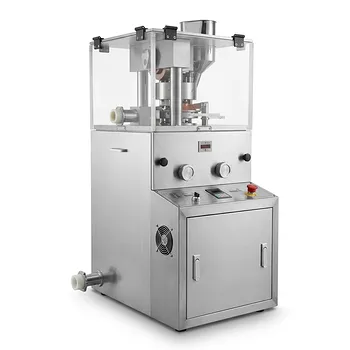
- Lab Scale Rotary Single Punch Tablet Press Machine TDP Tablet Punching Machine
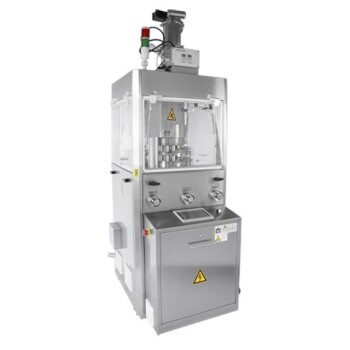
- Single Punch Tablet Press Machine and Mass Production Rotary Tablet Punching Machine for TDP
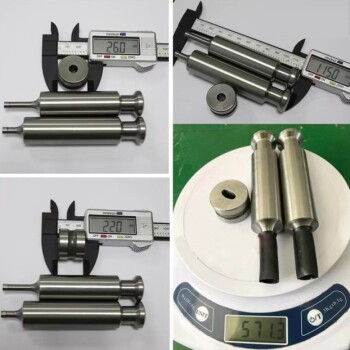
- Multi-Punch Rotary Tablet Press Mold Ring for Rotating Oval and Square Molds
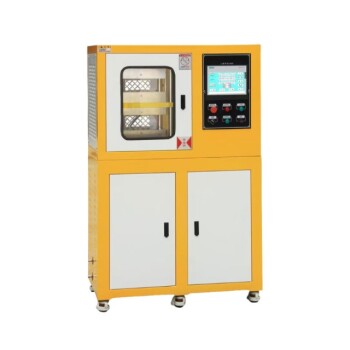
- Automatic High Temperature Heated Hydraulic Press Machine with Heated Plates for Lab
- Manual Lab Heat Press
People Also Ask
- What is a punch tablet press? Precision Tableting for R&D and Small Batches
- What is the use of single punch tablet press? For Precise R&D and Small-Batch Tablet Production
- What is the principle of a single punch tablet press machine? A Guide to Precision Lab-Scale Production
- What are advantages of single punch tablet press machine? Maximize R&D Efficiency with Minimal Material
- What are the different parts of a single punch tablet machine? The Core Components Explained