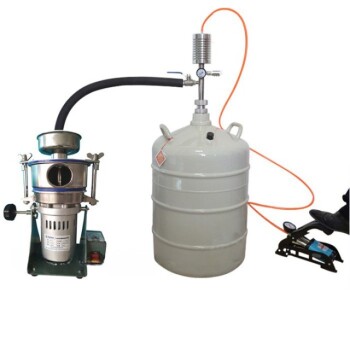
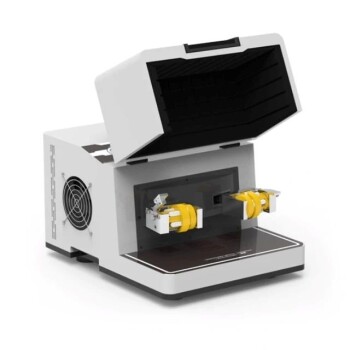
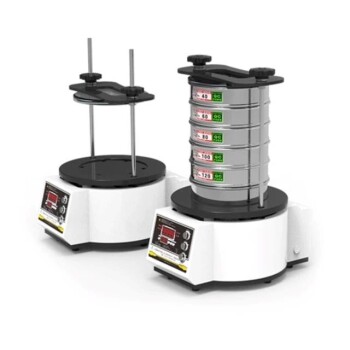
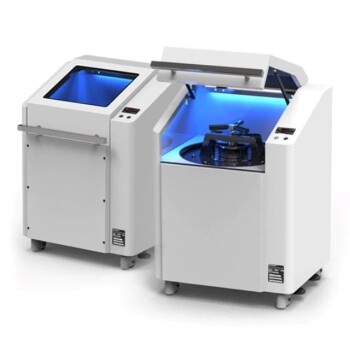
Laboratory crushing and sieving systems are the foundational tools used to activate the functional properties of medical stone raw materials. By mechanically processing natural ore into a precise particle size range—specifically 0.075–0.106 mm—these systems prepare the material for optimal interaction with environmental contaminants and biological agents.
Core Takeaway The primary role of these systems is to maximize specific surface area and expose critical pore structures through precise size reduction. This physical transformation directly enhances the material's efficiency in physically adsorbing heavy metals and creates a necessary microenvironment for the colonization and growth of sulfate-reducing bacteria (SRB).
The Mechanics of Material Preparation
Precision Size Reduction
The efficacy of medical stone is heavily dependent on its physical dimensions. Laboratory systems must crush the raw ore and sieve it to a strict specification, typically between 0.075 mm and 0.106 mm.
Establishing Uniformity
Beyond simple reduction, the sieving process ensures homogeneity across the sample. Uniform particle sizes prevent inconsistencies in experimental data, ensuring that the material behaves predictably during subsequent treatment phases.
Enhancing Physical Adsorption
Maximizing Specific Surface Area
Reducing the particle size significantly increases the specific surface area of the medical stone. This exposes a greater amount of the material to the surrounding medium, which is the fundamental driver for adsorption capacity.
Optimizing Heavy Metal Removal
With increased surface area, the medical stone presents more active sites for interaction. This directly improves the physical adsorption efficiency of heavy metals, allowing the stone to capture contaminants more effectively from a solution.
Facilitating Biological Synergy
Creating a Microenvironment
The role of crushing and sieving extends beyond chemistry into biology. The specific pore structures exposed during this process provide an ideal microenvironment for microorganisms.
Supporting Sulfate-Reducing Bacteria (SRB)
The processed medical stone acts as a carrier substrate. The optimized texture and surface characteristics facilitate the attachment and growth of sulfate-reducing bacteria (SRB), which are critical for various bioremediation and treatment applications.
Understanding the Trade-offs
The Risk of Inconsistent Sizing
While the primary reference focuses on the benefits of the 0.075–0.106 mm range, broader industrial principles suggest that deviating from this uniformity can be detrimental. Oversized particles reduce the available surface area, limiting adsorption rates.
Internal Diffusion Limitations
Conversely, particles that are too fine or tightly packed can cause pressure drops or blockages in fixed-bed applications. As seen in similar catalytic and biomass applications, maintaining the correct size range eliminates the impact of internal diffusion limitations, ensuring the reaction data remains accurate and the process efficient.
Making the Right Choice for Your Goal
When configuring your crushing and sieving protocols, align your parameters with your specific experimental objectives:
- If your primary focus is Heavy Metal Remediation: Prioritize maximizing specific surface area to increase the number of available physical adsorption sites.
- If your primary focus is Biological Treatment: Ensure the particle size preserves the pore structure integrity to support the healthy colonization of sulfate-reducing bacteria.
Precise mechanical preparation is not merely about size reduction; it is the process of unlocking the latent chemical and biological potential of the raw material.
Summary Table:
| System Component | Function in Pretreatment | Key Parameter (0.075–0.106 mm) |
|---|---|---|
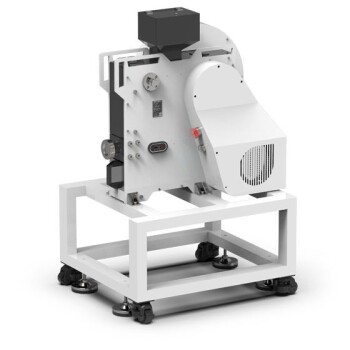
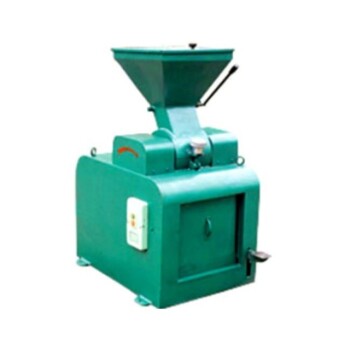
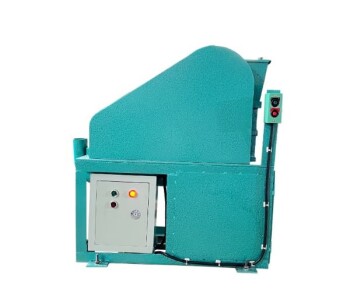
| Crushing System | Mechanical size reduction of raw ore | Maximizes specific surface area & exposes pores |
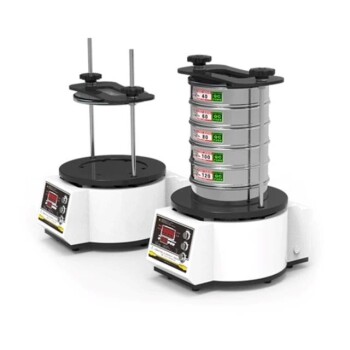
| Sieving System | Ensures homogeneity & uniformity | Eliminates internal diffusion & ensures data accuracy |
| Combined Effect | Enhanced physical adsorption | Optimizes heavy metal removal efficiency |
| Biological Role | Microenvironment creation | Supports growth of Sulfate-Reducing Bacteria (SRB) |
Unlock the Full Potential of Your Materials with KINTEK
Precise mechanical preparation is the foundation of scientific breakthrough. At KINTEK, we specialize in providing high-performance laboratory solutions tailored for researchers and industrial professionals.
Whether you are processing medical stone for bioremediation or conducting advanced materials research, our comprehensive range of crushing and milling systems, sieving equipment, and hydraulic presses ensures the precision your work demands. From achieving the perfect particle size for heavy metal adsorption to creating the ideal substrate for bacterial colonization, KINTEK’s equipment—including our renowned high-temperature furnaces and vacuum reactors—is engineered for excellence.
Ready to elevate your lab’s efficiency and accuracy? Contact our specialists today to find the perfect equipment configuration for your specific research goals!
References
- Xuying Guo, Ying Li. Study of the preparation of Maifan stone and SRB immobilized particles and their effect on treatment of acid mine drainage. DOI: 10.1039/d1ra08709f
This article is also based on technical information from Kintek Solution Knowledge Base .
Related Products
- Laboratory Test Sieves and Sieving Machines
- Laboratory Vibratory Sieve Shaker Machine for Dry and Wet Three-Dimensional Sieving
- Laboratory Jaw Crusher
- Laboratory Sealed Hammer Crusher for Efficient Sample Preparation
- Sealed Jaw Crusher High Efficiency Environmental Protection Safe and Reliable
People Also Ask
- What are laboratory test sieves used for? A Guide to Particle Size Analysis
- How do you calculate the sieve test? Master Particle Size Distribution for Quality Control
- How does a lab test sieve contribute to biomass charcoal powder preparation? Achieve Uniform Particle Size
- What are the specifications for test sieves? A Guide to ASTM & ISO Standards for Accurate Particle Analysis
- What materials are required for sieving? Achieve Accurate Particle Size Analysis