The significance of advanced stirring and mixing systems lies in their ability to sustain chemical reactivity by physically preventing reaction stalls. In the carbonation stage of indirect mineral carbonation, these systems are essential for enhancing mass transfer efficiency and ensuring that carbon dioxide successfully bonds with alkaline cations to maximize capture rates.
Without vigorous mechanical agitation, the chemical reaction is prone to self-limiting behavior caused by surface blockages. Advanced mixing acts as a mechanical enabler, breaking down diffusion barriers to maintain continuous contact between reactants.
Overcoming the Passivation Barrier
The Threat of Surface Coating
In aqueous carbonation, reacting particles are naturally prone to developing passivation layers. As the reaction proceeds, dense coatings—typically composed of silica-rich material or carbonates—form on the surface of the particles.
Blocking the Reaction Pathway
These layers act as a shield, encapsulating the unreacted core of the particle. This creates a diffusion barrier that prevents the surrounding fluids from reaching the alkaline material inside.
Mechanical Removal of Layers
Advanced stirring systems provide the necessary mechanical agitation to disrupt these layers. By continuously abrading and breaking these barriers, the mixing system exposes fresh surface area, allowing the reaction to continue rather than stalling out.
Enhancing Multiphase Efficiency
Optimizing Mass Transfer
Indirect mineral carbonation is a multiphase system, involving interactions between solids, liquids, and gases. Standard mixing is often insufficient to bridge the gaps between these phases effectively.
Ensuring Chemical Contact
Advanced systems are designed to force thorough contact between the carbon dioxide and the dissolved alkaline cations. This ensures that the reactants do not simply bypass one another, but actually collide and react.
Improving Capture Rates
The direct result of breaking diffusion barriers and improving contact is a tangible increase in overall carbon capture efficiency. The system converts more raw material into stable carbonates in less time.
Understanding the Risks of Inadequate Mixing
The "False Plateau" Pitfall
If the stirring mechanism is not aggressive enough, the process may appear to finish early. This is often a false plateau caused by the passivation layer sealing off the particle, leaving valuable alkaline cations unreacted inside.
Inconsistent Product Quality
Poor mixing leads to localized zones where the reaction is incomplete. This results in a heterogeneous output where some particles are fully carbonated while others remain shielded by silica-rich coatings.
Making the Right Choice for Your Goal
To apply these principles effectively to your project, consider your specific objectives:
- If your primary focus is Process Efficiency: Prioritize high-shear mixing systems capable of continuously stripping passivation layers to maintain peak reaction rates.
- If your primary focus is Material Utilization: Ensure your agitation strategy is vigorous enough to expose the inner core of reacting particles, preventing waste of alkaline feedstock.
Advanced mixing is not merely about movement; it is about physically maintaining the interface where chemistry happens.
Summary Table:
| Feature | Impact of Advanced Stirring | Benefit to Carbonation Stage |
|---|---|---|
| Passivation Control | Mechanically abrades silica/carbonate coatings | Exposes fresh surface area to prevent reaction stalls |
| Mass Transfer | Optimizes interaction between solid, liquid, and gas phases | Ensures thorough contact between CO2 and alkaline cations |
| Reaction Kinetics | Breaks down diffusion barriers | Maintains continuous chemical reactivity and speed |
| Product Consistency | Eliminates localized unreacted zones | Produces a homogeneous, fully carbonated final product |
Optimize Your Mineral Carbonation with KINTEK Advanced Solutions
Don't let passivation layers stall your carbon capture efficiency. KINTEK specializes in high-performance laboratory equipment designed to overcome complex chemical barriers. From advanced stirring systems and high-shear mixers to our robust high-temperature high-pressure reactors and autoclaves, we provide the precision tools necessary for critical carbonation research and material processing.
Whether you are refining battery research, developing ceramic components, or scaling CO2 sequestration, our comprehensive portfolio—including crushing systems, hydraulic presses, and specialized electrolytic cells—is engineered to deliver consistent, high-yield results.
Ready to enhance your lab's reaction efficiency? Contact our technical experts today to find the perfect equipment solution for your specific application.
References
- Caleb M. Woodall, Jennifer Wilcox. Utilization of mineral carbonation products: current state and potential. DOI: 10.1002/ghg.1940
This article is also based on technical information from Kintek Solution Knowledge Base .
Related Products
- Custom PTFE Teflon Parts Manufacturer for Magnetic Stirring Bar
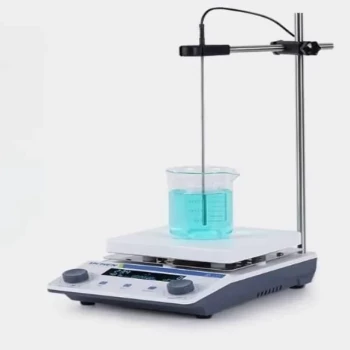
- Laboratory Small Constant Temperature Heated Magnetic Stirrer Heater and Stirrer
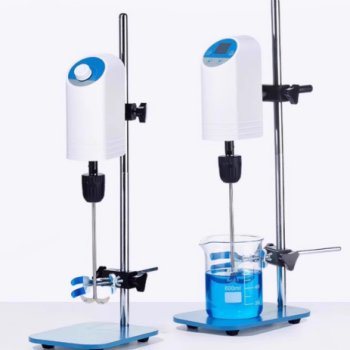
- High Performance Laboratory Stirrers for Diverse Applications
- Vacuum Induction Melting Spinning System Arc Melting Furnace
People Also Ask
- What is the function of a magnetic stirrer during the alkaline etching of nano-silicon carbide? Essential Mixing Guide
- Why is a powerful magnetic stirrer essential during photocatalytic degradation? Ensure Accurate Catalyst Performance
- What is the function of a magnetic stirrer in simulating industrial sulfolane environments? Master Fluid Dynamics
- What is the function of a magnetic stirrer in MgAl-LDH coprecipitation? Ensure Uniformity and Precision
- What is the function of a magnetic stirrer in co-precipitation? Ensure Homogeneity in Doped ZnO Synthesis