Knowledge What is the temperature of the rotary furnace? It Depends on the Heating Method
Author avatar

Tech Team · Kintek Solution

Updated 1 week ago

What is the temperature of the rotary furnace? It Depends on the Heating Method


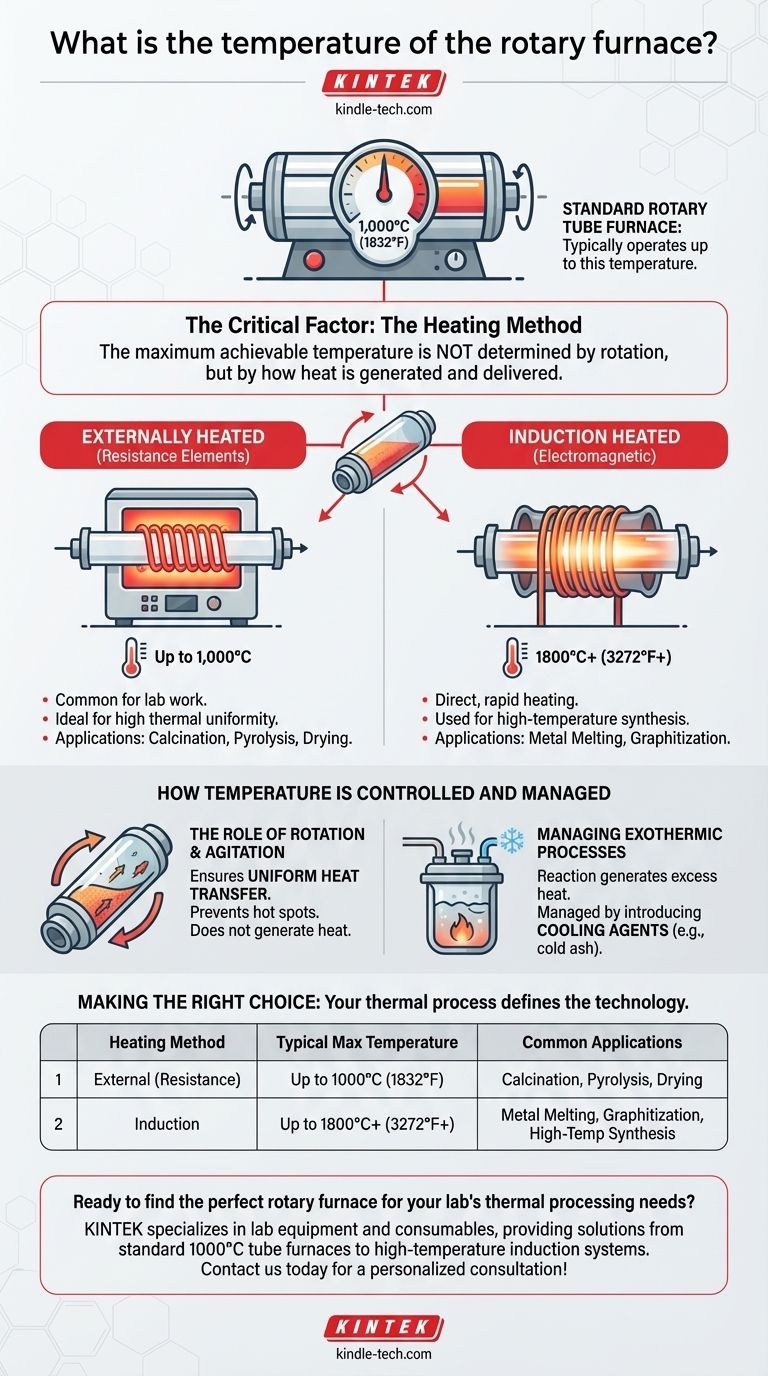
In short, a standard rotary tube furnace typically operates at temperatures up to 1,000°C (1832°F). However, this figure only tells part of the story, as the maximum achievable temperature is not determined by the furnace's rotation but by its specific heating method.

The key takeaway is that the term "rotary furnace" describes the mechanical function of rotating material, not the heating technology. The temperature capability depends entirely on whether it is heated externally by elements, by induction, or by a direct flame.
What is the temperature of the rotary furnace? It Depends on the Heating Method

The Critical Factor: The Heating Method

The function of rotation is to tumble the material, ensuring every particle is uniformly exposed to the heat source. The actual temperature limit is set by how that heat is generated and delivered.

Externally Heated Rotary Tube Furnaces

This is the most common type for laboratory and pilot-scale work. The material moves through a rotating tube that is situated inside a larger, stationary furnace.

These are typically heated by electrical resistance elements, which is why their upper range is generally limited to around 1,000°C. They are ideal for processes requiring high thermal uniformity and controlled atmospheres, such as calcination or pyrolysis.

Induction Heated Rotary Furnaces

For much higher temperature applications, an induction coil can be used as the heat source. This method uses electromagnetic induction to directly heat the conductive material (or a conductive crucible) inside the tube.

Induction systems can achieve extreme temperatures, often reaching 1800°C (3272°F) or more. They are used for melting metals, graphitization, and other high-temperature material synthesis where direct, rapid heating is needed.

How Temperature is Controlled and Managed

Controlling the thermal environment is just as important as reaching the peak temperature. The furnace's features are designed for this purpose.

The Role of Rotation and Agitation

The rotation speed, direction (forward or reverse), and the use of internal rakes or stirrers are not for generating heat.

Instead, these mechanical actions are primary control levers for heat transfer. They ensure the material mixes properly, preventing hot spots and promoting a uniform reaction or phase change throughout the batch.

Managing Temperature in Exothermic Processes

In some applications, such as waste incineration, the reaction itself can generate heat and cause the temperature to rise too high.

In these operational scenarios, temperature is managed by introducing a cooling agent. A common method is to add cold ash or other inert material to absorb excess heat and bring the system back into its target operating range.

Understanding the Trade-offs

Choosing a furnace involves balancing temperature requirements against process needs and cost.

Rotary Tube Furnace (Externally Heated)

  • Advantage: Provides excellent temperature uniformity and is well-suited for processing powders and granular materials in a controlled atmosphere.
  • Limitation: Capped at approximately 1,000°C, making it unsuitable for melting most metals or for ultra-high-temperature ceramics.

Rotary Furnace (Induction Heated)

  • Advantage: Capable of reaching very high temperatures (1800°C+) needed for metallurgy and advanced materials.
  • Limitation: The process is dependent on the electrical conductivity of the material being heated and can be a more complex and costly setup.

Making the Right Choice for Your Goal

Selecting the correct furnace technology starts with defining your thermal processing requirements.

  • If your primary focus is calcination, drying, or pyrolysis below 1000°C: A standard, externally heated rotary tube furnace provides the best combination of thermal uniformity and control.
  • If your primary focus is melting metals or high-temperature synthesis above 1200°C: You must look for a rotary system specifically designed with an induction or other high-temperature heating source.

Ultimately, your material's required processing temperature is the single most important factor in determining the right furnace technology.

Summary Table:

Heating Method Typical Max Temperature Common Applications
External (Resistance) Up to 1000°C (1832°F) Calcination, Pyrolysis, Drying
Induction Up to 1800°C+ (3272°F+) Metal Melting, Graphitization, High-Temp Synthesis

Ready to find the perfect rotary furnace for your lab's thermal processing needs?

KINTEK specializes in lab equipment and consumables, providing solutions from standard 1000°C tube furnaces to high-temperature induction systems. Our experts can help you select the right furnace to ensure precise temperature control, uniform heating, and optimal results for your materials.

Contact us today for a personalized consultation!

Visual Guide
What is the temperature of the rotary furnace? It Depends on the Heating Method Visual Guide

Related Products

People Also Ask

Related Products

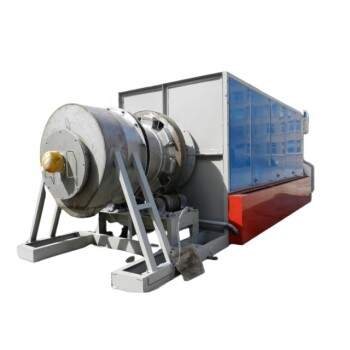
Electric Rotary Kiln Continuous Working Small Rotary Furnace Heating Pyrolysis Plant

Electric Rotary Kiln Continuous Working Small Rotary Furnace Heating Pyrolysis Plant

Efficiently calcine and dry bulk powder and lump fluid materials with an electric heating rotary furnace. Ideal for processing lithium ion battery materials and more.

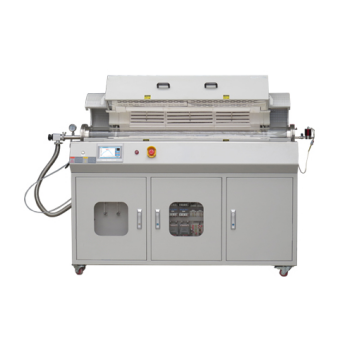
Rotary Tube Furnace Split Multi Heating Zone Rotating Tube Furnace

Rotary Tube Furnace Split Multi Heating Zone Rotating Tube Furnace

Multi zone rotary furnace for high-precision temperature control with 2-8 independent heating zones. Ideal for lithium ion battery electrode materials and high-temperature reactions. Can work under vacuum and controlled atmosphere.

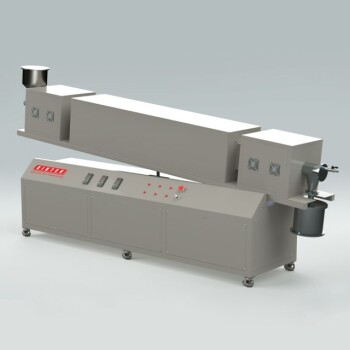
Electric Rotary Kiln Small Rotary Furnace for Activated Carbon Regeneration

Electric Rotary Kiln Small Rotary Furnace for Activated Carbon Regeneration

Revitalize your activated carbon with KinTek's Electric Regeneration Furnace. Achieve efficient and cost-effective regeneration with our highly automated rotary kiln and intelligent thermal controller.

1400℃ Laboratory Quartz Tube Furnace with Alumina Tube Tubular Furnace

1400℃ Laboratory Quartz Tube Furnace with Alumina Tube Tubular Furnace

Looking for a tube furnace for high-temperature applications? Our 1400℃ Tube Furnace with Alumina Tube is perfect for research and industrial use.

1700℃ Laboratory Quartz Tube Furnace with Alumina Tube Tubular Furnace

1700℃ Laboratory Quartz Tube Furnace with Alumina Tube Tubular Furnace

Looking for a high-temperature tube furnace? Check out our 1700℃ Tube Furnace with Alumina Tube. Perfect for research and industrial applications up to 1700C.

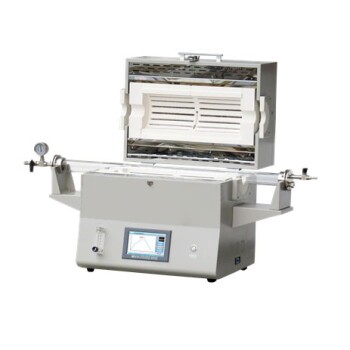
Vacuum Sealed Continuous Working Rotary Tube Furnace Rotating Tube Furnace

Vacuum Sealed Continuous Working Rotary Tube Furnace Rotating Tube Furnace

Experience efficient material processing with our vacuum-sealed rotary tube furnace. Perfect for experiments or industrial production, equipped with optional features for controlled feeding and optimized results. Order now.

Laboratory Muffle Oven Furnace Bottom Lifting Muffle Furnace

Laboratory Muffle Oven Furnace Bottom Lifting Muffle Furnace

Efficiently produce batches with excellent temperature uniformity using our Bottom Lifting Furnace. Features two electric lifting stages and advanced temperature control up to 1600℃.

High Pressure Laboratory Vacuum Tube Furnace Quartz Tubular Furnace

High Pressure Laboratory Vacuum Tube Furnace Quartz Tubular Furnace

KT-PTF High Pressure Tube Furnace: Compact split tube furnace with strong positive pressure resistance. Working temp up to 1100°C and pressure up to 15Mpa. Also works under controller atmosphere or high vacuum.

1800℃ Muffle Oven Furnace for Laboratory

1800℃ Muffle Oven Furnace for Laboratory

KT-18 muffle furnace with Japan Al2O3 polycrystalline fibe and Silicon Molybdenum heating element, up to 1900℃, PID temperature control and 7" smart touch screen. Compact design, low heat loss, and high energy efficiency. Safety interlock system and versatile functions.

High Temperature Muffle Oven Furnace for Laboratory Debinding and Pre Sintering

High Temperature Muffle Oven Furnace for Laboratory Debinding and Pre Sintering

KT-MD High temperature debinding and pre-sintering furnace for ceramic materials with various molding processes. Ideal for electronic components such as MLCC and NFC.

Vertical Laboratory Quartz Tube Furnace Tubular Furnace

Vertical Laboratory Quartz Tube Furnace Tubular Furnace

Elevate your experiments with our Vertical Tube Furnace. Versatile design allows for operation under various environments and heat treatment applications. Order now for precise results!

1200℃ Split Tube Furnace with Quartz Tube Laboratory Tubular Furnace

1200℃ Split Tube Furnace with Quartz Tube Laboratory Tubular Furnace

KT-TF12 split tube furnace: high-purity insulation, embedded heating wire coils, and max. 1200C. Widely used for new materials and chemical vapour deposition.

1700℃ Muffle Oven Furnace for Laboratory

1700℃ Muffle Oven Furnace for Laboratory

Get superior heat control with our 1700℃ Muffle Furnace. Equipped with intelligent temperature microprocessor, TFT touch screen controller & advanced insulation materials for precise heating up to 1700C. Order now!

1400℃ Muffle Oven Furnace for Laboratory

1400℃ Muffle Oven Furnace for Laboratory

Get precise high-temperature control up to 1500℃ with KT-14M Muffle furnace. Equipped with a smart touch screen controller and advanced insulation materials.

1700℃ Controlled Atmosphere Furnace Nitrogen Inert Atmosphere Furnace

1700℃ Controlled Atmosphere Furnace Nitrogen Inert Atmosphere Furnace

KT-17A Controlled atmosphere furnace: 1700℃ heating, vacuum sealing technology, PID temperature control, and versatile TFT smart touch screen controller for laboratory and industrial use.

Multi Zone Laboratory Quartz Tube Furnace Tubular Furnace

Multi Zone Laboratory Quartz Tube Furnace Tubular Furnace

Experience precise, efficient thermal testing with our Multi Zone Tube Furnace. Independent heating zones and temperature sensors allow for controlled high-temperature gradient heating fields. Order now for advanced thermal analysis!

Ultra-High Temperature Graphite Vacuum Graphitization Furnace

Ultra-High Temperature Graphite Vacuum Graphitization Furnace

The ultra-high temperature graphitization furnace utilizes medium frequency induction heating in a vacuum or inert gas environment. The induction coil generates an alternating magnetic field, inducing eddy currents in the graphite crucible, which heats up and radiates heat to the workpiece, bringing it to the desired temperature. This furnace is primarily used for graphitization and sintering of carbon materials, carbon fiber materials, and other composite materials.

2200 ℃ Graphite Vacuum Heat Treat Furnace

2200 ℃ Graphite Vacuum Heat Treat Furnace

Discover the power of the KT-VG Graphite Vacuum Furnace - with a maximum working temperature of 2200℃, it's perfect for vacuum sintering of various materials. Learn more now.

Vertical High Temperature Graphite Vacuum Graphitization Furnace

Vertical High Temperature Graphite Vacuum Graphitization Furnace

Vertical high temperature graphitization furnace for carbonization and graphitization of carbon materials up to 3100℃.Suitable for shaped graphitization of carbon fiber filaments and other materials sintered in a carbon environment.Applications in metallurgy, electronics, and aerospace for producing high-quality graphite products like electrodes and crucibles.

Molybdenum Vacuum Heat Treat Furnace

Molybdenum Vacuum Heat Treat Furnace

Discover the benefits of a high-configuration molybdenum vacuum furnace with heat shield insulation. Ideal for high-purity, vacuum environments like sapphire crystal growth and heat treatment.


Leave Your Message