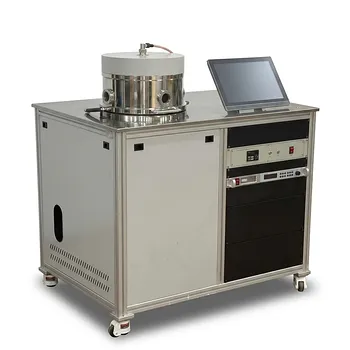
Thermally Activated Chemical Vapor Deposition (TACVD) is a conventional thin-film deposition process that utilizes thermal energy to trigger chemical reactions. In this method, gaseous precursors are dissociated by heat—typically generated by a source like a tungsten filament—and subsequently deposited onto a heated substrate to form a solid layer.
Core Insight: TACVD is capable of producing high-purity, high-density films that uniformly coat irregular surfaces. However, its strict requirement for high reaction temperatures limits its application to substrates that can withstand intense heat without melting or degrading.
The Mechanism Behind TACVD
The Role of Thermal Energy
The defining characteristic of TACVD is the use of heat to drive the chemical process. Volatile precursors serve as carrier devices, introducing source materials into the reactor in a gaseous phase.
Once inside the reactor, these gaseous precursors must be broken down to release the material intended for the coating. In TACVD, this dissociation occurs thermally.
Surface-Mediated Deposition
The formation of the thin film is not merely a coating settling on an object; it is a surface-mediated reaction.
This means the chemical reaction occurs heterogeneously, specifically at the surface of the substrate. This mechanism is what allows the process to create films with exceptional density and purity.
Coating Complex Geometries
Because the reactants are in the gas phase and the reaction occurs at the surface, TACVD is not limited to "line-of-sight" deposition.
It excels at providing uniform coatings on irregular surfaces. Whether the substrate has deep trenches, holes, or complex curves, the gas penetrates these features to form an even layer.
Key Components and Setup
The Heating Source
To achieve the temperatures necessary for precursor dissociation, the reactor requires a robust heating element.
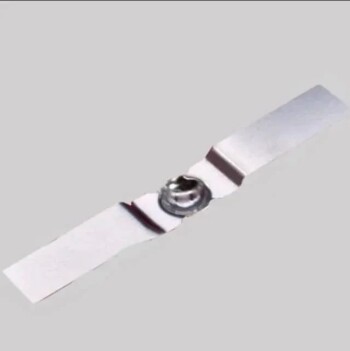
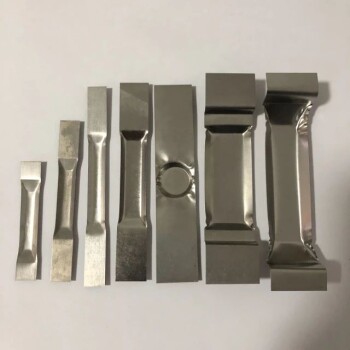
A tungsten filament is one of the most commonly utilized heating sources in TACVD reactors. It provides the intense, localized heat required to break the chemical bonds of the precursor gases.
Understanding the Trade-offs
High-Temperature Constraints
The most significant limitation of TACVD is the operating temperature. The process inherently requires high reaction temperatures to activate the chemical changes.
This dictates which materials you can coat. You cannot use this method on substrates that have a melting temperature lower than the reaction temperature. Doing so would result in the deformation or destruction of the substrate before the film can be successfully applied.
Making the Right Choice for Your Project
To determine if TACVD is the correct method for your specific application, consider the thermal properties of your base material and the geometry of your part.
- If your substrate is heat-resistant: TACVD is ideal for producing extremely high-purity, high-performance solid films on materials like ceramics or refractory metals.
- If you need to coat complex shapes: This process provides superior conformality, ensuring uniform thickness on irregular parts where other methods might leave gaps.
- If your substrate has a low melting point: You must avoid TACVD and look for lower-temperature alternatives (such as Plasma-Enhanced CVD) to prevent damaging your component.
Select TACVD when material durability and coating uniformity are paramount, provided your substrate can survive the thermal environment.
Summary Table:
| Feature | Description |
|---|---|
| Mechanism | Thermal dissociation of gaseous precursors |
| Heating Source | Typically Tungsten Filament |
| Deposition Type | Heterogeneous surface-mediated reaction |
| Surface Capability | Excellent conformality on irregular/complex geometries |
| Key Advantage | Produces high-purity, high-density solid films |
| Major Constraint | Requires substrates with high thermal resistance |
Elevate Your Material Science with KINTEK Precision
Unlock superior thin-film performance with KINTEK’s advanced deposition solutions. Whether you are working with ceramics, refractory metals, or complex geometries, our expertise in CVD, PECVD, and MPCVD systems ensures you achieve the highest purity and uniformity for your research or production needs.
Why choose KINTEK?
- Comprehensive Laboratory Range: From high-temperature furnaces and vacuum reactors to crushing, milling, and hydraulic presses.
- Specialized Equipment: High-pressure reactors, autoclaves, and specialized electrolytic cells for cutting-edge battery research.
- Expert Guidance: We help you navigate thermal constraints to select the perfect coating technology for your substrate.
Ready to optimize your coating process? Contact KINTEK today to discuss your project requirements!
Related Products
- CVD Diamond for Thermal Management Applications
- HFCVD Machine System Equipment for Drawing Die Nano-Diamond Coating
- Multi Heating Zones CVD Tube Furnace Machine Chemical Vapor Deposition Chamber System Equipment
- Customer Made Versatile CVD Tube Furnace Chemical Vapor Deposition Chamber System Equipment
- Chemical Vapor Deposition CVD Equipment System Chamber Slide PECVD Tube Furnace with Liquid Gasifier PECVD Machine
People Also Ask
- How long does it take to make a CVD diamond? A Detailed Look at the Growth Timeline
- What are the optical properties of CVD diamond? Unlock Unmatched Performance for Demanding Applications
- What is the hardness of CVD diamond? The Ultimate Guide to Engineered Super-Materials
- What is the chemical vapour deposition method for diamonds? Grow a Diamond from a Gas
- How long does it take to grow a CVD diamond? A 2-4 Week Journey to a Flawless Gem