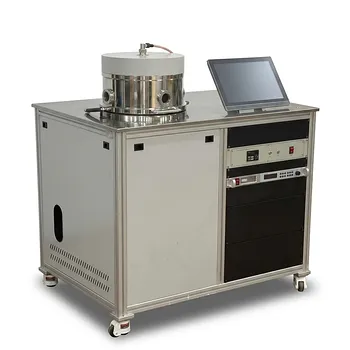
To initiate chemical reactions in Chemical Vapor Deposition (CVD), gaseous precursors must be energized or "activated" to break chemical bonds and form solid films. The three primary methods used to achieve this activation are thermal energy (heating the system), plasma generation (PECVD), and catalytic action (using a catalyst to lower energy barriers).
The specific activation method drives the reaction kinetics and efficiency of the entire CVD process. Choosing the right energy source—heat, plasma, or a catalyst—depends heavily on your required deposition rate, desired film properties, and whether your substrate can withstand high temperatures.
Mechanisms of Reactant Activation
Thermal Activation (Thermal CVD)
This is the most fundamental approach to CVD. Energy is supplied by significantly raising the temperature of either the entire reaction chamber or the specific substrate.
This heat provides the kinetic energy required for the precursors—such as metal-organics, hydrides, or halides—to decompose and react upon contact with the surface.
Plasma Activation (PECVD)
In Plasma-Enhanced CVD (PECVD), the necessary energy is not derived solely from heat, but from the generation of a plasma field.
This method ionizes the reactant gases, creating highly reactive species at lower temperatures. It is particularly useful when the substrate cannot withstand the high thermal loads required by standard Thermal CVD.
Catalytic Activation (Catalytic CVD)
This method involves introducing a specific catalyst into the reaction zone.
The catalyst works by lowering the activation energy barrier required for the chemical reaction to occur. This allows the precursors to react more easily without necessarily requiring extreme ambient temperatures or high-energy plasma fields.
Understanding the Trade-offs
Impact on Reaction Kinetics
The method of activation dictates the speed and efficiency of the deposition.
Thermal processes often rely on thermodynamics, while plasma and catalytic methods can accelerate reaction kinetics through alternative energy pathways. This directly influences the deposition rate and the throughput of the manufacturing process.
Substrate Compatibility
Not all substrates can survive the activation process.
High-temperature Thermal CVD may damage sensitive components found in advanced CMOS technology. In these scenarios, switching to PECVD or Catalytic CVD allows for film growth without thermally degrading the underlying material.
Film Property Variation
The energy source affects the microstructure and quality of the final film.
Films deposited via plasma activation may have different densities or stress levels compared to those deposited via thermal activation. Therefore, the choice of method is often a compromise between process efficiency and the specific material properties required for the final application.
Making the Right Choice for Your Goal
Selecting the correct activation method is an exercise in balancing thermal budgets against efficiency requirements.
- If your primary focus is broad compatibility and simplicity: Consider Thermal CVD, provided your substrate can withstand the elevated temperatures required to decompose the precursors.
- If your primary focus is substrate protection: Opt for Plasma-Enhanced CVD (PECVD) to generate the necessary reactivity at significantly lower temperatures.
- If your primary focus is energy efficiency and reaction control: Evaluate Catalytic CVD to lower the reaction's energy barrier specifically without relying on high bulk temperatures.
The ideal activation method aligns the energy requirements of the chemistry with the thermal limitations of your device.
Summary Table:
| Activation Method | Energy Source | Key Advantage | Best For |
|---|---|---|---|
| Thermal CVD | Heat (High Temp) | Simple & broadly compatible | Heat-resistant substrates |
| PECVD | Plasma Ionization | Low temperature processing | Heat-sensitive CMOS & polymers |
| Catalytic CVD | Catalyst Action | Lowered energy barriers | Precise reaction control |
Elevate Your Thin Film Research with KINTEK Precision
Choosing the right activation method is critical for material integrity and deposition quality. At KINTEK, we specialize in high-performance laboratory solutions designed to meet the rigorous demands of advanced chemical vapor deposition.
Our extensive portfolio includes:
- High-Temperature Tube and Vacuum Furnaces for robust Thermal CVD.
- Advanced PECVD and MPCVD Systems for low-temperature plasma activation.
- High-Pressure Reactors and Autoclaves for specialized catalytic studies.
- Precision Cooling Solutions and Crushing Systems to support your entire material workflow.
Whether you are developing next-generation semiconductors or exploring novel nanomaterials, KINTEK provides the equipment and consumables (like PTFE, ceramics, and crucibles) you need to succeed.
Ready to optimize your lab's deposition capabilities? Contact our technical experts today to find the perfect system for your research goals!
Related Products
- Chemical Vapor Deposition CVD Equipment System Chamber Slide PECVD Tube Furnace with Liquid Gasifier PECVD Machine
- Microwave Plasma Chemical Vapor Deposition MPCVD Machine System Reactor for Lab and Diamond Growth
- RF PECVD System Radio Frequency Plasma-Enhanced Chemical Vapor Deposition RF PECVD
- CVD Diamond for Thermal Management Applications
- Laboratory CVD Boron Doped Diamond Materials
People Also Ask
- What are the advantages of chemical vapor deposition? Achieve Superior Thin Films for Your Lab
- What types of substrates are used in CVD to facilitate graphene films? Optimize Graphene Growth with the Right Catalyst
- What is the chemical vapor deposition growth process? Build Superior Thin Films from the Atom Up
- How expensive is chemical vapor deposition? Understanding the True Cost of High-Performance Coating
- Why is Chemical Vapor Deposition (CVD) equipment uniquely suited for constructing hierarchical superhydrophobic structures?