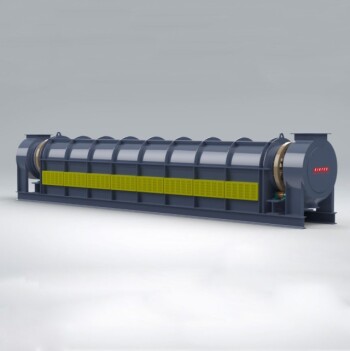
A controlled atmosphere pyrolysis furnace is the critical technology used to thermally decompose biomass into high-quality biochar by eliminating oxygen from the heating process. This specialized equipment precisely regulates temperatures—typically between 300°C and 700°C—to increase the fixed carbon content and energy density of the material, making it suitable for the extreme heat requirements of steel manufacturing.
The furnace acts as a precision reactor that prevents biomass combustion while driving off moisture and volatiles. This transformation is essential for creating a stable, carbon-rich fuel or reducing agent that can effectively replace fossil-based coal or coke in metallurgical applications.
Engineering the Thermochemical Environment
Eliminating Oxygen to Prevent Combustion
The primary role of the furnace is to maintain an oxygen-free or oxygen-limited environment, usually through a continuous flow of inert gas like nitrogen (N2). Without this atmospheric control, the biomass would simply burn into ash rather than carbonizing into biochar.
Precise Regulation of Heating Rates
Controlled furnaces allow engineers to set specific heating rates, such as 10°C per minute, to manage how quickly volatiles are released. This level of control ensures that the internal structure of the biomass decomposes uniformly, preventing thermal shock and ensuring a consistent final product.
Maintaining Residence Time and Temperature
By holding biomass at constant temperatures for specific residence times, the furnace facilitates critical chemical reactions like dehydration and polymerization. These reactions are fundamental to building the stable carbon skeleton required for industrial-grade biochar.
Enhancing Material Properties for Steelmaking
Increasing Energy Density and Fixed Carbon
Steel production requires fuels with high calorific values to maintain blast furnace temperatures. The pyrolysis furnace removes low-energy components and moisture, significantly boosting the fixed carbon content of the biochar to mimic the performance of traditional metallurgical coke.
Developing Specialized Porous Structures
The furnace environment regulates the formation of a rich porous structure within the biochar. In steelmaking, this porosity can influence the reactivity of the biochar when used as a reducing agent to strip oxygen from iron ore.
Rearranging Atomic Carbon
During high-temperature stages, often reaching up to 700°C, the furnace provides the heat necessary for carbon atoms to rearrange. This process increases the aromaticity and mechanical strength of the biochar, allowing it to withstand the physical pressures inside a blast furnace.
Understanding the Trade-offs
Temperature vs. Biochar Yield
There is a direct trade-off between the processing temperature and the final volume of biochar produced. While higher temperatures produce biochar with higher carbon purity, they also lead to lower overall yields as more material is converted into syngas and bio-oil.
Energy Consumption and Throughput
Maintaining a strict nitrogen atmosphere and precise thermal fields requires significant energy input. Industrial-grade furnaces must balance the need for high-quality, standardized biochar with the operational costs of nitrogen gas and electricity.
Feedstock Variability
The furnace must be calibrated to the specific type of biomass used, such as pine sawdust or sugarcane bagasse. Different feedstocks react differently to thermal stress, meaning a "one size fits all" heating profile can lead to inconsistent carbon quality or incomplete carbonization.
Making the Right Choice for Your Goal
To maximize the utility of a controlled atmosphere furnace in a steelmaking context, you must align the furnace settings with your specific metallurgical requirements.
- If your primary focus is replacing injection coal: Set the furnace for higher temperatures (600°C-700°C) to maximize the calorific value and minimize volatile matter.
- If your primary focus is maximizing carbon sequestration credits: Use lower heating rates and moderate temperatures to increase the total biochar yield and stable carbon mass.
- If your primary focus is iron ore reduction: Prioritize atmosphere control to develop specific surface functional groups and a highly porous structure for better reactivity.
By precisely mastering the thermochemical environment, the pyrolysis furnace transforms raw organic waste into a sophisticated technical carbon essential for the future of green steel.
Summary Table:
| Feature | Role in Pyrolysis Process | Benefit for Steelmaking |
|---|---|---|
| Oxygen Elimination | Prevents biomass combustion/ashing | Ensures high fixed carbon content |
| Temperature Control | Regulates decomposition (300°C–700°C) | Increases calorific value/energy density |
| Atmosphere Control | Uses inert gas (N2) to manage volatiles | Develops specialized porous structures |
| Residence Time | Facilitates dehydration & polymerization | Builds a stable, strong carbon skeleton |
Optimize Your Green Steel Innovation with KINTEK
Achieving the perfect biochar for metallurgical applications requires absolute precision. KINTEK specializes in advanced laboratory equipment designed to master thermochemical environments. Our comprehensive range of controlled atmosphere furnaces (including tube, muffle, vacuum, and rotary models) and high-temperature high-pressure reactors provides the exact thermal stability and oxygen-free conditions necessary for high-quality biochar production.
Whether you are refining feedstock variability or maximizing carbon sequestration credits, KINTEK offers the tools you need—from crushing and milling systems to specialized crucibles and ceramics. Empower your research and scale your production with reliable, industrial-grade solutions.
Contact KINTEK today to discuss your furnace requirements!
References
- Shijie Wang, Shengli An. Review on the Application and Development of Biochar in Ironmaking Production. DOI: 10.3390/met13111844
This article is also based on technical information from Kintek Solution Knowledge Base .
Related Products
- 1200℃ Controlled Atmosphere Furnace Nitrogen Inert Atmosphere Furnace
- 1700℃ Controlled Atmosphere Furnace Nitrogen Inert Atmosphere Furnace
- 1400℃ Controlled Atmosphere Furnace with Nitrogen and Inert Atmosphere
- Mesh belt controlled atmosphere furnace
- Controlled Nitrogen Inert Hydrogen Atmosphere Furnace
People Also Ask
- What is controlled atmosphere furnace? Precision Heating Without Oxidation for Superior Materials
- What are the two primary purposes of using a controlled atmosphere? Master Protection vs. Material Modification
- What is the role of the furnace atmosphere? Master Precise Metallurgical Control for Your Heat Treatment
- What is the necessity of a controlled atmosphere furnace for corrosion research? Replicating Realistic Industrial Risks
- What is a controlled atmosphere furnace for heat treatment? Master Surface Chemistry and Metallurgy