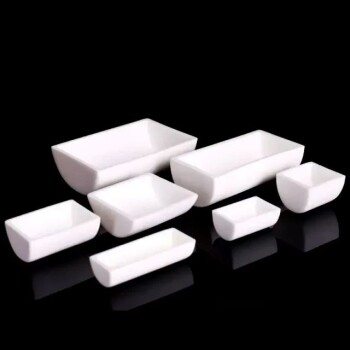
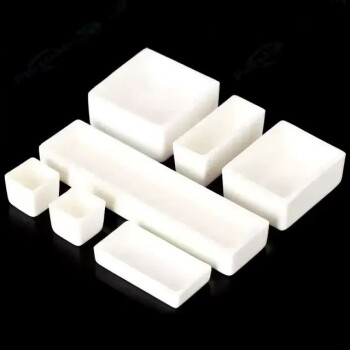
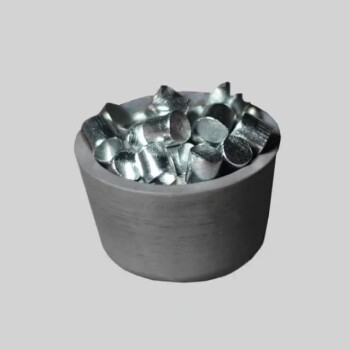
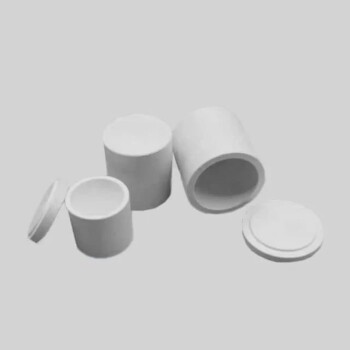
In vacuum carbothermic reduction experiments, the corundum crucible acts as the primary reaction container. Its fundamental role is to securely hold the mixture of magnesium oxide and graphite, facilitating the reduction process without physically degrading or chemically interfering with the reactants.
Core Takeaway The success of magnesium reduction depends heavily on isolating the reactants from the vessel itself. A corundum crucible provides the necessary thermal resilience to withstand extreme heat while maintaining chemical inertness, ensuring that the structural integrity of the experiment is preserved and the resulting data remains uncontaminated.
The Critical Functions of Corundum
To understand why a corundum crucible is selected for this specific application, one must look at the extreme demands placed on materials during vacuum metallurgy.
Withstanding Extreme Temperatures
The reduction of magnesium oxide requires significant energy. The corundum crucible is engineered to maintain its structural integrity in environments reaching temperatures as high as 1723 K.
At these temperatures, many standard laboratory ceramics would soften or deform. Corundum remains rigid, ensuring the reactants stay contained throughout the heating cycle.
Ensuring Chemical Inertness
High heat often accelerates unwanted chemical reactions between a vessel and its contents.
However, corundum possesses excellent chemical stability. It does not react with the magnesium oxide and graphite mixture, preventing the vessel walls from eroding or introducing foreign compounds into the melt.
Preservation of Experimental Safety
By resisting both thermal deformation and chemical attack, the crucible acts as a safety barrier.
It prevents the breach of containment that could lead to equipment damage or hazardous leaks within the vacuum furnace.
Understanding the Material Context
While corundum is the chosen vessel for holding the reactants in this specific setup, it is important to understand the broader context of high-temperature materials used in reduction.
The Role of Material Composition
Corundum is a crystalline form of aluminum oxide. Because it is an oxide ceramic, it is distinct from carbon-based materials.
This distinction is vital when precise control over the carbon-to-oxide ratio in the reactant mixture is required. Using a corundum crucible ensures that the only source of carbon participating in the reduction comes from the graphite added to the mixture, not the crucible itself.
Alternative Material Considerations
It is worth noting that graphite crucibles are also frequently used in similar high-temperature reduction environments.
Graphite offers superior thermal conductivity and is chemically stable in carbon-rich environments. However, the specific selection of corundum implies a prioritization of oxide stability and reaction isolation for this particular experimental design.
Making the Right Choice for Your Goal
When designing a vacuum reduction experiment, the choice of crucible material dictates the reliability of your results.
- If your primary focus is reaction isolation: Choose a corundum crucible to ensure the vessel does not chemically interact with the magnesium oxide and graphite mixture.
- If your primary focus is structural durability at 1723 K: Rely on corundum’s high-temperature resistance to prevent deformation during the peak of the reduction cycle.
Select the crucible that offers the highest stability for your specific temperature range and reactant chemistry.
Summary Table:
| Feature | Function in Carbothermic Reduction |
|---|---|
| Material Composition | High-purity crystalline aluminum oxide (Al2O3) |
| Max Temperature | Maintains structural integrity up to 1723 K |
| Chemical Stability | Prevents reactions between vessel walls and MgO/graphite |
| Reaction Isolation | Ensures graphite is the only carbon source in the reduction |
| Experimental Safety | Prevents containment breaches and vacuum furnace contamination |
Elevate Your Material Research with KINTEK Precision
Precision in vacuum metallurgy begins with the right containment. KINTEK specializes in high-performance laboratory equipment, providing the specialized high-temperature furnaces (vacuum, tube, and atmosphere) and premium ceramic crucibles necessary for successful carbothermic reduction.
Whether you are conducting magnesium research or developing advanced alloys, our portfolio—including high-temperature high-pressure reactors, crushing systems, and customized PTFE and ceramic consumables—is designed to meet the rigorous demands of modern laboratories. Ensure your data remains uncontaminated and your experiments stay safe with KINTEK’s industry-leading solutions.
Ready to optimize your high-temperature processes? Contact our technical experts today to find the perfect equipment and consumables for your specific research goals.
Related Products
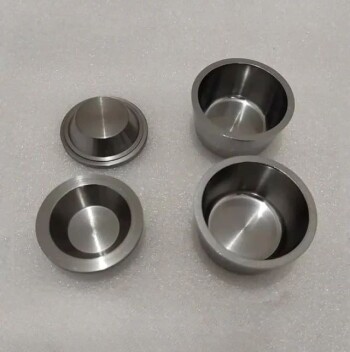
- Electron Beam Evaporation Coating Tungsten Crucible and Molybdenum Crucible for High Temperature Applications
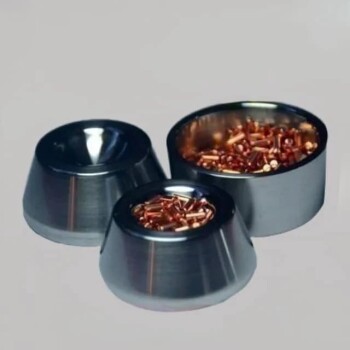
- Electron Beam Evaporation Coating Gold Plating Tungsten Molybdenum Crucible for Evaporation
- Arc-Shaped Alumina Ceramic Crucible High Temperature Resistant for Engineering Advanced Fine Ceramics
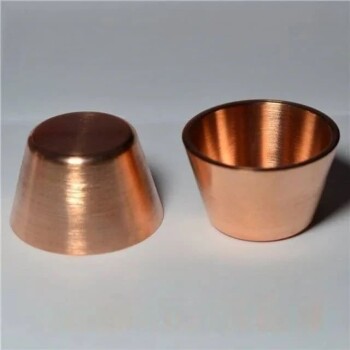
- Electron Beam Evaporation Coating Oxygen-Free Copper Crucible and Evaporation Boat
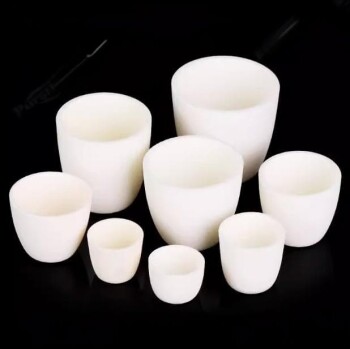
- Engineering Advanced Fine Ceramics Alumina Al2O3 Crucible With Lid Cylindrical Laboratory Crucible
People Also Ask
- What is the container that holds the metal source material called in e-beam evaporation? Ensure Purity and Quality in Your Thin-Film Deposition
- What materials are used in electron beam evaporation? Master High-Purity Thin Film Deposition
- What is the voltage of e-beam evaporation? Achieve Precise Thin-Film Deposition
- What are the applications of e-beam evaporation? Achieve High-Purity Coatings for Optics & Electronics
- What is e-beam evaporation? Achieve High-Purity Thin Film Deposition for Your Lab