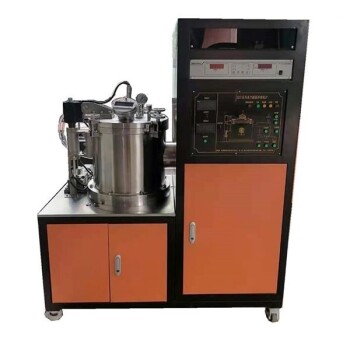
The high-temperature furnace with a vacuum control system serves as a precise chemical reactor for surface engineering. Its primary function is to create a sealed, stable environment—typically between 650°C and 750°C—where the interaction between the zirconium alloy and specific gases can be strictly regulated. By controlling the pressure of introduced gases like dilute oxygen or nitrogen, the system forces these elements to diffuse into the metal matrix, creating a hardened surface layer with predictable, reproducible properties.
Core Takeaway: This equipment moves beyond simple heating; it isolates the workpiece to manipulate the partial pressure of reactive gases, ensuring that strengthening elements penetrate the surface at a controlled rate rather than through random oxidation.
Establishing the Reaction Environment
Creating a Clean Slate
The first requirement for strengthening zirconium is eliminating uncontrolled variables. The vacuum control system evacuates the chamber, removing ambient air and moisture that would cause unpredictable oxidation or contamination.
Precision Atmosphere Regulation
Once the chamber is evacuated, the system does not simply leave it empty. It introduces specific reaction atmospheres, such as dilute oxygen or high-pressure nitrogen, via gas pressure regulation devices.
This allows the operator to dial in the exact chemical composition required for the treatment.
Thermal Stability
The furnace maintains a consistent high-temperature plateau, often at 650°C or 750°C. This thermal energy provides the necessary activation energy for chemical reactions to occur at the surface of the alloy.
The Mechanism of Surface Strengthening
Interstitial Diffusion
The combination of high heat and controlled gas pressure drives a process known as interstitial diffusion.
Small atoms, specifically oxygen and nitrogen, are forced into the spaces between the larger zirconium atoms in the metal matrix.
Matrix Modification vs. Coating
Unlike applying a paint or external coating, this process modifies the material itself. The equipment ensures these elements penetrate the metal according to preset pressure and temperature conditions.
This results in a "controllable strengthened surface layer" where the depth and hardness are dictated by the equipment settings, not environmental chance.
Operational Criticalities and Trade-offs
The Risk of Seal Failure
While high temperatures are necessary for diffusion, they are destructive to the equipment's vacuum integrity.
Extended heat treatment processes (which can last up to 20 hours) generate significant radiant heat that can degrade vacuum seals and furnace walls.
The Role of Auxiliary Cooling
To mitigate this, a circulating water cooling system is non-negotiable. It rapidly cools critical hardware and sensors to prevent overheating.
If this cooling fails, the vacuum seals may compromise, leading to a loss of atmosphere control and a failure to achieve the desired surface strengthening.
Making the Right Choice for Your Goal
To ensure the successful preparation of strengthened zirconium layers, consider your specific processing priorities:
- If your primary focus is Surface Hardness: Prioritize the precise regulation of gas pressure (nitrogen/oxygen) relative to temperature to maximize interstitial diffusion without causing brittleness.
- If your primary focus is Process Reproducibility: Ensure your equipment includes a robust circulating water cooling system to protect vacuum seals during long-duration treatment cycles.
Success in surface engineering relies not just on reaching the right temperature, but on maintaining absolute control over the microscopic atmosphere surrounding your alloy.
Summary Table:
| Feature | Role in Surface Strengthening | Benefit to Zirconium Alloy |
|---|---|---|
| Vacuum System | Eliminates ambient air and moisture | Prevents uncontrolled oxidation and contamination |
| Atmosphere Control | Regulates partial pressure of $O_2$ or $N_2$ | Ensures predictable interstitial diffusion and hardness |
| High-Temp Stability | Provides activation energy at 650°C - 750°C | Facilitates chemical reactions within the metal matrix |
| Cooling System | Protects seals and walls during 20h cycles | Maintains vacuum integrity and process reproducibility |
Elevate Your Surface Engineering with KINTEK Precision
Achieving the perfect strengthened layer on zirconium alloys requires absolute control over thermal and atmospheric variables. KINTEK specializes in advanced laboratory equipment designed for the most demanding research environments. Our comprehensive range of high-temperature furnaces—including vacuum, atmosphere, and CVD systems—is engineered to provide the stability and precision needed for successful interstitial diffusion and material modification.
From robust vacuum control systems to high-performance circulating cooling solutions, KINTEK provides the tools that ensure your process reproducibility and equipment longevity. Whether you are focused on maximizing surface hardness or exploring new alloy matrices, our experts are here to support your mission with industry-leading technology and consumables.
Ready to optimize your material treatment? Contact KINTEK today to find the perfect furnace solution for your laboratory!
References
- V. S. Trush. Effect of oxidation and nitriding on the properties of zirconium alloys. DOI: 10.15587/1729-4061.2017.97446
This article is also based on technical information from Kintek Solution Knowledge Base .
Related Products
- Vacuum Heat Treat and Pressure Sintering Furnace for High Temperature Applications
- 2200 ℃ Tungsten Vacuum Heat Treat and Sintering Furnace
- Ultra-High Temperature Graphite Vacuum Graphitization Furnace
- 2200 ℃ Graphite Vacuum Heat Treat Furnace
- Vertical High Temperature Graphite Vacuum Graphitization Furnace
People Also Ask
- What is the purpose of the heat treatment (sintering) step? Engineering Robust Electroactive Membranes
- What is a vacuum sintering furnace? Unlock Purity and Performance in Advanced Materials
- What are some alternative atmospheres to pure hydrogen for powder metallurgy sintering processes? Top Sintering Solutions
- How does the vacuum environment impact sintering of diamond-copper composites? Protect Against Thermal Damage
- Why must green bodies produced via binder jetting undergo treatment in a vacuum sintering furnace?