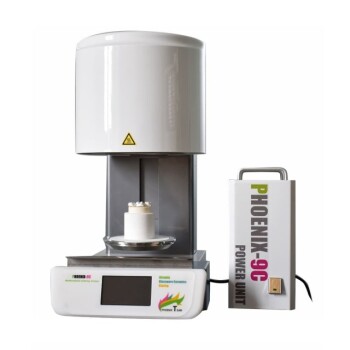
The high-temperature sintering furnace acts as the definitive processing tool that transforms Yttria-Stabilized Zirconia (YSZ) from a porous precursor into a functional ceramic electrolyte. By providing a thermal environment capable of reaching 1400°C, it drives the complete densification of the material. This specific heat treatment is the only way to convert the ceramic layers into the gas-tight, ion-conducting membranes required for high-performance applications like solid oxide fuel cells.
Core Takeaway The sintering furnace is not merely a heating device; it is a structural engineering tool that eliminates porosity to create a gas-tight barrier. This process simultaneously isolates reactive gases and establishes the crystal structure necessary for efficient oxygen ion transport.
Achieving Densification and Functionality
The Necessity of 1400°C Heat
Primary densification of YSZ typically requires a thermal environment of approximately 1400°C. At this temperature, the furnace provides the energy needed to fuse ceramic particles together. This eliminates voids within the material, resulting in a fully dense layer.
Creating a Gas-Tight Membrane
The primary goal of this thermal processing is to create a pore-free barrier. A properly sintered YSZ layer acts as a hermetic seal that isolates the fuel chamber from the oxidant chamber. Without this isolation, reactive gases would mix physically, leading to system failure rather than electrochemical energy generation.
Facilitating Ion Transport
Beyond physical sealing, the furnace ensures the material achieves the correct crystalline structure. The heat treatment drives grain growth and crystallization. This allows the YSZ layer to serve as an efficient transport channel for oxygen ions, which is the fundamental mechanism of the electrolyte's operation.
Process Control and Structural Integrity
Removal of Organic Components
Before densification can occur, the furnace must remove impurities. A controlled heating ramp, often involving oxygen or air atmospheres, burns off organic additives such as binders and plasticizers found in ceramic green tapes. This ensures that no carbon residue compromises the final ceramic structure.
Co-Sintering Composite Structures
In advanced manufacturing, the furnace allows for co-sintering. This process involves heating porous support layers and dense electrolyte layers simultaneously under the same thermal conditions. This unified heating creates a monolithic ceramic framework with strong mechanical bonding, eliminating inter-layer stress that could lead to delamination.
Understanding the Trade-offs
High Temperature vs. Component Aging
While 1400°C guarantees densification, extreme heat can degrade other system components or lead to "aging" of the materials. Prolonged exposure to these temperatures consumes significant energy and may accelerate microstructural coarsening, which can eventually impact mechanical stability.
Mitigating Heat with Sintering Aids
To address the risks of extreme heat, high-purity sintering aids, such as iron (Fe), can be introduced. These aids allow the YSZ electrolyte to reach full densification at significantly lower temperatures. This approach maintains high ionic conductivity while reducing energy consumption and preventing the physical aging of the components.
Making the Right Choice for Your Goal
The specific role your furnace plays depends on the balance between raw performance and manufacturing efficiency.
- If your primary focus is maximum material density: Prioritize a furnace capable of precise control at 1400°C to ensure a completely pore-free, gas-tight membrane.
- If your primary focus is process efficiency and longevity: Utilize sintering aids to lower the required temperature, reducing energy costs and mechanical stress while maintaining conductivity.
- If your primary focus is structural integrity: Leverage co-sintering protocols to bond porous and dense layers into a single, stress-free monolithic unit.
The sintering furnace is the gatekeeper of electrolyte quality, determining whether your YSZ layer becomes a fragile ceramic or a high-performance electrochemical engine.
Summary Table:
| Process Objective | Temperature Requirement | Role of Sintering Furnace |
|---|---|---|
| Densification | ~1400°C | Fuses ceramic particles to eliminate voids and porosity. |
| Gas-Tightness | ~1400°C | Creates a hermetic seal to isolate fuel and oxidant chambers. |
| Ion Transport | High/Controlled | Establishes crystal structure for efficient oxygen ion flow. |
| Impurity Removal | Controlled Ramp | Burns off organic binders and plasticizers without residue. |
| Co-Sintering | Unified Thermal Cycle | Bonds porous and dense layers into a monolithic framework. |
Optimize Your YSZ Sintering Process with KINTEK
Precise thermal control is the difference between a fragile ceramic and a high-performance electrochemical engine. KINTEK specializes in advanced laboratory equipment, offering high-temperature muffle, tube, and vacuum furnaces specifically engineered for the rigorous demands of YSZ electrolyte preparation.
Whether you are focusing on high-density materials or exploring low-temperature co-sintering with sintering aids, our solutions provide the stability and precision your research requires. In addition to our furnaces, we offer high-purity ceramics and crucibles to ensure contaminant-free results.
Ready to achieve superior material densification? Contact us today to discover how KINTEK’s expert-grade thermal systems and laboratory consumables can elevate your material science outcomes.
References
- Selene Díaz-González, A.D. Lozano-Gorrı́n. RE0.01Sr0.99Co0.5Fe0.5O3 (RE = La, Pr, and Sm) Cathodes for SOFC. DOI: 10.3390/cryst14020143
This article is also based on technical information from Kintek Solution Knowledge Base .
Related Products
- Vacuum Heat Treat and Pressure Sintering Furnace for High Temperature Applications
- 2200 ℃ Tungsten Vacuum Heat Treat and Sintering Furnace
- High Temperature Muffle Oven Furnace for Laboratory Debinding and Pre Sintering
- 2200 ℃ Graphite Vacuum Heat Treat Furnace
- Ultra-High Temperature Graphite Vacuum Graphitization Furnace
People Also Ask
- What is the purpose of the heat treatment (sintering) step? Engineering Robust Electroactive Membranes
- What is a vacuum sintering furnace? Unlock Purity and Performance in Advanced Materials
- What are some alternative atmospheres to pure hydrogen for powder metallurgy sintering processes? Top Sintering Solutions
- How does the vacuum environment impact sintering of diamond-copper composites? Protect Against Thermal Damage
- Why must green bodies produced via binder jetting undergo treatment in a vacuum sintering furnace?