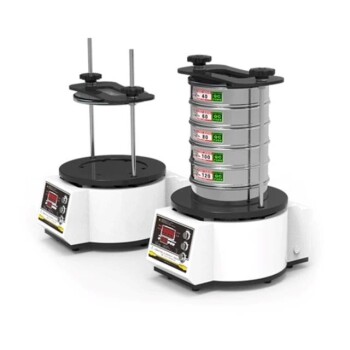
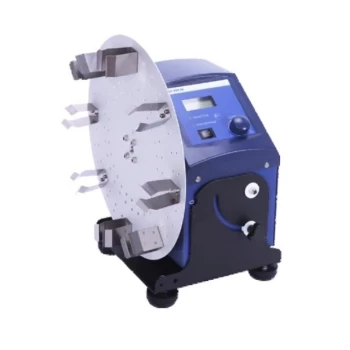
The primary role of an orbital shaker is to act as a mechanical catalyst for microbial activity during degradation screening. By providing continuous agitation at precise speeds, it optimizes the liquid environment to support the aerobic metabolism required to break down xenobiotics (foreign chemical substances).
The orbital shaker bridges the gap between static culture and efficient degradation. Its mechanical power drives oxygen transfer and ensures uniform contact between microbes and their fuel sources, guaranteeing that the resulting kinetic data is both consistent and reproducible.
Optimizing the Aerobic Environment
Enhancing Oxygen Transfer
The most critical function of the orbital shaker is increasing oxygen transfer efficiency.
In a static liquid, oxygen availability is often the limiting factor for microbial growth. The shaker’s continuous mechanical agitation breaks the liquid surface tension and circulates the fluid, maximizing the transfer of oxygen from the air into the liquid phase.
Meeting Dissolved Oxygen Requirements
This enhanced transfer is vital for aerobic microbes.
To successfully degrade xenobiotics, these microbes require a steady supply of dissolved oxygen. The shaker ensures that oxygen levels remain sufficiently high to support the metabolic pathways involved in degradation.
Ensuring Homogeneity and Interaction
Thorough Contact and Mixing
Beyond oxygenation, the shaker prevents stratification within the culture vessel.
It facilitates thorough contact between the microbial biomass, the target substrates (xenobiotics), and essential nutrients. Without this mixing, microbes might settle at the bottom while nutrients remain at the top, stalling the process.
Driving Degradation Kinetics
Effective mixing directly influences the rate of degradation.
By keeping substrates and nutrients evenly distributed, the shaker ensures that the degradation reaction proceeds at a steady, measurable rate. This is essential for accurately studying degradation kinetics.
The Impact on Research Reliability
Maintaining Consistency
Scientific rigor requires that experiments be conducted under identical conditions.
The "set speeds" of an orbital shaker allow researchers to maintain a constant level of mechanical power input. This consistency eliminates variables related to uneven mixing or oxygen starvation.
Ensuring Reproducibility
Reproducibility is the gold standard of laboratory screening.
Because the shaker standardizes the physical environment of the culture, researchers can replicate results across different trials. This reliability is crucial when screening multiple microbial strains for their degradation potential.
Understanding Operational Trade-offs
Balancing Speed and Shear Stress
While agitation is necessary, the "set speed" must be chosen carefully.
High speeds maximize oxygen transfer but can introduce excessive shear stress. If the mechanical agitation is too aggressive, it may damage fragile microbial cells or disrupt floc structures, potentially inhibiting the very degradation process you are trying to measure.
Homogeneity vs. Energy Input
Increasing agitation ensures better mixing but increases the energy input into the system.
For simple screenings, moderate speeds often suffice to maintain homogeneity. Excessive speeds generally yield diminishing returns regarding oxygen transfer while increasing the risk of splashing or cross-contamination in multi-well plates or flasks.
Making the Right Choice for Your Goal
To maximize the utility of an orbital shaker in your screening protocols, align your operational parameters with your specific research objectives.
- If your primary focus is maximizing aerobic metabolism: Prioritize higher agitation speeds to peak oxygen transfer efficiency, ensuring dissolved oxygen never limits the degradation of xenobiotics.
- If your primary focus is data precision and reliability: strict adherence to constant, moderate speeds is key to maintaining the consistency and reproducibility of your degradation kinetics studies.
The orbital shaker is not just a mixer; it is a precision instrument that defines the boundary conditions for successful microbial degradation.
Summary Table:
| Feature | Role in Microbial Degradation | Benefit for Research |
|---|---|---|
| Oxygen Transfer | Enhances gas exchange at the liquid surface | Supports aerobic metabolism for xenobiotic breakdown |
| Homogeneity | Maintains uniform distribution of microbes and nutrients | Ensures steady degradation kinetics and prevents stratification |
| Speed Control | Standardizes mechanical power input | Guarantees reproducibility and consistency across trials |
| Agitation | Facilitates contact between biomass and substrates | Maximizes reaction efficiency for faster screening results |
Elevate Your Microbial Research with KINTEK Precision
Are you looking to optimize your degradation kinetics and ensure maximum reproducibility in your laboratory screenings? KINTEK specializes in high-performance laboratory equipment designed to meet the rigorous demands of modern science. From our precision orbital shakers and shakers that guarantee perfect oxygen transfer to our ULT freezers and cooling solutions for sample preservation, we provide the tools you need for breakthrough results.
Our extensive portfolio also includes:
- Laboratory Furnaces: Muffle, tube, and vacuum furnaces for high-temperature material processing.
- Sample Preparation: Advanced crushing, milling systems, and hydraulic presses.
- Bioprocessing Tools: High-pressure reactors, autoclaves, and specialized electrolytic cells.
- Essential Consumables: Durable PTFE products, ceramics, and crucibles.
Ready to enhance your lab's efficiency and data precision? Contact KINTEK today to discuss how our tailored solutions can support your specific research goals.
References
- Bastian Herzog, Elisabeth Müller. Screening and monitoring microbial xenobiotics’ biodegradation by rapid, inexpensive and easy to perform microplate UV-absorbance measurements. DOI: 10.1186/1756-0500-7-101
This article is also based on technical information from Kintek Solution Knowledge Base .
Related Products
- Laboratory Oscillating Orbital Shaker
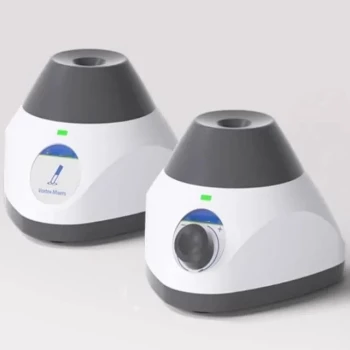
- Laboratory Vortex Mixer Orbital Shaker Multifunctional Rotation Oscillation Mixer
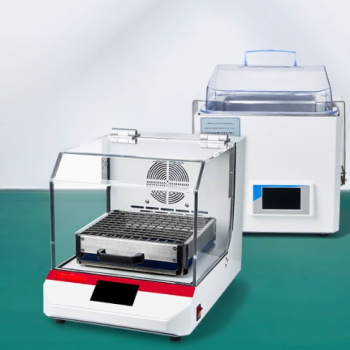
- Shaking Incubators for Diverse Laboratory Applications
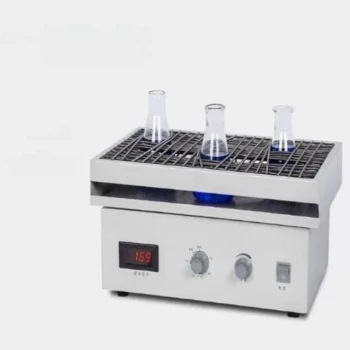
- Laboratory Multifunctional Small Speed-Adjustable Horizontal Mechanical Shaker for Lab
- Laboratory Test Sieves and Vibratory Sieve Shaker Machine
People Also Ask
- What is the role of a laboratory orbital shaker in activated carbon synthesis? Maximize Pore Depth & Surface Area
- What is the role of a laboratory orbital shaker in copper recovery? Optimize Industrial Waste Liquid Processing
- Why are high-precision shakers required for graphene oxide kinetic studies? Ensure Data Accuracy and Rapid Equilibrium
- What is the role of a laboratory shaker in silane sol preparation? Master Uniform Aramid Fabric Coating
- Why is a laboratory shaker required for continuous 24-hour catalyst treatment? Achieve Deep Uniform Impregnation