Knowledge Why are alumina crucibles preferred for DSC analysis of SiCp/2009Al? Ensure High-Temperature Chemical Inertness
Author avatar

Tech Team · Kintek Solution

Updated 3 days ago

Why are alumina crucibles preferred for DSC analysis of SiCp/2009Al? Ensure High-Temperature Chemical Inertness


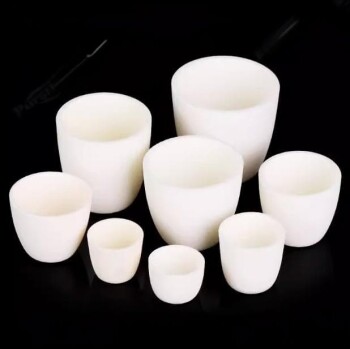
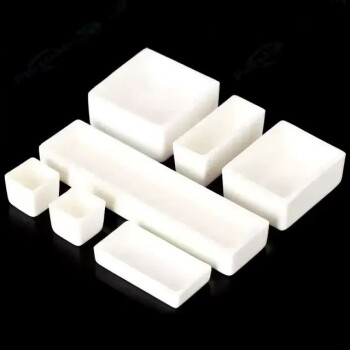
Alumina crucibles are the preferred choice for Differential Scanning Calorimetry (DSC) of SiCp/2009Al composites due to their exceptional chemical inertness and thermal stability. By resisting interaction with the sample at elevated temperatures, they ensure the thermal data reflects the material's true properties rather than experimental artifacts.

The accuracy of thermal analysis relies on isolating the sample from its container. Alumina crucibles are essential because they withstand temperatures exceeding 720°C without reacting with the aluminum matrix, ensuring precise identification of solidus and liquidus temperatures.

The Critical Role of Chemical Stability

Preventing Matrix Reactions

The primary challenge in analyzing aluminum-based composites, such as SiCp/2009Al, is the high reactivity of the metal matrix at elevated temperatures.

If a reactive container is used, the aluminum matrix will chemically bond with the crucible walls. Alumina offers a chemically inert environment, preventing this interaction completely.

Withstanding High Thermal Loads

To properly analyze these composites, the material must be heated significantly to observe phase changes.

Alumina crucibles possess excellent heat resistance, maintaining their structural integrity and chemical composition even when temperatures rise to 720°C or higher. This stability is required to reach the melting range of the 2009Al alloy.

Ensuring Data Integrity

Accurate Phase Transition Detection

The primary goal of DSC analysis for these composites is to determine critical thermal points, specifically the solidus and liquidus temperatures.

These temperatures mark the exact beginning and end of the melting process. Precise determination of these points is impossible if the sample composition changes due to reactions with the crucible.

Eliminating Experimental Artifacts

In DSC, any chemical reaction releases or absorbs heat, which the machine records as a peak or dip in the graph.

Because alumina does not react with the SiCp/2009Al composite, it ensures that every thermal event recorded on the graph originates from the sample itself. This guarantees the accuracy of the thermal analysis data.

Understanding the Trade-offs

Specificity of Application

While alumina is ideal for SiCp/2009Al, it is selected specifically for its lack of reaction with this particular matrix.

It is important to remember that alumina is not a universal solution for all material classes; its inertness is relative to the specific chemistry of the sample being tested.

Thermal Characteristics

Using a ceramic crucible like alumina introduces different thermal properties compared to metallic pans.

While this is necessary to prevent reaction, the crucible's own thermal mass and conductivity must be consistent to maintain the calibration validity of the DSC instrument.

Making the Right Choice for Your Analysis

To ensure the validity of your DSC results for SiCp/2009Al composites, apply the following guidelines:

  • If your primary focus is determining melt temperatures: Use alumina to prevent the aluminum matrix from reacting during the transition to the liquid phase.
  • If your primary focus is high-temperature stability: Rely on alumina to maintain total inertness at temperatures exceeding 720°C.

Selection of the proper crucible material is the fundamental step in guaranteeing that your thermal data is physically meaningful and accurate.

Summary Table:

Feature Alumina Crucible Benefit Impact on DSC Analysis
Chemical Inertness Prevents bonding with the aluminum matrix Eliminates experimental artifacts and data errors
Thermal Stability Withstands temperatures >720°C Enables accurate solidus and liquidus detection
Structural Integrity Maintains form at high thermal loads Ensures consistent sample positioning and safety
Purity High-grade ceramic composition Guarantees thermal events originate from the sample

Elevate Your Thermal Analysis with KINTEK Precision

Precision in material science begins with the right consumables. KINTEK specializes in high-quality laboratory equipment and consumables, providing the essential alumina crucibles, ceramics, and high-temperature reactors required for rigorous thermal analysis and composite research.

Whether you are analyzing SiCp/2009Al composites or developing next-generation alloys, our expertise in high-temperature furnaces, crushing systems, and specialized ceramic labware ensures your data remains accurate and your experiments repeatable.

Ready to optimize your laboratory's performance? Contact us today to explore our comprehensive range of crucibles and thermal solutions!

Related Products

People Also Ask

Related Products

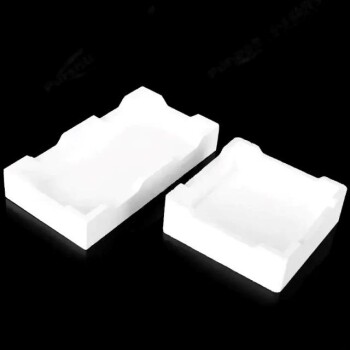
Alumina Al2O3 Ceramic Crucible Semicircle Boat with Lid for Engineering Advanced Fine Ceramics

Alumina Al2O3 Ceramic Crucible Semicircle Boat with Lid for Engineering Advanced Fine Ceramics

Crucibles are containers widely used for melting and processing various materials, and semicircular boat-shaped crucibles are suitable for special smelting and processing requirements. Their types and uses vary by material and shape.

Engineering Advanced Fine Ceramics Alumina Crucibles (Al2O3) for Thermal Analysis TGA DTA

Engineering Advanced Fine Ceramics Alumina Crucibles (Al2O3) for Thermal Analysis TGA DTA

TGA/DTA thermal analysis vessels are made of aluminum oxide (corundum or aluminum oxide). It can withstand high temperature and is suitable for analyzing materials that require high temperature testing.

Arc-Shaped Alumina Ceramic Crucible High Temperature Resistant for Engineering Advanced Fine Ceramics

Arc-Shaped Alumina Ceramic Crucible High Temperature Resistant for Engineering Advanced Fine Ceramics

In the journey of scientific exploration and industrial production, every detail is crucial. Our arc-shaped alumina ceramic crucibles, with their excellent high temperature resistance and stable chemical properties, have become a powerful assistant in laboratories and industrial fields. They are made of high-purity alumina materials and manufactured through precision processes to ensure excellent performance in extreme environments.

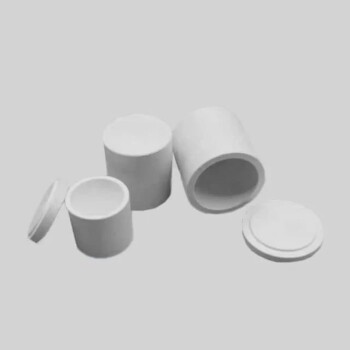
Engineering Advanced Fine Alumina Al2O3 Ceramic Crucible for Laboratory Muffle Furnace

Engineering Advanced Fine Alumina Al2O3 Ceramic Crucible for Laboratory Muffle Furnace

Alumina ceramic crucibles are used in some materials and metal melting tools, and flat-bottomed crucibles are suitable for melting and processing larger batches of materials with better stability and uniformity.

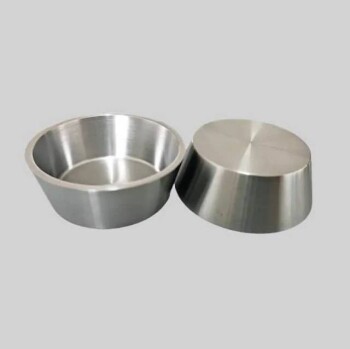
Electron Beam Evaporation Coating Tungsten Crucible and Molybdenum Crucible for High Temperature Applications

Electron Beam Evaporation Coating Tungsten Crucible and Molybdenum Crucible for High Temperature Applications

Tungsten and molybdenum crucibles are commonly used in electron beam evaporation processes due to their excellent thermal and mechanical properties.

Engineering Advanced Fine Alumina (Al₂O₃) Ceramic Positioning Pin Straight Bevel for Precision Applications

Engineering Advanced Fine Alumina (Al₂O₃) Ceramic Positioning Pin Straight Bevel for Precision Applications

Alumina ceramic positioning pin has the characteristics of high hardness, wear resistance and high temperature resistance.

Electron Beam Evaporation Coating Gold Plating Tungsten Molybdenum Crucible for Evaporation

Electron Beam Evaporation Coating Gold Plating Tungsten Molybdenum Crucible for Evaporation

These crucibles act as containers for the gold material evaporated by the electron evaporation beam while precisely directing the electron beam for precise deposition.

Custom Machined and Molded PTFE Teflon Parts Manufacturer with PTFE Crucible and Lid

Custom Machined and Molded PTFE Teflon Parts Manufacturer with PTFE Crucible and Lid

PTFE crucibles, made from pure Teflon, offer chemical inertness and resistance from -196°C to 280°C, ensuring compatibility with a wide range of temperatures and chemicals. These crucibles feature machine-finished surfaces for easy cleaning and prevention of contamination, making them ideal for precise laboratory applications.

Boron Nitride (BN) Crucible for Phosphorous Powder Sintered

Boron Nitride (BN) Crucible for Phosphorous Powder Sintered

Phosphorus powder sintered boron nitride (BN) crucible has a smooth surface, dense, pollution-free and long service life.

Evaporation Crucible for Organic Matter

Evaporation Crucible for Organic Matter

An evaporation crucible for organic matter, referred to as an evaporation crucible, is a container for evaporating organic solvents in a laboratory environment.

Electron Beam Evaporation Coating Oxygen-Free Copper Crucible and Evaporation Boat

Electron Beam Evaporation Coating Oxygen-Free Copper Crucible and Evaporation Boat

Electron Beam Evaporation Coating Oxygen-Free Copper Crucible enables precise co-deposition of various materials. Its controlled temperature and water-cooled design ensure pure and efficient thin film deposition.

Hexagonal Boron Nitride HBN Ceramic Ring

Hexagonal Boron Nitride HBN Ceramic Ring

Boron nitride ceramic (BN) rings are commonly used in high temperature applications such as furnace fixtures, heat exchangers and semiconductor processing.

Custom PTFE Teflon Parts Manufacturer for PTFE Tweezers

Custom PTFE Teflon Parts Manufacturer for PTFE Tweezers

PTFE tweezers inherit the excellent physical and chemical properties of PTFE, such as high temperature resistance, cold resistance, acid and alkali resistance, and corrosion resistance to most organic solvents.

Electron Beam Evaporation Coating Conductive Boron Nitride Crucible BN Crucible

Electron Beam Evaporation Coating Conductive Boron Nitride Crucible BN Crucible

High-purity and smooth conductive boron nitride crucible for electron beam evaporation coating, with high temperature and thermal cycling performance.

Precision Machined Zirconia Ceramic Ball for Engineering Advanced Fine Ceramics

Precision Machined Zirconia Ceramic Ball for Engineering Advanced Fine Ceramics

zirconia ceramic ball have the characteristics of high strength, high hardness, PPM wear level, high fracture toughness, good wear resistance, and high specific gravity.

Precision Machined Yttrium Stabilized Zirconia Ceramic Rod for Engineering Advanced Fine Ceramics

Precision Machined Yttrium Stabilized Zirconia Ceramic Rod for Engineering Advanced Fine Ceramics

Zirconia ceramic rods are prepared by isostatic pressing, and a uniform, dense and smooth ceramic layer and transition layer are formed at high temperature and high speed.

Engineering Advanced Fine Ceramics Aluminum Oxide Al2O3 Heat Sink for Insulation

Engineering Advanced Fine Ceramics Aluminum Oxide Al2O3 Heat Sink for Insulation

The hole structure of the ceramic heat sink increases the heat dissipation area in contact with the air, which greatly enhances the heat dissipation effect, and the heat dissipation effect is better than that of super copper and aluminum.

Molybdenum Disilicide (MoSi2) Thermal Elements Electric Furnace Heating Element

Molybdenum Disilicide (MoSi2) Thermal Elements Electric Furnace Heating Element

Discover the power of Molybdenum Disilicide (MoSi2) Heating Element for high-temperature resistance. Unique oxidation resistance with stable resistance value. Learn more about its benefits now!

Graphite Vacuum Continuous Graphitization Furnace

Graphite Vacuum Continuous Graphitization Furnace

High-temperature graphitization furnace is a professional equipment for graphitization treatment of carbon materials. It is a key equipment for the production of high-quality graphite products. It has high temperature, high efficiency and uniform heating. It is suitable for various high-temperature treatments and graphitization treatments. It is widely used in metallurgy, electronics, aerospace, etc. industry.

Silicon Carbide (SIC) Ceramic Sheet Wear-Resistant Engineering Advanced Fine Ceramics

Silicon Carbide (SIC) Ceramic Sheet Wear-Resistant Engineering Advanced Fine Ceramics

Silicon carbide (sic) ceramic sheet is composed of high-purity silicon carbide and ultra-fine powder, which is formed by vibration molding and high-temperature sintering.


Leave Your Message